IV Set Overview:
Intravenous infusion sets are widely used medical devices that allow fluids, medications, or nutrients to be delivered directly into a patient’s bloodstream. These devices are used in hospitals, clinics, emergency care, surgical procedures, and long term therapies.
With the growing demand for disposable medical products and expanding healthcare infrastructure, IV set manufacturing has become a strong opportunity for medical device manufacturers and new healthcare entrepreneurs.
Setting up an IV infusion set manufacturing unit requires proper planning that includes manufacturing process knowledge, machinery selection, cleanroom infrastructure, and regulatory approvals. Companies entering this sector must also ensure compliance with global medical device quality standards.
Looking for Medical Device IV Set Manufacturing Consultant?
Let’s have word about your project
This guide explains the IV set manufacturing process, machinery requirements, plant setup considerations, and regulatory requirements for companies planning to start production.
Enhance your IV set manufacturing project with Operon Strategist. Contact us today for expert guidance on manufacturing plant layout design and turnkey solutions tailored to optimize efficiency and compliance
What is an IV Set?
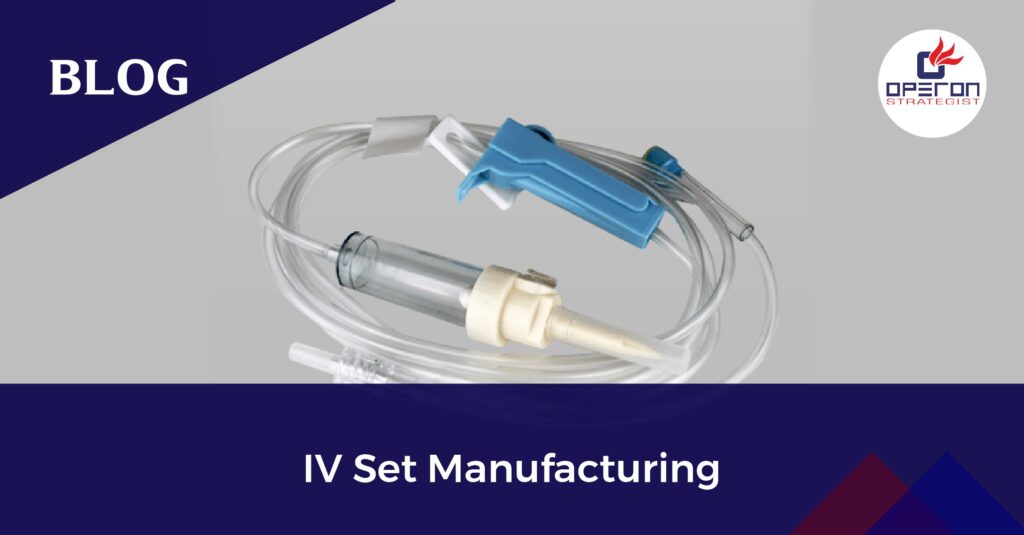
An IV infusion set is a disposable medical device used to administer fluids such as saline, medications, blood products, or nutrients into the bloodstream through intravenous access.
These devices are designed to control the flow rate and ensure safe fluid delivery to patients. IV sets are used across several medical applications including:
- Hospital patient care
- Emergency treatment
- Surgical procedures
- Chemotherapy
- Nutritional therapy
Due to their single use design, hospitals require a continuous supply of IV sets, making IV set manufacturing a high demand segment in the medical device industry.
Components of an IV Infusion Set
An IV infusion set is made of several components that work together to regulate fluid flow and ensure safe administration.
Spike
The spike is inserted into the fluid container or IV bottle to allow fluid entry into the infusion system.
Drip Chamber
This transparent chamber allows healthcare professionals to monitor and control the drip rate during fluid administration.
Roller Clamp
The roller clamp regulates the fluid flow rate through the tubing.
IV Tubing
Medical grade flexible tubing connects the fluid source to the patient.
Injection Port
The injection port allows additional medications to be injected into the infusion line if required.
Luer Connector
This connector links the IV set to the patient’s catheter or needle.
Each component must be manufactured using medical grade materials and assembled in sterile conditions to ensure patient safety.
IV Set Manufacturing Process
The IV set manufacturing process involves several stages including component production, assembly, sterilization, and packaging.
1. Raw Material Selection
Manufacturing begins with selecting medical grade raw materials such as:
- PVC (Polyvinyl Chloride)
- Polypropylene
- Polyethylene
- Rubber components for seals
These materials must meet biocompatibility and safety requirements used in medical devices.
2. Injection Molding
Injection molding machines are used to manufacture plastic components including:
- drip chambers
- connectors
- clamps
- ports
This process ensures uniform component design and dimensional accuracy.
3. Tube Extrusion
Medical grade PVC tubing is produced through extrusion machines. The tubing must meet strict requirements for:
- flexibility
- transparency
- flow control
Precise diameter control is essential to maintain accurate fluid flow rates.
4. Component Assembly
All components are assembled using automated or semi automated assembly machines. The typical assembly includes:
- attaching the spike to the tubing
- connecting the drip chamber
- fixing roller clamps
- installing injection ports
Manufacturing is performed inside controlled environments to avoid contamination.
5. Sterilization
Since IV sets come in direct contact with the bloodstream, sterilization is a critical stage in the manufacturing process.
Common sterilization methods include:
- Ethylene Oxide (EtO) sterilization
- Gamma radiation sterilization
These processes eliminate microorganisms and ensure product safety.
6. Packaging
After sterilization, IV sets are sealed in sterile packaging materials such as medical grade pouches.
Packaging protects the product during transportation and storage while maintaining sterility until use.
Planning to start an IV set manufacturing plant? Talk to our experts.
IV Set Manufacturing Machinery
The following machines are essential for production:
- Injection molding machine & molds
- Sealing machine
- Automatic packaging & blister packaging machines
- Sterilization plant
- Scrap guiding machine
- Weighing scale
- Water pump & chilling plant
- Air compressor
- Electrical fittings & testing equipment
Cleanroom Requirements for IV Set Manufacturing
Medical device manufacturing requires strict contamination control. Therefore, IV set production facilities must operate within controlled cleanroom environments.
Typical requirements include:
- ISO Class 8 cleanroom environment
- HEPA filtered air systems
- controlled temperature and humidity
- contamination monitoring
Cleanrooms help maintain product quality and compliance with international medical device standards.
Regulatory Compliance in IV Set Manufacturing
To manufacture and market IV sets globally, compliance is mandatory:
- India → CDSCO Manufacturing License
- USA → FDA 510(k) clearance (21 CFR Part 820 QSR compliance)
- Europe → CE Marking under EU MDR
- Global → ISO 13485 certification for QMS
Operon Strategist ensures regulatory compliance, plant setup, and certification support so you can focus on production.
Ready to Bring Your IV Set Manufacturing Vision to Life?
Operon Strategist: Your Partner in IV Set Manufacturing Excellence
As a leading medical device regulatory consultant, Operon Strategist provides:
- Turnkey manufacturing solutions
- Plant layout design & setup
- CDSCO licensing support
- ISO 13485 implementation
- Regulatory compliance (US FDA, CE Marking, QMS)
With Operon Strategist, you can establish a world-class IV set manufacturing facility that is efficient, compliant, and market-ready.
Download Full Guide (PDF) - IV Set Manufacturing
FAQs
What approvals are needed to manufacture IV sets in India?
Manufacturers must obtain a CDSCO manufacturing license and comply with ISO 13485 standards.
Can IV sets be exported globally?
Yes, but exporters must comply with FDA (U.S.), CE Marking (Europe), and ISO 13485 standards depending on the target market.
What types of IV sets are available?
Common types include filtered IV sets, vented IV sets, non-vented IV sets, and gravity administration sets.