
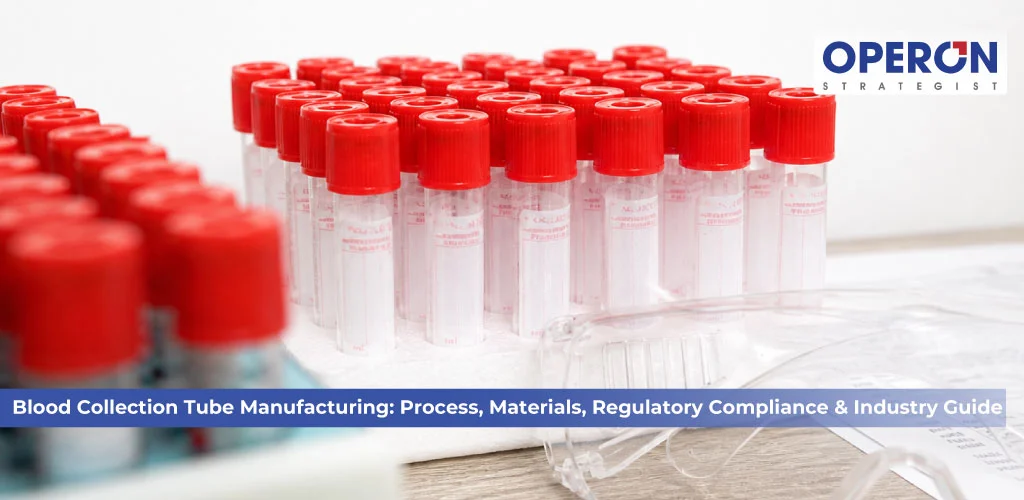
Blood Collection Tube Manufacturing: Process, Materials, Regulatory Compliance & Industry Guide
Blood collection tube manufacturing is a critical segment of the in vitro diagnostics (IVD) industry, directly impacting diagnostic accuracy, patient safety, and laboratory efficiency. These tubes are not simple containers they are precision-engineered medical devices designed to preserve sample integrity, prevent contamination, and ensure reliable test results.
With increasing demand for diagnostics, manufacturers must focus on material compatibility, additive stability, vacuum control, and regulatory compliance to remain competitive.
What Are Blood Collection Tubes and Why Is Manufacturing Precision Critical?
Blood collection tubes are sterile containers used to collect, transport, and store blood samples for laboratory testing.
Their performance depends on:
- Proper vacuum levels for accurate blood draw
- Stability of additives (anticoagulants, clot activators)
- Material compatibility with blood components
Key insight: Even minor variation in manufacturing can lead to diagnostic errors, making quality control essential.
Types of Blood Collection Tubes and Their Functional Differences
Manufacturers must produce different tube variants based on testing requirements:
- Serum tubes (Red/Yellow cap) → clot activator or gel separator
- EDTA tubes (Purple cap) → hematology testing
- Heparin tubes (Green cap) → plasma-based tests
- Sodium citrate tubes (Blue cap) → coagulation studies
- Fluoride tubes (Grey cap) → glucose testing
Each type requires specific additive formulation and coating techniques.
Raw Materials Used in Blood Collection Tube Manufacturing
Material selection directly affects safety and performance:
- PET (Polyethylene Terephthalate) → lightweight, shatter-resistant
- Glass → high chemical stability (less common today)
- Rubber stoppers → ensure airtight sealing
- Additives → anticoagulants, clot activators, gels
Expert insight: Additive compatibility with tube material is critical to avoid sample contamination or reaction interference.
Step-by-Step Blood Collection Tube Manufacturing Process
- Tube Formation
- PET tubes are produced using injection molding or extrusion-blow molding
- Ensures uniform wall thickness and dimensional accuracy
- Additive Preparation and Dosing
- Precise formulation of anticoagulants or clot activators
- Automated dosing systems ensure consistent quantity
Critical factor: Incorrect additive concentration can compromise test results.
- Coating and Drying
- Additives are coated inside the tube
- Controlled drying ensures uniform distribution
- Vacuum Creation
- Tubes are evacuated to create negative pressure
- Determines the exact volume of blood drawn
High-risk step: Improper vacuum leads to inaccurate sample volume.
- Stopper Placement and Sealing
- Rubber stoppers are inserted to maintain vacuum integrity
- Must ensure leak-proof sealing
- Sterilization
- Typically done using gamma radiation or EtO
- Ensures sterility without affecting additives
- Labelingand Packaging
- Tubes are labeled with color codes and specifications
- Packed in sterile, contamination-free environments
Regulatory Requirements for Blood Collection Tube Manufacturing
- Quality Management System
- ISO 13485 compliance is mandatory
- Ensures process control and traceability
- Product Classification and Approval
- Classified as IVD devices
- Regulatory pathways include:
- CDSCO (India)
- Key Standards to Follow
- ISO 6710 → single-use blood collection containers
- ISO 10993 → biocompatibility
- ISO 14971 → risk management
Critical Quality Control Parameters
Manufacturers must monitor:
- Vacuum accuracy
- Additive concentration
- Sterility assurance
- Tube material integrity
- Hemolysis prevention
Industry challenge: Maintaining consistency at high production volumes.
Common Manufacturing Challenges
- Variability in additive coating
- Vacuum leakage issues
- Contamination risks
- Regulatory compliance complexity
- Scaling production while maintaining quality
Latest Trends in Blood Collection Tube Manufacturing
- Automation and robotics in production lines
- Advanced separator gels for better sample quality
- Eco-friendly materials and sustainable packaging
- Integration with smart diagnostics systems
- Increased demand from decentralized healthcare
How Can Operon Strategist Support Blood Collection Tube Manufacturers?
Operon Strategist provides complete support across the manufacturing and regulatory lifecycle:
- Product feasibility and plant setup
- Regulatory approvals (CDSCO, CE Marking, FDA)
- Technical documentation (DMF, PMF)
- ISO 13485 QMS implementation
- Process validation and compliance support
- Product and process technology with Machinery guidance
In short: Operon Strategist helps manufacturers achieve faster approvals, compliant production, and scalable growth.
FAQs
What material is commonly used for blood collection tubes?
PET is widely used due to its durability and safety.
Why is vacuum important in blood collection tubes?
It ensures accurate blood volume collection.
Are blood collection tubes regulated?
Yes, they are classified as IVD devices and must meet strict regulatory standards.
What is the biggest manufacturing challenge?
Maintaining consistency in additive coating and vacuum levels.
Can startups enter this market?
Yes, but they must invest in cleanrooms, automation, and regulatory compliance.