Overview
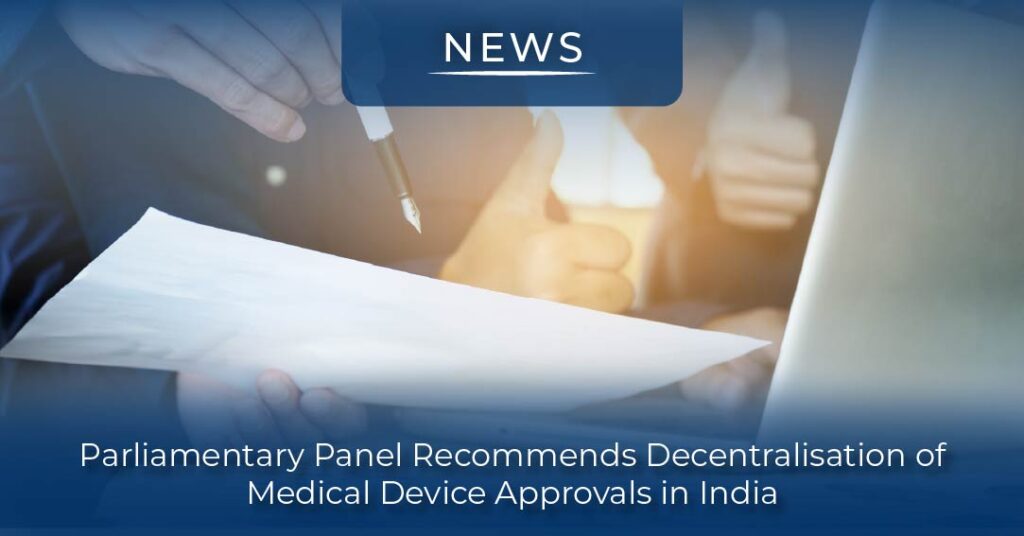
A Parliamentary Panel on Health and Family Welfare has proposed major reforms in India’s medical device regulatory framework, aiming to reduce approval delays, improve efficiency, and strengthen the country’s global competitiveness.
Push for Decentralisation
The panel has recommended decentralising approvals for all medical devices—including imports and higher-risk Class C and D devices—to State Drug Authorities, reducing dependency on the CDSCO. Read about CDSCO classifications.
Currently, state authorities regulate drugs and low-risk devices (Class A/B), while CDSCO oversees imports and high-risk devices. The panel believes this centralisation has created bottlenecks and slowed down approvals.
Looking For a Medical Device Regulatory Consultant?
Let’s have a word about your next project
Concerns Over Approval Delays
The report highlighted critical inefficiencies in the current system:
- Around 62% of applications faced multiple query cycles
- Over 250 import applications remained pending beyond 90 days. More about CDSCO Import License
- Even devices approved by global regulators experienced delays
These issues were attributed to unclear submission requirements and an inefficient review process.
Key Recommendations by the Panel
To streamline approvals and enhance transparency, the panel suggested:
- AI-assisted pre-submission validation in the MD Online portal
- A “single comprehensive query” system to avoid repeated queries
- Creation of a dedicated facilitation cell to guide manufacturers under MDR 2017
- Development of a unified National Regulatory Dashboard integrating central and state systems
Self-Financing Regulatory System
The panel also proposed that CDSCO should become self-financing by utilising revenue generated from medical device licensing. A portion of these funds should be reinvested into:
- Digital infrastructure upgrades
- Capacity building at both central and state levels
- Real-time compliance monitoring systems
Role of Operon Strategist
With evolving regulatory changes, companies will require expert guidance to stay compliant and competitive. Operon Strategist can support medical device manufacturers through:
- Regulatory Strategy Planning: Aligning business models with decentralised approval pathways
- Documentation & Submission Support: Ensuring error-free applications to reduce query cycles
- MDR 2017 Compliance: End-to-end assistance in meeting Indian regulatory requirements
- Portal & Process Navigation: Helping manufacturers efficiently manage CDSCO and state-level approvals
- Market Entry Acceleration: Minimising delays and speeding up time-to-market