
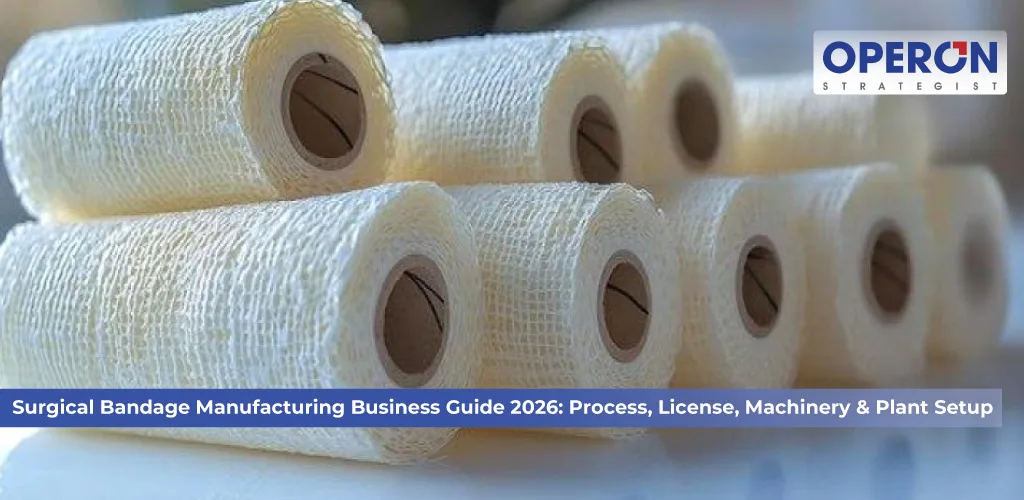
Surgical Bandage Manufacturing Business Guide 2026: Process, License, Machinery & Plant Setup
Introduction to surgical bandage manufacturing
Surgical bandage manufacturing is one of the most stable and high-demand opportunities in the medical consumables industry. Hospitals, clinics, pharmacies, first-aid providers, and home healthcare users require bandages daily for wound care, post-surgery recovery, trauma treatment, orthopedic support, and emergency care.
As healthcare infrastructure expands across India, Africa, the Middle East, and emerging markets, the demand for reliable and affordable bandage products continues to rise.
What is Surgical Bandage Manufacturing?
Surgical bandage manufacturing is the production of sterile or non-sterile medical bandages used to cover wounds, stop bleeding, protect injuries, apply pressure, or support healing.
These products are among the most frequently consumed healthcare disposables, creating repeat demand and long-term business potential.
Why is Surgical Bandage Manufacturing a Good Business in 2026?
Surgical bandage manufacturing remains attractive because:
- Constant hospital and clinic demand
- Low to medium entry investment
- Fast-moving consumable product category
- Easy product diversification
- Government tender opportunities
- Export demand in developing countries
- Growing e-commerce medical supply market
- Recession-resistant healthcare demand
What Types of Surgical Bandages Can Be Manufactured?
Common products include:
- Gauze Bandages
- Roller Bandages
- Crepe Bandages
- Compression Bandages
- Elastic Bandages
- Adhesive Bandages
- Triangular Bandages
- Tube Bandages
- Sterile Dressing Bandages
- Orthopedic Support Bandages
Starting with one or two products and expanding later is often a practical model.
What Raw Materials Are Used in Surgical Bandage Manufacturing?
Typical raw materials include:
- Absorbent cotton wool
- Bleached cotton gauze
- Elastic yarn
- Medical adhesive
- Non-woven fabric
- PE film / laminated film
- Sterile packaging pouches
- Labels and cartons
- Sterilization indicators
Why Material Quality Matters
It impacts:
- Absorbency
- Softness
- Sterility
- Shelf life
- Patient comfort
- Compliance approvals
What Machinery is Required for Surgical Bandage Manufacturing?
Depending on scale, machinery may include:
- Cotton processing machine
- Gauze weaving machine
- Slitting machine
- Cutting machine
- Rolling machine
- Folding machine
- Elastic knitting machine
- Adhesive coating machine
- Sealing machine
- Labeling machine
- Shrink wrapping machine
- ETO sterilizer / autoclave
- QC testing instruments
Recommended Model
For startups, semi-automatic machinery helps reduce investment while allowing future expansion.
What is the Surgical Bandage Manufacturing Process?
- How is Raw Material Prepared?
Cotton and gauze materials are checked for cleanliness, whiteness, and absorbency.
- How is Fabric Produced?
Cotton yarn is woven into gauze fabric using controlled mesh size and thread density.
- How Are Bandages Cut to Size?
Fabric is cut into standard or custom sizes according to market requirements.
- How Are Bandages Rolled or Folded?
The cut material is rolled, folded, or compressed based on product design.
- How Are Bandages Sterilized?
Sterile products are processed using:
- Ethylene Oxide (ETO)
- Gamma Radiation
- Steam sterilization (specific applications)
- How Are Finished Bandages Packed?
Products are packed in:
- Poly pouches
- Medical paper pouches
- Peel-open sterile packs
- Bulk cartons
- What Quality Tests Are Done?
- Absorbency test
- Strength test
- Dimension accuracy
- Sterility check
- Elasticity test
- Visual inspection
- Adhesion test
What License is Required for Surgical Bandage Manufacturing in India?
Depending on product type and classification, approvals may include:
- CDSCO / applicable medical device licensing
- State regulatory approvals
- Factory license
- GST registration
- Fire NOC
- Local authority permissions
Important Note
Regulatory classification may vary by product category, sterile claim, and intended use.
Is ISO 13485 Needed for Surgical Bandage Manufacturing?
ISO 13485 is strongly recommended.
Benefits Include:
- Better process control
- Easier hospital approvals
- Tender eligibility
- Export readiness
- Strong documentation system
- Higher buyer confidence
How Much Investment is Required to Start a Surgical Bandage Factory?
Investment depends on several factors such as production capacity, product range, automation level, plant location, sterilization setup, packaging systems, and regulatory compliance requirements.
Major Cost Components Include:
- Manufacturing machinery
- Raw material inventory
- Packaging materials
- Licensing and certifications
- Manpower and training
- Utilities and working capital
Expert Insight
A small semi-automatic unit requires significantly lower investment than a fully automated sterile manufacturing plant designed for exports.
Best Approach
Prepare a detailed project report with capacity planning and compliance requirements before finalizing investment.
How Much Space is Needed for a Surgical Bandage Plant?
Approximate requirement depends on production scale and automation.
Typical Setup Includes:
- Raw material storage area
- Production section
- Packing room
- Quality control room
- Finished goods storage
- Utility area
- Office and documentation section
Separate zones help improve workflow and compliance.
Is Surgical Bandage Manufacturing Profitable?
Yes, profitability can be attractive when manufacturers focus on:
- Efficient raw material sourcing
- Product quality consistency
- Institutional supply contracts
- Distributor network
- Export markets
- Brand building
- Automation for lower operating cost
Can Surgical Bandages Be Exported?
Yes. Common export markets include:
- Africa
- Middle East
- South Asia
- Latin America
May require:
- Country-specific registrations
- Export-compliant labeling
What Are Common Challenges in This Business?
- Price Competition
Commodity products require cost efficiency.
- Inconsistent Raw Materials
Can affect absorbency and finish.
- Sterility Control
Essential for medical trust.
- Documentation Delays
Licensing and tenders require strong records.
- Branding Difficulty
Without differentiation, price wars occur.
What Are the Latest Trends in Surgical Bandage Manufacturing?
- Antimicrobial bandages
- Silver wound dressings
- Skin-friendly adhesives
- Eco-friendly packaging
- Automated packaging lines
- Smart wound care products
- Premium hospital dressing kits
How Does Operon Strategist Help Start a Surgical Bandage Manufacturing Plant?
Operon Strategist provides complete project support for medical consumables manufacturing.
Services Include:
- Documentation systems
- Expansion planning
Why Choose Operon Strategist?
- Specialized healthcare manufacturing expertise
- Practical execution support
- Regulatory understanding
- Faster project implementation
- End-to-end solutions
- Scalable business strategy
Need Help to Start Surgical Bandage Manufacturing?
Operon Strategist supports entrepreneurs, manufacturers, and investors with complete guidance for setting up compliant and scalable surgical bandage manufacturing units.
Frequently Asked Questions (FAQs)
Is surgical bandage manufacturing profitable in India?
Yes, due to strong demand and recurring consumption.
Can I start with low investment?
Yes, semi-automatic small-scale units are possible.
How long does setup take?
Usually 3 to 6 months depending on machinery and approvals.
Do I need ISO certification?
Recommended, especially for hospital and export business.
Can I export surgical bandages?
Yes, with proper quality systems and approvals.