
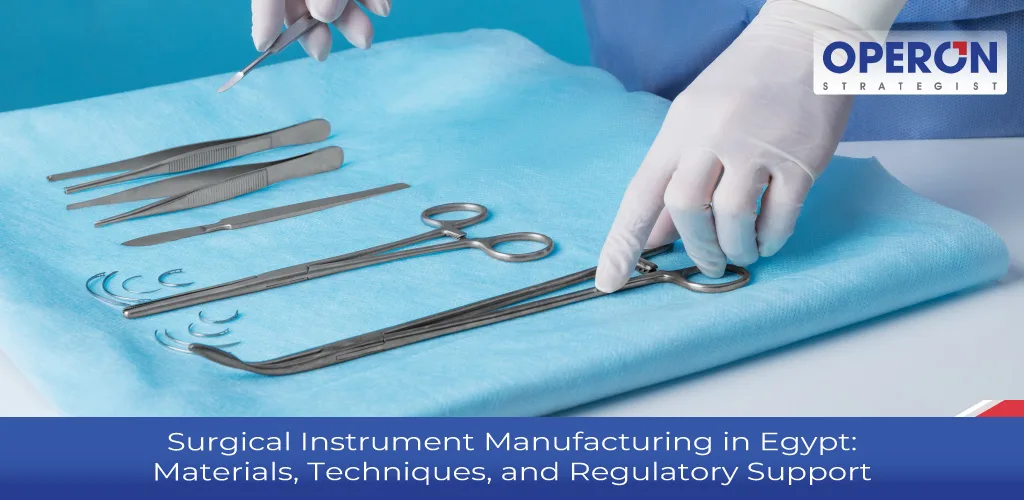
Surgical Instrument Manufacturing in Egypt: Materials, Techniques, and Regulatory Support
Surgical instrument manufacturing is a highly specialized and precision-driven process, essential to modern healthcare systems. In Egypt, the demand for quality surgical instruments is growing rapidly with the expansion of hospitals, surgical centers, and medical exports. These instruments are designed to assist healthcare professionals during surgical procedures, making their quality and compliance critical for patient safety and clinical success.
Manufacturers in Egypt looking to enter or expand in this sector must focus on using the right materials, advanced techniques, and regulatory compliance to meet both domestic and international market expectations.
Let's Grow Your Business Together
What Is a Surgical Instrument?
A surgical instrument is a specially designed tool used by medical professionals during surgical procedures. These instruments serve a variety of functions including cutting, grasping, retracting, and suturing tissues. The performance and precision of these instruments directly affect the outcome of surgeries, which makes their manufacturing process vital.
Materials Used in Surgical Instrument Manufacturing
Material selection is a crucial step in surgical instrument manufacturing. The instruments must be durable, corrosion-resistant, sterilizable, and biocompatible. Here are the most commonly used metals:
- Stainless Steel – Most widely used due to its strength, affordability, and resistance to corrosion.
- Titanium – Lightweight and ideal for orthopedic surgical instruments due to its strength and biocompatibility.
- Tantalum – Offers excellent corrosion resistance and is suitable for high-precision surgical instruments.
- Platinum & Palladium – Rarely used due to cost but ideal for microsurgical instruments requiring high precision.
These materials must be malleable enough for shaping yet retain strength after forming.
Manufacturing Techniques
The surgical instrument manufacturing process involves techniques like:
- One-piece forging for strength and durability
- CNC machining for precision in cutting and shaping
- Electropolishing for smooth, corrosion-resistant surfaces
- Heat treatment for hardening specific components
Modern Egyptian manufacturers are adopting advanced production technologies while maintaining the craftsmanship required for quality surgical tools.
Regulatory Considerations in Egypt
Manufacturing a surgical instrument requires strict adherence to regulatory standards. In Egypt, manufacturers must comply with the Egyptian Drug Authority (EDA) regulations. For global exports, especially to the U.S. market, compliance with 21 CFR Part 820 (FDA’s Quality System Regulation) is essential. Additionally, ISO 13485 certification is recommended to establish a robust quality management system.
Regulatory compliance ensures that the instruments are safe, effective, and meet global standards, which is critical for market approval and long-term credibility.
Partner with Operon Strategist to achieve seamless compliance for your manufacturing project
Ensure Compliance for Manufacturers with Expert Guidance
How Operon Strategist Supports Surgical Instrument Manufacturers in Egypt
Operon Strategist is a leading medical device consulting firm with over a decade of experience. We help Egyptian manufacturers establish or upgrade their surgical instrument production units with end-to-end support—from concept to compliance.
Our Services:
- EDA, 21 CFR Part 820, and ISO 13485 regulatory support
- Manufacturing plant layout and cleanroom design
- Turnkey project execution and process validation
- Technical file preparation and QMS implementation
- Supplier qualification and audit readiness
Our team ensures that your surgical instrument manufacturing facility meets local and international standards, enabling smooth product registration and market access.
Conclusion
The manufacturing of a surgical instrument requires attention to detail, regulatory insight, and precision engineering. As the medical device industry in Egypt continues to grow, there is a strong opportunity for local manufacturers to supply both domestic and global markets—provided they maintain high quality and compliance standards.
If you’re planning to start or scale your surgical instrument manufacturing project, partnering with experts like Operon Strategist ensures you get the guidance and systems needed for success.
📩 Contact us today to take your surgical instrument manufacturing to the next level.
Ready to launch or scale your surgical instrument facility?
Get expert support from our regulatory consultants today.
FAQ's
What materials are commonly used in surgical instrument manufacturing in Egypt?
Surgical instruments are typically manufactured from medical-grade stainless steel, titanium, and specialized alloys due to their strength, corrosion resistance, durability, and ability to withstand repeated sterilization. The choice of material depends on the instrument’s intended surgical application.
What manufacturing techniques are used to produce surgical instruments?
The manufacturing process generally includes forging or precision casting, CNC machining, heat treatment, grinding, polishing, passivation, assembly, quality inspection, sterilization (where applicable), and packaging. These processes help ensure precision, durability, and compliance with quality standards.
What regulatory requirements apply to surgical instrument manufacturers in Egypt?
Manufacturers should comply with Egyptian Drug Authority (EDA) regulations and implement an ISO 13485-compliant Quality Management System (QMS). Companies exporting surgical instruments should also meet the regulatory requirements of their target markets, such as US FDA regulations or the EU Medical Device Regulation (MDR).
How can manufacturers ensure the quality and compliance of surgical instruments?
Manufacturers can ensure compliance by implementing ISO 13485 quality management systems, validating manufacturing processes, conducting material and performance testing, maintaining full product traceability, performing routine quality inspections, and complying with applicable national and international regulatory requirements.