
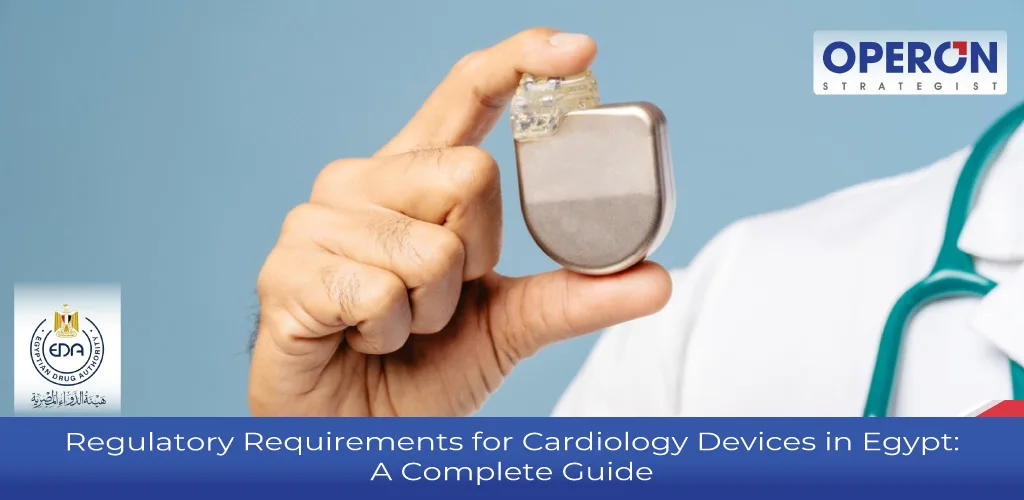
Regulatory Requirements for Cardiology Devices in Egypt: A Complete Guide
Introduction
Egypt has rapidly emerged as a strategic hub for medical technology in the Middle East and Africa. With rising cardiovascular disease prevalence, expanding healthcare infrastructure, and strong government support for local manufacturing, the demand for cardiology devices in Egypt is growing steadily.
For international manufacturers planning to import cardiology devices or establish manufacturing facilities in Egypt, understanding the regulatory framework, classification system, and manufacturing requirements is critical for successful market entry.
Talk to Our Egypt Medical Device Regulatory Experts
Overview of the Regulatory Authority in Egypt
All medical devices, including every cardiology device in Egypt, are regulated by the:
Egyptian Drug Authority (EDA)
Through its Central Administration of Medical Devices (CAMD), the EDA is responsible for:
- Medical device registration
- Import approvals
- Local manufacturing licensing
- Post-market surveillance and vigilance
Foreign manufacturers cannot interact directly with the EDA without a local legal presence or authorized representative.
Who Can Register a Cardiology Device in Egypt?
1. Foreign Manufacturers (Importing)
Companies outside Egypt must appoint an:
- Egyptian Registration Holder (ERH) or
- Authorized Local Agent
The ERH acts as the official liaison with EDA and is legally responsible for:
- Device registration
- Import permits
- Vigilance reporting and recalls
2. Local Manufacturing Companies
Foreign firms setting up manufacturing facilities in Egypt must:
- Establish an Egyptian legal entity
- Obtain an EDA Manufacturing License
Comply with local GMP and quality regulations
Classification of Cardiology Devices in Egypt
Egypt follows a risk-based classification system aligned with the EU MDR, which directly impacts documentation depth and approval timelines.
Class | Risk Level | Examples |
Class I | Low | Basic cardiology accessories |
Class IIa | Low–Moderate | Heart monitors, ECG accessories |
Class IIb | Moderate–High | Continuous heart monitor, cardiac ultrasound machine |
Class III | High | Implantable cardiac devices, under-skin heart monitor |
Most advanced cardiology devices in Egypt, such as cardiac event monitors, wearable heart monitors from doctors, and implantable loop recorders, fall under Class IIb or Class III.
Regulatory Requirements for Importing Cardiology Devices
To register a cardiology devices in Egypt, foreign manufacturers must submit a complete regulatory dossier, typically including:
Core Documentation
- ISO 13485:2016 Certificate (mandatory for most devices)
- CE Certificate or FDA approval (strongly preferred)
- Declaration of Conformity
- Certificate of Free Sale (CFS) from the country of origin
- Technical File / Summary Technical Documentation
- Risk Management File (ISO 14971)
- Clinical evidence (especially for high-risk cardiology devices)
Labeling & Language Requirements
- Arabic and English labeling
- Instructions for Use (IFU) in Arabic
- Manufacturer, ERH, UDI (if applicable)
Devices such as medical heart monitors, heart arrhythmia monitors, and cardiac loop monitors are closely reviewed for clinical safety and post-market controls.
Ready to bring your cardiology devices to Egypt?
Schedule a consultation with our EDA regulatory experts today
Manufacturing Cardiology Devices in Egypt: Key Requirements
Manufacturing License Requirements
To manufacture a cardiology device in Egypt, companies must:
- Obtain an EDA Manufacturing Site License
- Comply with Egyptian GMP aligned with ISO 13485
- Pass EDA site inspection and technical audit
Quality System Expectations
- ISO 13485-compliant Quality Management System
- Design control procedures
- Supplier qualification and traceability
- Complaint handling and vigilance systems
Local manufacturing is particularly attractive for products like:
- Heart monitor device from doctor
- Continuous heart monitor
- Cardiac ultrasound machines
- Wearable and digital cardiology devices
Import Approval vs Device Registration
Process | Purpose |
Device Registration | Legal authorization to market the medical device in Egypt |
Import Approval | Shipment-based clearance required for each import |
A common misconception among foreign companies is confusing import approval with device registration. Even after registration, each shipment of cardiology devices into Egypt requires import approval from the Egyptian Drug Authority (EDA). | |
Strategic Advantages of Egypt for Cardiology Manufacturers
Egypt offers several advantages for international cardiology companies:
- Large patient population with high cardiovascular disease rates
- Government incentives for medical device manufacturing
- Gateway to Africa and Middle East markets
- Regulatory system aligned with international standards
Companies manufacturing locally often experience faster market access and reduced import dependency.
How Operon Can Help Cardiology Device Companies in Egypt?
Operon is a trusted regulatory and manufacturing consulting partner with extensive experience in cardiology devices. Our expertise spans regulatory affairs, quality systems, and manufacturing readiness, enabling global companies to confidently introduce and manufacture cardiology devices in Egypt while meeting EDA and international compliance expectations.
Operon’s Core Services for Egypt
- EDA regulatory approvals and registration support
- Regulatory strategy and device classification
- Turnkey project consulting for manufacturing facilities
- Clean room design and process validation
- ISO 13485, FDA, and QMS compliance support
With a practical, compliance-driven approach, Operon supports cardiology device manufacturers at every stage—from regulatory planning to market approval—ensuring long-term success in Egypt’s evolving healthcare landscape.
Explore: EU MDR Compliance for Cardiovascular Medical Devices
Streamline your EDA registration and market entry
Talk to Operon’s compliance team now.
FAQ's
What is the primary regulatory authority in Egypt?
How are cardiology devices classified?
- Class IIb (Medium-High Risk): Devices like pacemakers.
- Class III (High Risk): Devices such as heart valves, heart pumps, and drug-eluting stents.
Do I need a local presence in Egypt to register?
Yes. Foreign manufacturers without a direct commercial presence in Egypt must designate a local authorized representative called an Egyptian Registration Holder (ERH). This entity, which can be an EDA-licensed scientific office or a commercial distributor, holds the marketing authorization and manages compliance.