
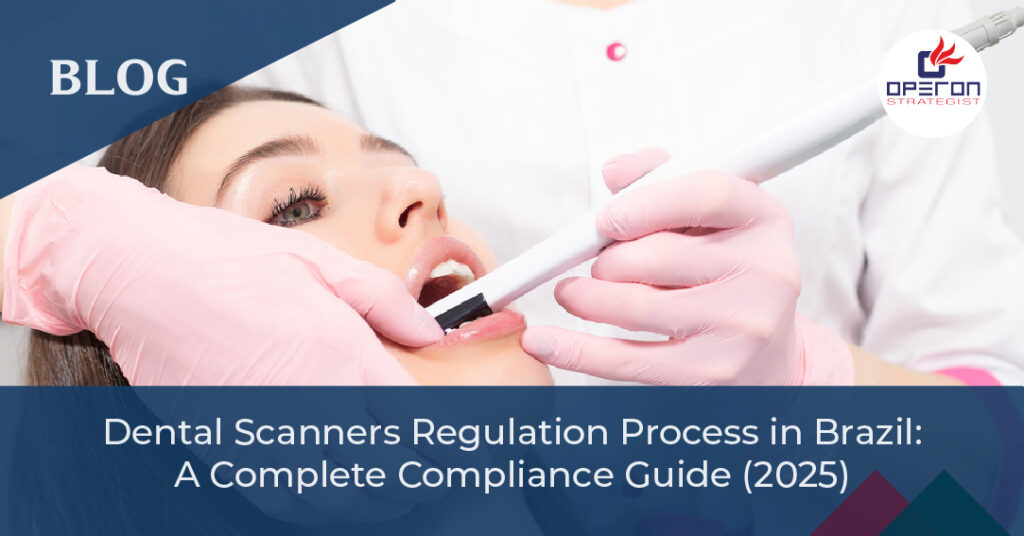
Dental Scanners Regulation Process: Ensuring Regulatory Compliance in Brazil
Bringing a dental scanner to the Brazilian market requires more than innovative technology—it demands strict adherence to the Dental Scanners Regulation Process defined by national and international regulatory authorities. Without proper compliance, even the most advanced digital dental scanner cannot be legally marketed or used in clinical practice.
Brazil’s growing dental healthcare sector is regulated by ANVISA, making regulatory planning, documentation, and post-market compliance critical for manufacturers aiming for successful market entry.
Looking for Medical Device Manufacturing Consultant
What Are Dental Scanners & Why Are They Essential?
Dental scanners are advanced medical devices designed to capture precise 3D digital impressions of a patient’s oral cavity. These devices eliminate traditional impression materials, improving accuracy, efficiency, and patient comfort.
Dental scanners are widely used for:
- Digital dentistry workflows
- CAD/CAM prosthetics design
- Orthodontic treatment planning
- Implantology and restorative dentistry
Due to their direct clinical application, dental scanners are classified as regulated medical devices, making compliance mandatory.
Navigating the Dental Scanners Regulation Process in Brazil
1. Regulatory Authority & Device Classification
In Brazil, dental scanners are regulated by ANVISA (Agência Nacional de Vigilância Sanitária). Depending on their intended use and risk profile, they are typically classified as Class II or Class III medical devices.
Manufacturers must determine:
- Device risk classification
- Applicable conformity assessment route
- Registration or notification requirements
2. Pre-Market Approval & Technical Documentation
To comply with the Dental Scanners Regulation Process, manufacturers must submit a comprehensive technical dossier to ANVISA, including:
- Device description & technical specifications
- Software validation and performance testing
- Clinical evaluation or literature evidence
- Risk management file (ISO 14971)
- Manufacturing process flow & controls
- Regulatory submission forms
For global manufacturers, documentation alignment with FDA 510(k) or EU MDR CE Marking can streamline the Brazilian approval process.
Learn More: ANVISA Medical Device Regulations
3. Quality Management System (QMS) Compliance
A compliant Quality Management System is mandatory. ANVISA recognizes ISO 13485 as the primary standard for medical device manufacturing.
Key QMS elements include:
- Design & development controls
- Supplier qualification
- Process validation
- Complaint handling
- Corrective and Preventive Actions (CAPA)
A robust QMS ensures long-term compliance throughout the product lifecycle.
4. Post-Market Surveillance & Vigilance
Approval is not the final step in the Dental Scanners Regulation Process. Manufacturers must implement post-market surveillance systems, including:
- Adverse event reporting to ANVISA
- Field safety corrective actions
- Periodic product performance reviews
- Continuous risk reassessment
Failure to maintain post-market compliance can result in penalties or product withdrawal.
5. Labelling & UDI Requirements
Dental scanner labelling must comply with Brazilian Portuguese language requirements and include:
- Intended use & operating instructions
- Safety warnings and contraindications
- Manufacturer & importer details
- ANVISA registration number
- Unique Device Identification (UDI) where applicable
Proper labelling ensures traceability and user safety.
Ready to Navigate the Dental Scanners Regulation Process in Brazil?
How Operon Strategist Supports Dental Scanner Compliance in Brazil
Navigating Brazilian medical device regulations can be complex—but Operon Strategist simplifies the entire journey with end-to-end regulatory support.
Our Regulatory & Consulting Services Include:
- ANVISA medical device registration and regulatory approval support
- Dental scanner regulatory strategy and risk-based classification
- ISO 13485 quality management system (QMS) implementation and audit assistance
- FDA 510(k) and CE Marking alignment for global market access
- Risk management, clinical evaluation, and technical documentation preparation
- Post-market surveillance, vigilance reporting, and regulatory maintenance
We also support related medical device services such as:
- Medical Device Registration in Brazil
- Digital Dentistry Device Compliance
- Software as a Medical Device (SaMD) Consulting
- Medical Device Manufacturing Setup & Cleanroom Compliance
With Operon Strategist as your regulatory partner, you can confidently launch compliant, high-quality dental scanners in Brazil and other global markets.
FAQs
Are dental scanners regulated medical devices in Brazil?
Yes. Dental scanners are regulated as medical devices in Brazil under ANVISA. Depending on their intended use and risk classification, they are generally categorized as Class II or Class III devices, requiring formal registration and regulatory approval before commercialization.
What is the ANVISA approval process for dental scanners?
The ANVISA approval process includes device classification, preparation of technical documentation, clinical evaluation, risk management, quality system compliance, and submission through the ANVISA registration pathway. Post-market surveillance is also mandatory after approval.
Is ISO 13485 mandatory for dental scanner manufacturers?
Yes. Compliance with ISO 13485 is strongly expected by ANVISA for dental scanner manufacturers. A certified quality management system ensures control over design, manufacturing, testing, and post-market activities throughout the device lifecycle.
Do dental scanners require clinical evaluation in Brazil?
Yes. Dental scanners must undergo clinical evaluation to demonstrate safety and performance. This may include clinical data, literature reviews, or equivalence studies, depending on the device classification and intended use.
Can FDA 510(k) or CE Marking support ANVISA registration?
Yes. Existing FDA 510(k) clearance or CE Marking under EU MDR can support the Brazilian regulatory submission by providing aligned technical documentation, risk management data, and clinical evidence, helping reduce approval timelines.