
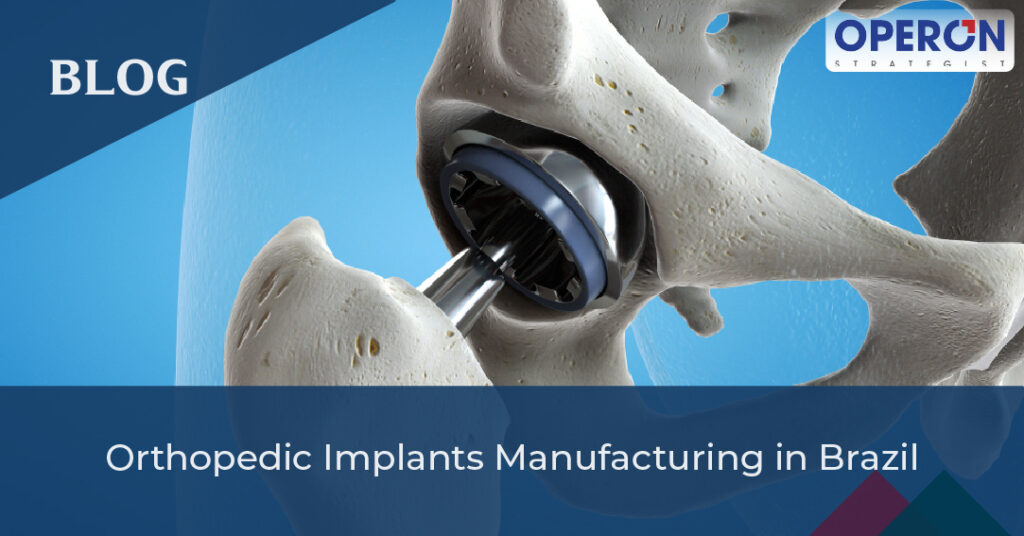
What Is Orthopedic Implants Manufacturing?
Orthopedic implants manufacturing refers to the design, development, production, and quality assurance of medical devices used to treat musculoskeletal conditions. These implants help restore mobility, reduce pain, and improve patient quality of life.
Common orthopedic implants include:
- Bone plates
- Screws and fixation devices
- Hip and knee joint replacements
- Spinal implants
- Trauma fixation systems
Looking for Medical Device Manufacturing Consultant
These devices are manufactured using biocompatible materials such as titanium alloys, stainless steel, cobalt-chrome alloys, and high-performance medical polymers to ensure durability, safety, and compatibility with the human body.
With the global rise in orthopedic disorders and injuries, the demand for high-quality implants is growing rapidly.
Why Invest in Orthopedic Implants Manufacturing in Brazil?
Brazil is one of the largest healthcare markets in Latin America, making it an attractive destination for orthopedic implant manufacturers.
Key reasons to invest in Brazil include:
- Growing demand for orthopedic surgeries
- Expanding healthcare infrastructure
- Government support for local medical device manufacturing
- Increasing aging population
- Large domestic and export market potential
Brazil also serves as a strategic manufacturing hub for Latin America, allowing companies to expand across regional markets.
With the right regulatory and manufacturing partner like Operon Strategist, manufacturers can successfully establish compliant facilities and enter the Brazilian market.
Why Is Orthopedic Implants Manufacturing Growing in Brazil?
The orthopedic implants market in Brazil is expanding due to several factors:
Rising Aging Population
An increasing elderly population leads to higher rates of joint replacement surgeries and orthopedic treatments.
Growth in Sports Injuries and Trauma Cases
Brazil has a high rate of sports participation and road accidents, increasing the demand for trauma implants.
Expansion of Private Healthcare
Private hospitals and specialized orthopedic clinics are growing rapidly.
Demand for Advanced Medical Technology
Healthcare providers are adopting high-performance implants with better longevity and patient outcomes.
These factors collectively create strong opportunities for orthopedic implant manufacturers in Brazil.
What Are the Key Regulatory Requirements in Brazil?
To manufacture and sell orthopedic implants in Brazil, companies must comply with regulations governed by the Agência Nacional de Vigilância Sanitária (ANVISA).
Key regulatory requirements include:
Quality Management System
Manufacturers must implement a Quality Management System compliant with ISO 13485 to ensure consistent product quality and safety.
ANVISA Medical Device Registration
Orthopedic implants must be registered with ANVISA before commercialization in Brazil.
Brazilian Good Manufacturing Practices (BGMP)
Manufacturing facilities must comply with ANVISA Good Manufacturing Practice regulations.
Local Representation
Foreign manufacturers must appoint an authorized Brazilian Registration Holder (BRH).
Post-Market Surveillance
Manufacturers must maintain systems for:
- Vigilance reporting
- Complaint handling
- Product traceability
- Recall procedures
Regulatory compliance is essential to ensure legal market entry and long-term product distribution in Brazil.
What Is the Process of Manufacturing Orthopedic Implants?
Orthopedic implant production involves highly controlled manufacturing processes to ensure precision and patient safety.
1. Product Design and Development
- The process begins with implant design and engineering.
- Computer-Aided Design (CAD) for anatomical accuracy
- Finite Element Analysis (FEA) for structural performance
- Prototyping and biomechanical testing
2. Material Selection
Manufacturers select biocompatible materials such as:
- Titanium alloys
- Stainless steel
- Cobalt-chromium alloys
- Ultra-high-molecular-weight polyethylene (UHMWPE)
These materials provide strength, corrosion resistance, and biological compatibility.
3. Precision Manufacturing
Advanced manufacturing techniques are used, including:
- CNC machining
- Laser cutting
- Additive manufacturing (3D printing)
- Surface polishing and finishing
4. Surface Treatment
Implants undergo specialized surface treatments to improve performance:
- Plasma spraying
- Hydroxyapatite coatings
- Surface roughening for osseointegration
5. Sterilization and Packaging
Implants must be sterilized before market distribution.
Common sterilization methods include:
- Gamma radiation
- Ethylene oxide (EtO) sterilization
- Steam sterilization
Products are then packed in sterile barrier packaging compliant with ANVISA labeling regulations.
6. Quality Testing and Validation
Manufacturers must perform rigorous testing such as:
- Mechanical strength testing
- Biocompatibility testing
- Corrosion resistance testing
- Sterility validation
All documentation must align with ISO 13485 and ANVISA regulatory requirements.
What Are the Challenges for Orthopedic Implant Manufacturers in Brazil?
Despite strong opportunities, manufacturers may face several challenges.
Complex Regulatory Approval
Medical device registration with ANVISA can be time-consuming without expert guidance.
High Manufacturing Costs
Advanced manufacturing equipment and compliance requirements increase capital investment.
Supply Chain Dependence
Specialized materials may need to be imported.
Strict Quality Standards
Manufacturers must maintain continuous compliance with international standards.
Working with experienced regulatory consultants helps overcome these challenges efficiently.
Ready to Start Orthopedic Implants Manufacturing in Brazil?
How Can Operon Strategist Help Orthopedic Implant Manufacturers in Brazil?
Operon Strategist provides comprehensive consulting services for orthopedic implants manufacturing in Brazil, helping companies establish compliant manufacturing operations and enter global markets.
Regulatory Consulting
- End-to-end support for ANVISA medical device registration
- Regulatory strategy development
- Gap assessment and compliance planning
Quality Management System Implementation
- ISO 13485 certification support
- QMS documentation and implementation
- Internal audits and training programs
Technical Documentation Support
- Technical file preparation
- Risk management documentation
- Clinical evaluation reports
Manufacturing Facility Setup
- Medical device manufacturing plant design
- Cleanroom design and validation
- Process validation and equipment qualification
Global Market Access
Operon Strategist also supports manufacturers in obtaining international approvals such as:
- CE Marking for European markets
- US FDA registration
- Global regulatory submissions
FAQs
What is orthopedic implants manufacturing?
Orthopedic implants manufacturing is the process of designing, producing, and testing medical devices such as plates, screws, joint replacements, and spinal implants used to treat musculoskeletal conditions.
Which authority regulates orthopedic implants in Brazil?
Orthopedic implants in Brazil are regulated by Agência Nacional de Vigilância Sanitária, which oversees medical device registration, manufacturing standards, and market approval.
What materials are commonly used in orthopedic implants manufacturing?
Orthopedic implants are typically manufactured using biocompatible materials such as titanium alloys, stainless steel, cobalt-chromium alloys, and medical-grade polymers to ensure strength and compatibility with the human body.
What certifications are required for orthopedic implant manufacturers?
Manufacturers must implement a Quality Management System aligned with ISO 13485 and comply with ANVISA regulatory requirements to manufacture and distribute orthopedic implants in Brazil.
What are the key steps in orthopedic implants manufacturing?
The manufacturing process generally includes product design, material selection, precision machining, surface finishing, sterilization, packaging, and rigorous quality testing before market approval.