
Introduction to Disposable Syringe Manufacturing
With rising demand for safe, single-use medical products in Algeria’s growing healthcare sector, disposable syringes have become indispensable. Algeria is strategically strengthening its local medical device manufacturing ecosystem to reduce import dependency, making it an ideal time for companies to invest.
Setting up a disposable syringe manufacturing plant in Algeria requires strict adherence to international manufacturing standards and emerging national regulatory guidelines. This guide will help you navigate the entire process from raw material to regulatory compliance and understand how to make a syringe that meets global quality benchmarks.
Looking for Medical Device Consultant?
What Is a Disposable Syringe?
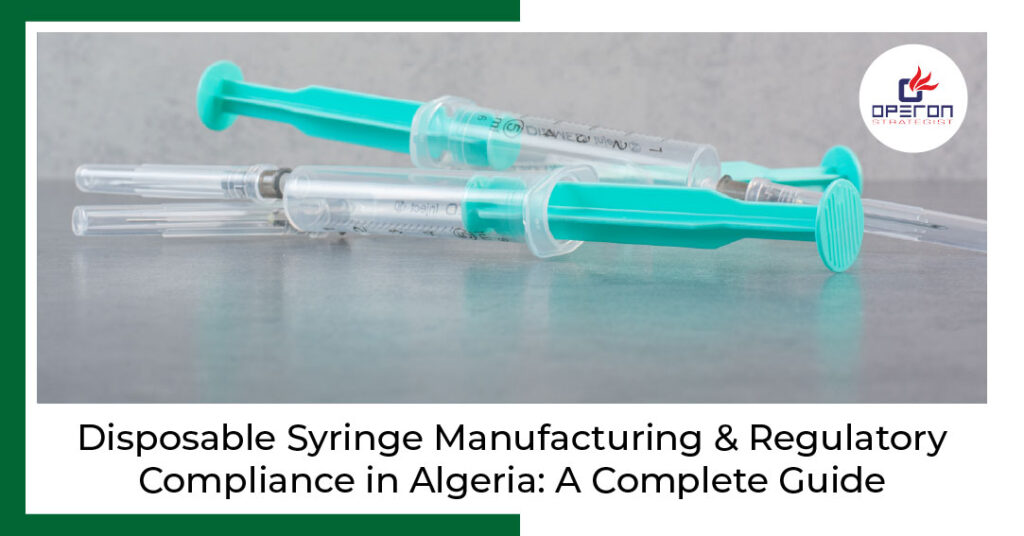
A disposable syringe is a sterile, single-use device designed to administer or withdraw fluids. Typically made from medical-grade polypropylene and stainless steel, these devices eliminate cross-contamination risk crucial for hospitals, clinics, and diagnostic centers. Knowing how to make a syringe with proper materials and sterilization ensures safe and efficient performance in healthcare settings.
Step-by-Step Manufacturing Process
1. Raw Material Selection
- Use of medical-grade polypropylene (PP) and stainless steel
- Biocompatibility as per ISO 10993
2. Injection Molding
- Precision molding for barrels and plungers
- Contamination-controlled environments
3. Needle Assembly
- Automated cutting and bonding of stainless steel needles
- Adhesive or mechanical locking technology
4. Lubrication
- Barrel walls lubricated with pharma-grade silicone oil to ensure smooth plunger action
5. Printing & Marking
- Use of non-toxic inks with precise graduation (ISO 15223-1)
6. Sterilization
- Ethylene Oxide (EtO) or Gamma Radiation
- Sterilization must comply with ISO 11135 or ISO 11137
7. Packaging
- Blister or pouch packaging under ISO 11607
- Ensures sterility and extended shelf life
8. Quality Control & Batch Release
- Includes leak tests, pull tests, and dimensional checks
- Must align with ISO 13485:2016
Regulatory Landscape in Algeria
Algeria is aligning its medical device regulations with international standards, especially ISO and EU MDR frameworks. Here’s what manufacturers need to comply with:
1. Algerian Ministry of Health & National Agency of Health Products (ANPP)
- Oversees local registration, manufacturing facility approvals, and product licensing
- Requires documentation on product safety, performance, and intended use
2. CE Marking (Optional but Preferred)
- Devices with CE Mark gain fast-track registration in Algeria
- Compliance with EU MDR 2017/745, especially for exports to Europe
3. ISO 13485:2016 – Mandatory QMS
- Quality Management System required for plant approval and product clearance
4. Labeling Requirements
- Labels and Instructions for Use (IFU) must be in Arabic and French
- Must include manufacturing date, lot number, sterility status, and expiration
5. Import & Distribution Licensing
- For non-Algerian manufacturers, local representation and ANPP registration are compulsory
Start Your Syringe Manufacturing Journey in Algeria
How Operon Strategist Can Help
Operon Strategist offers complete turnkey consultancy for setting up a disposable syringe manufacturing plant, covering feasibility reports, cleanroom design, machinery setup, process validation, packaging, sterilization, and ISO 13485:2016 QMS implementation. We also provide end-to-end regulatory support, including ANPP, CE Marking, FDA 510(k), CDSCO, SFDA, UKCA, and MDSAP certifications, ensuring your facility and products meet global compliance standards. With over a decade of experience, we help you build faster, certify smarter, and expand globally with confidence.
FAQs
What is needed to start a disposable syringe manufacturing plant in Algeria?
You need a certified facility, ISO 13485 QMS, ANPP approval, and sterilization validation as per ISO standards.
How much investment is required?
It depends on plant size, machinery, and cleanroom setup. Major costs include infrastructure, equipment, and regulatory documentation.
Do I need CE Marking for syringes in Algeria?
Not mandatory, but highly recommended. CE-certified devices get faster registration approval and easier access to European markets.