
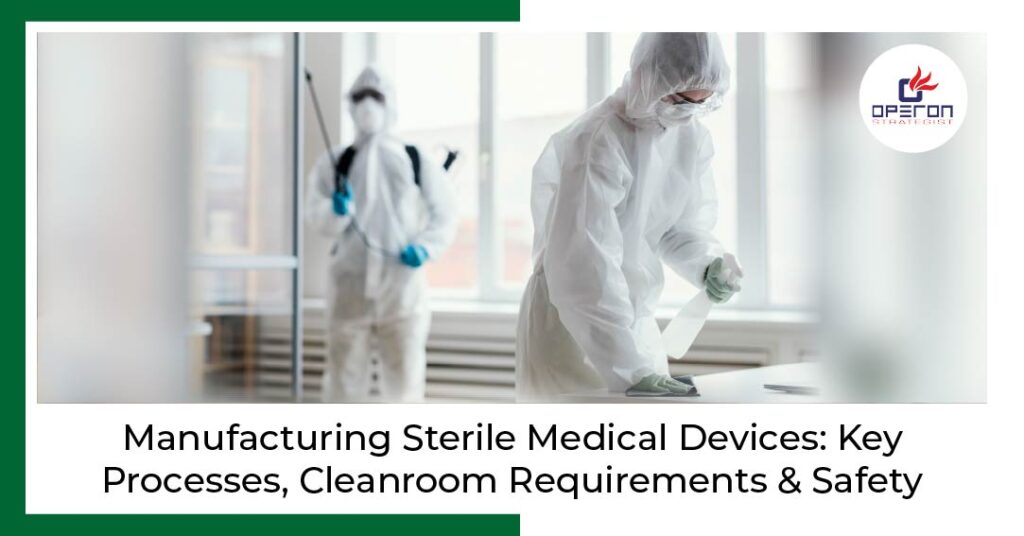
In the highly regulated world of medical device production, ensuring product sterility isn’t just a best practice — it’s a mandatory requirement. Manufacturing sterile medical devices demands strict environmental control to protect patient safety, prevent contamination, and meet global regulatory expectations. Cleanrooms play a crucial role in maintaining controlled environments necessary for sterile production, safeguarding public health, and enabling successful regulatory approvals in Algeria and international markets.
This blog explains how cleanrooms support the safe and compliant manufacturing sterile medical devices, why cleanroom validation and classification are essential, and how Algerian manufacturers can align with international standards such as ISO 14644-1, ISO 13485, EU MDR, and US FDA requirements.
Learn More: Clean Room Design for Medical Devices In Algeria
Looking For a Medical Device Regulatory Consultant?
What Is a Cleanroom in Medical Device Manufacturing?
A cleanroom is a controlled environment where contaminants such as dust, airborne microbes, aerosol particles, and chemical vapors are strictly regulated. In manufacturing sterile medical devices, cleanrooms are indispensable during operations where even minimal contamination can compromise product sterility, regulatory compliance, or patient safety.
Cleanrooms are classified according to internationally recognized standards such as ISO 14644-1:2015 and EU GMP Annex 1, based on the maximum allowable concentration of airborne particles. Depending on the manufacturing stage, cleanrooms used for manufacturing sterile medical devices typically range from ISO Class 1 to ISO Class 9.
Why Cleanrooms Are Essential for Manufacturing Sterile Medical Devices?
The process of manufacturing sterile medical devices requires rigorous control over environmental parameters. Even microscopic contamination can lead to costly recalls, regulatory enforcement actions, or serious patient harm. Cleanrooms mitigate these risks in several critical ways:
Control of Microbial and Particulate Contamination
Cleanrooms are equipped with advanced HEPA or ULPA filtration systems that continuously remove airborne particles and microorganisms. This ensures sterile medical devices remain uncontaminated during critical stages of manufacturing, assembly, packaging, and sterilization.
Compliance with Global Regulatory Requirements
Regulatory authorities including the US FDA, EMA, WHO, and EU Competent Authorities require validated cleanroom environments for manufacturing sterile medical devices. Standards such as ISO 13485, 21 CFR Part 820, and EU MDR emphasize environmental control, monitoring, and validation to ensure product sterility and consistent quality.
Product Integrity and Patient Safety
Cleanrooms protect both the product and the end user. By maintaining aseptic conditions, cleanrooms prevent infections and post-procedure complications that could arise from contaminated implants, surgical instruments, catheters, IVDs, or diagnostic kits.
Cleanroom Classifications for Manufacturing Sterile Medical Devices
| Process Stage | Cleanroom Classification (ISO) |
|---|---|
| Component Assembly | ISO Class 7–8 |
| Sterilization Preparation | ISO Class 6–7 |
| Aseptic Filling or Critical Operations | ISO Class 5 |
| Packaging in Final Sterile Barrier | ISO Class 7 |
| Molding of Components | ISO Class 9 |
Cleanroom design and classification for manufacturing sterile medical devices require specialized expertise. Airflow patterns, pressure differentials, material movement, and personnel flow must be carefully engineered to prevent cross-contamination and ensure regulatory compliance.
The Role of Cleanroom Validation and Monitoring
The effectiveness of cleanrooms used in manufacturing sterile medical devices depends on continuous validation and monitoring. Manufacturers must routinely evaluate:
- Airborne particulate counts
- Microbial contamination levels
- Temperature and humidity
- Pressure differentials
- Airflow velocity and patterns
Cleanroom validation confirms that the controlled environment consistently operates within defined limits, ensuring ongoing sterility assurance throughout the product lifecycle.
Cleanroom Compliance for Manufacturing Sterile Medical Devices in Algeria
medical devices comply with both local regulatory expectations and international standards. Alignment with ISO 13485, ISO 14644-1, EU MDR, and FDA QSR is essential for product registration, market access, and global export readiness.
Proper cleanroom design, validation, and environmental monitoring help Algerian manufacturers achieve faster regulatory approvals, reduce compliance risks, and build long-term quality systems aligned with global best practices.
Need GMP-Compliant Cleanroom Solutions for Manufacturing Sterile Medical Devices?
How Operon Strategist Supports Cleanroom Projects for Manufacturing Sterile Medical Devices
At Operon Strategist, we specialize in cleanroom design, validation, and turnkey regulatory solutions for companies engaged in manufacturing sterile medical devices. Our end-to-end support enables manufacturers in Algeria and worldwide to establish GMP-compliant cleanroom facilities aligned with international regulatory standards.
Our Comprehensive Services Include:
- Cleanroom layout planning, zoning, and ISO classification
- HVAC design and contamination control strategies
- Environmental monitoring program development
- Cleanroom qualification and validation documentation
- Regulatory gap assessment for ISO 13485, EU MDR, and FDA 21 CFR Part 820
FAQs
Why are cleanrooms essential for manufacturing sterile medical devices?
Cleanrooms are essential for manufacturing sterile medical devices because they control airborne particles and microbial contamination, ensuring products remain sterile, safe for patients, and compliant with international regulatory standards.
Which cleanroom standards apply to manufacturing sterile medical devices in Algeria?
Manufacturing sterile medical devices in Algeria typically requires compliance with ISO 14644-1 for cleanroom classification, ISO 13485 for quality management systems, EU MDR for European market access, and FDA 21 CFR Part 820 for US exports.
What ISO cleanroom class is required for sterile medical device manufacturing?
The required ISO cleanroom class depends on the process stage. Aseptic filling and critical operations usually require ISO Class 5, while component assembly and sterile packaging are commonly performed in ISO Class 7 or 8 cleanrooms.
How does cleanroom validation support regulatory compliance?
Cleanroom validation confirms that environmental conditions such as particle counts, airflow, pressure differentials, temperature, and humidity consistently meet predefined limits, which is mandatory for regulatory approval and ongoing compliance.
Are cleanrooms mandatory for exporting sterile medical devices from Algeria?
Yes, cleanrooms are mandatory for exporting sterile medical devices from Algeria to regulated markets such as the EU, US, and GCC, as international authorities require documented evidence of controlled manufacturing environments.