
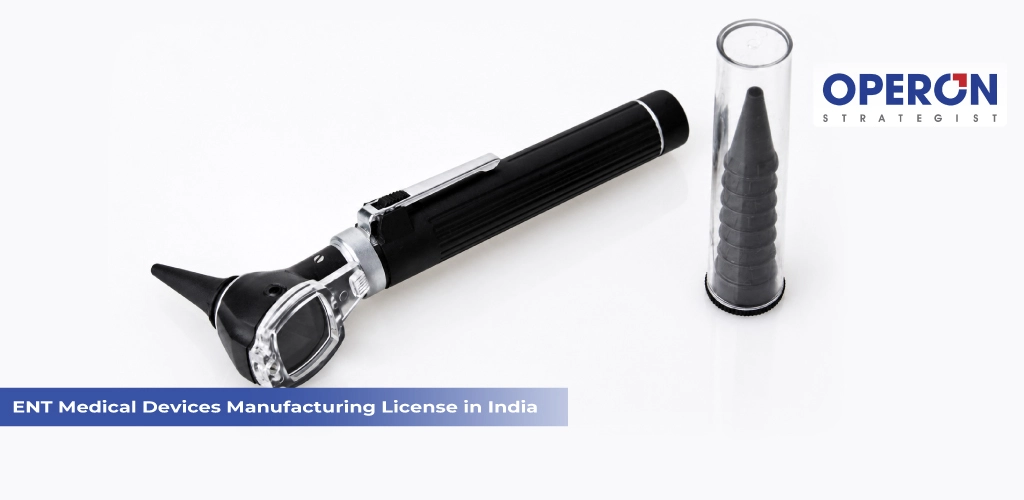
ENT Medical Devices Manufacturing License in India
Manufacturers planning to produce ENT medical devices in India must understand the applicable requirements under India’s medical device regulatory framework. Depending on the device and its risk classification, manufacturers may need to obtain the appropriate CDSCO manufacturing license before placing the device on the Indian market.
ENT devices cover a broad range of products used for the diagnosis, monitoring, treatment, or management of conditions affecting the ear, nose, throat, and related structures.
The regulatory pathway depends on factors such as the device’s intended purpose, risk classification, manufacturing activity, and applicable requirements under the Medical Devices Rules, 2017.
This guide explains the ENT medical devices manufacturing license in India, including classification, documentation, application steps, and key compliance requirements.
Talk to our experts
What Are ENT Medical Devices?
ENT medical devices are products used by healthcare professionals for the examination, diagnosis, monitoring, treatment, or management of conditions involving the ear, nose, throat, and related anatomical structures.
Examples can include:
- Otoscopes
- Audiometers
- Ear specula
- Ear examination instruments
- ENT surgical instruments
- Ear and nasal examination devices
- Hearing-related medical devices
- ENT diagnostic equipment
- Ear bowls
- Ear canal lights
- Other devices intended for ENT procedures
The regulatory classification of an ENT device depends on its intended purpose and the applicable classification rules. Therefore, manufacturers should not assume that all ENT devices fall into the same risk class.
Are ENT Medical Devices Regulated in India?
Yes. Medical devices placed on the Indian market are regulated under the applicable Indian medical device framework, primarily the Drugs and Cosmetics Act, 1940 and Medical Devices Rules, 2017 (MDR 2017). The Central Drugs Standard Control Organisation (CDSCO) is India’s central regulatory authority for medical devices.
Before manufacturing an ENT medical device commercially in India, the manufacturer should:
- Determine whether the product qualifies as a medical device.
- Identify the applicable device classification.
- Determine the applicable licensing authority and pathway.
- Prepare the required technical and quality documentation.
- Submit the applicable manufacturing license application.
- Address any regulatory queries or inspection requirements.
- Obtain the applicable manufacturing license before commencing regulated commercial activities.
ENT Medical Device Classification in India
Classification is an important first step when applying for an ENT medical devices manufacturing license in India.
Under India’s risk-based regulatory framework, medical devices are generally classified into:
| Class | Risk level |
|---|---|
| Class A | Low risk |
| Class B | Low-moderate risk |
| Class C | Moderate-high risk |
| Class D | High risk |
The classification depends on the applicable rules and the device’s intended purpose. For example, an ENT examination instrument may have a different regulatory classification from an active device used for diagnosis or treatment. Manufacturers should therefore perform a product-specific classification assessment instead of relying only on the general category of “ENT medical devices.”
What License Is Required to Manufacture ENT Medical Devices in India?
The applicable license depends primarily on the device’s classification and the manufacturing activity. For devices falling under the relevant CDSCO manufacturing licensing framework, manufacturers need to submit the applicable application and supporting documentation to the appropriate licensing authority.
For example, Class C and Class D medical device manufacturing applications follow the applicable CDSCO licensing pathway, while Class A and Class B devices may follow different licensing and regulatory routes depending on the applicable requirements. Manufacturers should confirm the current application form, authority, and documentation requirements for their specific device before submitting an application.
Also Read: Ethiopia Medical Device Registration: Proven Guide
Schedule a Compliance Consultation
Accelerate Market Access with End-to-End Regulatory Guidance
Requirements for ENT Medical Device Manufacturing License
Manufacturers should prepare the documentation required for their specific device and licensing pathway.
Depending on the product, the documentation may include:
- Manufacturer details
- Manufacturing site details
- Device name and intended purpose
- Device classification
- Device specifications
- Manufacturing process information
- Quality management system documentation
- Risk management documentation
- Product testing reports
- Performance information
- Labeling and packaging details
- Instructions for use
- Technical documentation
- Site and infrastructure information
- Applicable declarations and certificates
The exact documentation requirements can vary according to device classification and the applicable CDSCO pathway.
How to Obtain an ENT Medical Devices Manufacturing License in India?
The general regulatory process can be divided into the following steps.
Step 1: Identify the Medical Device
Start by defining the product, its intended purpose, indications, users, and method of operation. This information is important because the intended purpose is one of the factors used to determine the applicable regulatory requirements.
Step 2: Determine the Device Classification
Identify whether the ENT device falls under Class A, B, C, or D according to the applicable classification rules. Classification determines the regulatory pathway and can affect the documentation, testing, quality requirements, and licensing authority involved.
Step 3: Establish the Required Quality Management System
The manufacturer should establish the applicable quality management system and manufacturing controls. ISO 13485 can provide a structured framework for managing quality processes in medical device manufacturing.
Step 4: Prepare Technical Documentation
Prepare the technical documentation required for the device and applicable licensing pathway. The documentation should provide sufficient information to demonstrate that the device meets applicable safety, quality, and performance requirements.
Step 5: Prepare the Manufacturing Facility
The manufacturing facility should have the appropriate infrastructure, equipment, personnel, procedures, and quality controls required for the proposed device. For manufacturers establishing a new facility, planning the manufacturing layout and production areas early can help avoid compliance gaps.
Step 6: Submit the CDSCO Application
Submit the applicable manufacturing license application along with the required documentation and prescribed fees through the applicable regulatory process.
Step 7: Address Regulatory Queries or Inspection
The licensing authority may review the submitted information and, where applicable, conduct an inspection or request additional information. Manufacturers should respond to regulatory queries with clear and consistent documentation.
Step 8: Obtain the Manufacturing License
Once the applicable regulatory requirements are satisfied, the manufacturing license can be issued. The manufacturer must then continue to comply with the conditions of the license and applicable post-market requirements.
ENT Medical Device Manufacturing Facility Requirements
A compliant manufacturing facility is an important part of establishing an ENT medical device manufacturing operation.
Depending on the device, manufacturing activities may involve:
- Raw material storage
- Component inspection
- Assembly areas
- Production areas
- Testing and inspection areas
- Packaging areas
- Finished goods storage
- Quality control
- Documentation and records
- Personnel facilities
- Controlled environments, where required
The facility should be designed according to the manufacturing process and the specific requirements of the medical device. Operon Strategist can support manufacturers with medical device plant layout design, facility planning, QMS implementation, validation documentation, and regulatory licensing.
How Operon Strategist Can Help With ENT Medical Device Licensing
Operon Strategist provides regulatory consulting and project support for medical device manufacturers planning to establish or expand manufacturing operations in India.
Our support for ENT medical devices can include:
- ENT device classification
- CDSCO regulatory pathway assessment
- CDSCO manufacturing license support
- Technical documentation
- Design Master File support
- ISO 13485 QMS implementation
- Risk management documentation
- Manufacturing facility planning
- Plant layout design
- Regulatory gap assessment
- Application preparation
- Regulatory query support
- Inspection readiness
- Post-licensing compliance
From manufacturing facility planning to CDSCO licensing, our team can support manufacturers through the key stages of their medical device manufacturing project.
Explore: Regulatory and Market Challenges for Veterinary Medical Devices
Ensure Seamless Regulatory Compliance for Your Device
Get Your Medical Device Market-Ready with Expert Regulatory Support
FAQ's
What is an ENT medical device?
An ENT medical device is a medical device intended for the diagnosis, monitoring, treatment, or management of conditions involving the ear, nose, throat, or related anatomical structures.
Do ENT medical devices require a CDSCO manufacturing license?
The applicable CDSCO authorization depends on the specific device, its classification, and the manufacturing activity. Manufacturers should determine the device classification and applicable licensing pathway before starting commercial manufacturing.
How are ENT medical devices classified in India?
Medical devices in India are generally classified as Class A, B, C, or D based on risk and the applicable classification rules. The classification of an ENT device depends on its intended purpose and characteristics.
Is ISO 13485 required for ENT medical device manufacturing?
Quality management requirements apply to medical device manufacturers under the applicable regulatory framework. ISO 13485 is an important quality management standard for medical device manufacturing, but certification by itself does not replace the applicable CDSCO manufacturing license.
What documents are required for an ENT medical device manufacturing license?
Requirements vary according to the device and classification. Documentation may include product information, classification, technical documentation, manufacturing details, QMS documentation, risk management information, testing reports, labeling, and facility-related information.