
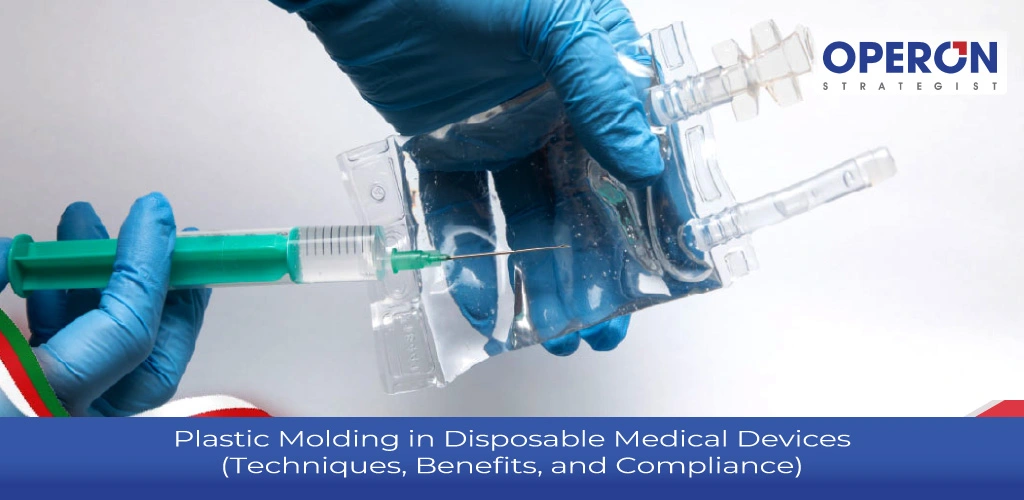
Plastic Molding in Disposable Medical Devices (Techniques, Benefits, and Compliance)
Plastic molding is a backbone technology in the manufacturing of disposable medical devices, especially in a growing healthcare market like Oman. From syringes and IV connectors to catheters and diagnostic tools, precision plastic components ensure hygiene, performance, and regulatory safety.
In this blog, we’ll uncover how plastic molding in disposable medical devices plays a pivotal role in modern healthcare, explore molding techniques, and highlight regulatory compliance tailored for Oman-based manufacturers.
Looking for Medical Device Manufacturing Consultant
Importance of Disposable Medical Devices in Modern Healthcare
The transition from reusable to disposable medical devices has reshaped infection control and operational efficiency in hospitals and clinics.
Key Benefits of Disposable Medical Devices:
- Infection Control: Reduces hospital-acquired infections (HAIs) by eliminating reuse and sterilization risks.
- Cost Efficiency: Saves on cleaning, maintenance, and sterilization infrastructure.
- Reliable Performance: Offers consistent quality for critical applications such as injections, diagnostics, and fluid management.
Plastic Molding: The Foundation of Disposable Medical Device Manufacturing
Plastic molding refers to shaping medical-grade polymers into precise and sterile components using heat and pressure. This method allows high-volume, high-quality production that meets the stringent requirements of healthcare systems.
- Precision and Consistency
Plastic molding ensures tight tolerances and uniform shapes, which is essential for functionality and safety in devices like blood collection tubes and inhalers. - Cost-Effective Production
Injection and blow molding allow scalable, low-cost manufacturing—perfect for high-demand, single-use medical devices in Oman and the Middle East. - Material Versatility
Manufacturers can choose from a range of medical-grade plastics, such as:
- Polypropylene (PP)
- Polycarbonate (PC)
- Polyethylene (PE)
- Thermoplastic elastomers (TPE)
These materials provide:
- Biocompatibility
- Chemical resistance
- Durability
- Sterilizability
Common Plastic Molding Techniques in Medical Device Manufacturing
Omani manufacturers can benefit from adopting the following techniques:
- Injection Molding: Ideal for complex parts such as syringe plungers and valve housings.
- Blow Molding: Used for hollow parts like medical bottles and containers.
- Thermoforming: Suitable for packaging trays and diagnostic kits.
- Extrusion Molding: Used for tubing applications in IV sets and catheters.
Regulatory Compliance for Disposable Medical Devices
Manufacturers in Oman must adhere to international regulatory standards to ensure market access, patient safety, and product reliability.
Global Regulatory Bodies & Standards:
- US FDA: Complies with 21 CFR Part 820 (Quality System Regulation).
- EU MDR: Mandatory compliance with Regulation (EU) 2017/745.
- CDSCO (India): Medical Device Rules, 2017 for manufacturing/exporting to India.
SFDA (Saudi Arabia): MDS-G5 guidelines for registration and quality.
Why Omani Manufacturers Should Choose Operon Strategist
At Operon Strategist, we understand the unique challenges faced by Oman-based medical device manufacturers. We provide end-to-end support to ensure your plastic molded disposable devices meet global standards.
What We Offer:
FAQ
What is plastic molding in disposable medical device manufacturing?
Plastic molding is a manufacturing process used to produce disposable medical device components with high precision and consistency. Injection molding is the most widely used technique for manufacturing products such as syringes, IV components, specimen containers, catheters, and diagnostic device parts using medical-grade polymers.
Which plastic molding techniques are commonly used for medical devices?
Common techniques include injection molding, insert molding, overmolding, blow molding, compression molding, and micro-molding. The appropriate method depends on the device design, material selection, dimensional requirements, production volume, and intended medical application.
Which quality standards apply to plastic molding for medical devices?
Manufacturers commonly implement ISO 13485 for quality management systems and ISO 14971 for risk management. Depending on the product, additional standards for biocompatibility, sterilization, packaging, cleanroom manufacturing, and process validation may also apply to ensure product safety and regulatory compliance.
Why is process validation important in medical device molding?
Process validation demonstrates that the molding process consistently produces components meeting predetermined quality specifications. Manufacturers typically validate tooling, molding parameters, equipment performance, inspection methods, and production processes to ensure product quality, traceability, and regulatory compliance.