
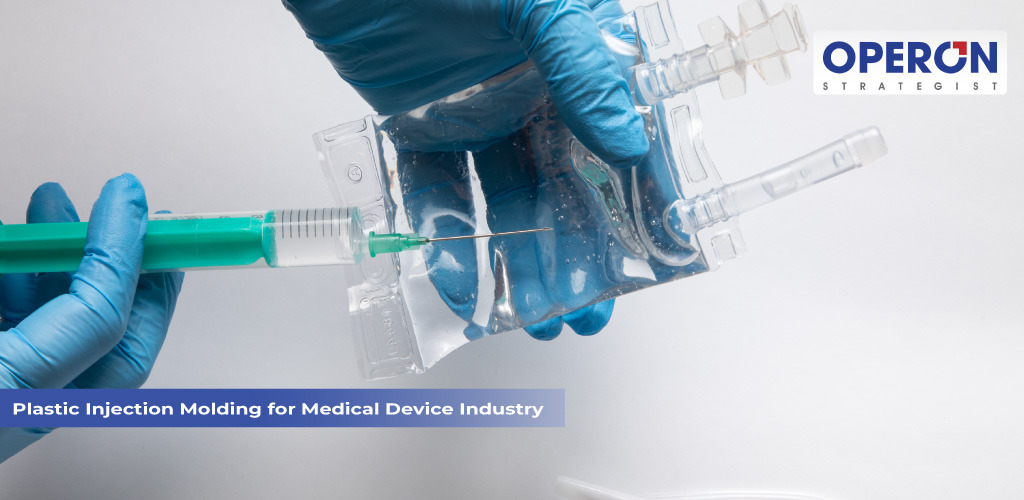
Plastic Injection Molding for Medical Devices: Benefits, Process, Compliance & Applications
Introduction
Plastic injection molding is one of the most widely used manufacturing processes in the medical device industry. It enables manufacturers to produce precise, repeatable, and cost-effective medical components at large scale.
From syringes and IV components to diagnostic cartridges and surgical products, medical injection molding supports modern healthcare manufacturing with high accuracy and regulatory compliance.
Medical manufacturers increasingly focus on:
- Precision manufacturing
- Cleanroom production
- Medical-grade materials
- Process validation
- Regulatory compliance
- Scalable manufacturing systems
Talk to our experts
What Is Plastic Injection Molding for Medical Devices?
Plastic injection molding is a process where molten plastic is injected into a mold cavity under pressure. After cooling, the component is ejected for assembly, packaging, or sterilization.
Medical injection molding is used for manufacturing:
- Disposable medical devices
- Diagnostic components
- Surgical products
- Drug delivery devices
- Implantable device parts
- Laboratory consumables
The process supports both prototype and high-volume commercial production.
Why Is Injection Molding Important in Medical Device Manufacturing?
Medical devices require strict consistency, precision, and contamination control. Injection molding supports these requirements through repeatable and scalable production.
Key Benefits
High Precision
Supports tight tolerances and complex geometries.
Cost-Effective Production
Enables large-scale manufacturing with lower per-unit costs.
Faster Production Cycles
Improves manufacturing speed and scalability.
Material Flexibility
Supports medical-grade plastics with:
- Biocompatibility
- Chemical resistance
- Sterilization compatibility
- Mechanical strength
Reduced Material Waste
Minimizes scrap compared to conventional machining processes.
What Are the Advantages of Medical Injection Molding?
- Consistent Product Quality
Ensures repeatable manufacturing with minimal variation.
- Complex Part Manufacturing
Supports intricate and micro-sized medical components.
- Cleanroom Manufacturing Compatibility
Can operate in controlled environments to reduce contamination risks.
- Production Scalability
Supports both low-volume and high-volume manufacturing.
- Regulatory Compatibility
Supports compliance with:
- ISO 13485
- FDA requirements
- CE Marking
- CDSCO regulations
- GMP guidelines
Which Medical Devices Are Manufactured Using Injection Molding?
Disposable Medical Devices
Surgical Products
- Instrument handles
- Surgical trays
- Device housings
Diagnostic Devices
- Testing cartridges
- Sample containers
- Laboratory consumables
Drug Delivery Systems
- Inhaler components
- Infusion system parts
- Insulin delivery devices
Implantable Device Components
- Orthopedic parts
- Prosthetic components
- Implant housings
What Materials Are Used in Medical Injection Molding?
Polycarbonate (PC)
Used for transparent and impact-resistant medical components.
Polypropylene (PP)
Commonly used for syringes, containers, and packaging.
Polyethylene (PE)
Used for tubing and flexible medical components.
PEEK
Used in implantable and high-performance medical devices.
ABS
Used for medical equipment housings and casings.
What Factors Should Be Considered When Selecting Medical Plastics?
Biocompatibility
Materials must be safe for patient contact.
Sterilization Compatibility
Materials should withstand:
- Ethylene oxide (EtO)
- Gamma radiation
- Steam sterilization
Chemical Resistance
Materials should tolerate disinfectants and chemicals.
Mechanical Strength
Products must maintain structural integrity during use.
Regulatory Compliance
Materials should comply with applicable FDA and ISO standards.
What Is Design for Manufacturability (DFM)?
Design for Manufacturability (DFM) is the process of optimizing product design for efficient injection molding production.
DFM helps improve:
- Mold performance
- Product consistency
- Material flow
- Cycle times
- Manufacturing efficiency
Proper DFM analysis helps reduce production defects and manufacturing costs.
What Is Cleanroom Injection Molding?
Cleanroom injection molding is performed in controlled environments to reduce contamination during manufacturing.
This is important for:
- Sterile medical devices
- Implantable products
- Diagnostic consumables
- Drug delivery systems
Common Cleanroom Standards
Cleanroom Class | Typical Application |
ISO Class 7 | Critical medical device manufacturing |
ISO Class 8 | General medical device manufacturing |
Why Is Regulatory Compliance Important?
Medical devices are highly regulated because they directly affect patient safety.
Failure to comply may result in:
- Product recalls
- Regulatory penalties
- Delayed approvals
- Market restrictions
Important Medical Device Regulations
ISO 13485
International quality management standard for medical devices.
FDA Requirements
Required for medical devices entering the US market.
CE Marking
Required for medical devices sold in Europe.
CDSCO Regulations
Required for medical device manufacturing and import activities in India.
What Is Process Validation in Medical Injection Molding?
Process validation verifies that the manufacturing process consistently produces products meeting predefined quality requirements.
Validation activities commonly include:
- Installation Qualification (IQ)
- Operational Qualification (OQ)
- Performance Qualification (PQ)
Manufacturers must also maintain traceability for:
- Raw materials
- Batch records
- Process parameters
- Inspection records
Process validation is essential for regulatory compliance and quality consistency.
What Are the Latest Innovations in Medical Injection Molding?
Micro Injection Molding
Used for miniature and wearable medical devices.
Multi-Material Molding
Combines multiple materials into one component.
Smart Medical Components
Supports integration of sensors and electronic functionality.
Advanced Biocompatible Polymers
Improve implant safety and performance.
Automation in Medical Molding
Robotic systems improve consistency, reduce contamination risks, and increase manufacturing efficiency.
What Are the Common Challenges in Medical Injection Molding?
Manufacturers often face challenges such as:
- Mold design complexity
- Tight tolerance requirements
- Material compatibility issues
- Sterilization-related deformation
- Cleanroom contamination risks
- Validation documentation gaps
Proper planning and quality systems help reduce these risks.
How Can Operon Strategist Support Medical Device Manufacturers?
Operon Strategist supports medical device manufacturers with:
We support startups, manufacturers, importers, exporters, and contract manufacturing companies across the medical device industry.
Why Choose Operon Strategist?
Industry-Focused Expertise
Specialized support for medical device manufacturing and compliance.
End-to-End Support
Support from facility planning to regulatory approvals.
Regulatory Knowledge
Understanding of evolving global medical device regulations.
Customized Solutions
Tailored guidance based on product and business requirements.
Need Support for Medical Device Manufacturing Compliance?
Operon Strategist helps manufacturers with:
Whether you are developing a new product or scaling manufacturing operations, Operon Strategist can support your compliance and manufacturing journey.
FAQ
What is medical injection molding?
Medical injection molding is a process used to manufacture precise plastic components for medical devices and healthcare products.
Why is injection molding preferred for medical devices?
It offers high precision, repeatability, scalability, and compatibility with cleanroom manufacturing.
What plastics are commonly used in medical devices?
Common materials include polycarbonate, polypropylene, polyethylene, ABS, and PEEK.
Is cleanroom manufacturing necessary for medical injection molding?
Yes, many medical devices require cleanroom production to reduce contamination risks.