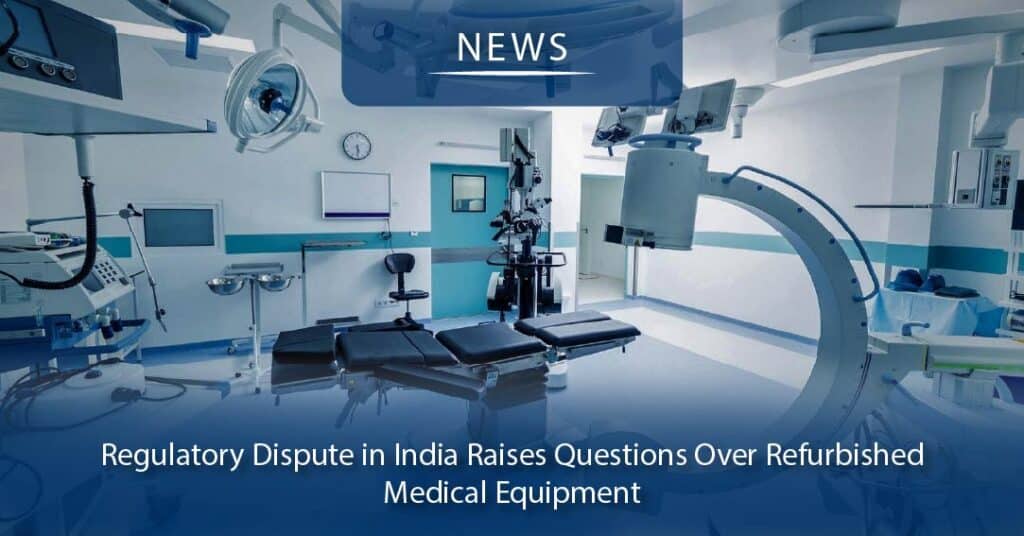
India’s medical device sector is currently embroiled in a regulatory conflict after the Ministry of Environment, Forest & Climate Change (MoEFCC) approved multiple consignments of refurbished high-end medical equipment, even as the country’s health regulator, Central Drugs Standard Control Organisation (CDSCO), has formally barred such imports.
Conflicting Green and Health Mandates
On November 12, 2025, MoEFCC’s expert committee overseeing hazardous and other waste imports cleared 16 CT scanners, 10 MRI systems, and 10 surgical robotic units from several companies for reuse in India.
Looking For a Medical Device Regulatory Consultant?
These approvals follow similar permissions issued throughout 2024 and 2025 under MoEFCC’s framework for “refurbished/used” high-end medical devices, which treats such devices partly as a waste management and reuse issue. However, on January 10, 2025, CDSCO issued a clarification to Customs stating that refurbished medical devices cannot be imported for sale or distribution, citing the absence of any provision under the Medical Devices Rules, 2017. This has created a direct conflict between environmental clearances and health regulatory restrictions.
How Refurbished Imports Were Opened — and Then Shut
India first allowed a narrow legal pathway for refurbished high-end devices in 2023 through amendments to the Hazardous and Other Wastes (Management and Transboundary Movement) Rules, permitting used systems up to a defined age for select high-value categories.
The revised MoEFCC list now spans 38 device types, including MRI and CT scanners, radiotherapy systems, surgical robots, ophthalmic lasers, and endoscopic cameras. Conditions include original equipment manufacturer (OEM) refurbishment and mandatory disposal as hazardous waste at the end of life.
Despite this, industry groups lobbied against the orders, arguing that the rules undermine “Make in India” initiatives and open the market to depreciated foreign imports. Following this, CDSCO’s January 2025 clarification effectively froze this import channel, which domestic manufacturers now cite as the binding regulatory reference.
Industry Alarm Over ‘Dumping Ground’ Risk
Domestic manufacturers and associations, such as AiMeD, have expressed strong concerns that India could become a dumping ground for near end-of-life foreign equipment.
Industry leaders argue:
Investments in R&D for surgical robots, imaging platforms, and other high-end devices are undermined.
Imported refurbished machines, already depreciated abroad, could crowd out demand for locally manufactured systems.
India restricts pre-owned cars and phones but allows refurbished medical devices that impact patient safety and generate complex e-waste.
The issue, therefore, is not only about competitiveness but also healthcare sovereignty, patient safety, and environmental responsibility.
Patient Safety, Transparency, and Court Scrutiny
Safety advocates and consumer groups emphasize risks associated with refurbished equipment, including:
- Reduced diagnostic accuracy and surgical outcomes
- Shorter warranties and limited service support
- Outdated software and lower reliability
The Patient Safety and Access Initiative of India Foundation (PSAIIF) has filed a public interest litigation (PIL) in the Delhi High Court challenging imports of refurbished CT, MRI, and surgical robots, highlighting alleged instances of illegal imports worth over Rs 250 crore.
The Court has issued notices to multiple ministries and regulators, keeping the matter under judicial review, while MoEFCC continues to issue approvals.
Hospitals, Access, and the Counter-Argument
Supporters of refurbished equipment, including some multinational OEMs, argue that reconditioned devices:
- Expand access to advanced medical care in price-sensitive markets
- Enable smaller hospitals to acquire high-end systems at affordable costs
- Support the circular economy by reusing high-value equipment
However, CDSCO’s strict stance currently leaves hospitals and suppliers in a regulatory grey zone, with environment clearances in place but no health licensing pathway.
Policy Questions Facing the Government
The clash between MoEFCC and CDSCO raises important policy questions:
- How to balance patient safety, affordability, and technology access?
- How to align “Make in India” incentives with environmental and industrial policies?
- How to regulate refurbished medical devices under circular economy principles?
The Delhi High Court proceedings are ongoing, and a unified government stance is yet to be established. The outcome of this controversy will shape India’s approach to high-end medical device imports, patient safety, and industrial policy.
Need Regulatory Support for Refurbished or High-End Medical Devices?
Role of Operon Strategist
Operon Strategist plays a critical role in navigating this complex landscape for both domestic manufacturers and healthcare providers. The consultancy provides:
- Regulatory guidance on CDSCO, MoEFCC, and import compliance
- Market strategy for high-end medical device manufacturers to align with Make in India initiatives
- Quality and safety assessments for refurbished or new devices
- Support in liaising with authorities for approvals and certifications
By offering expert consulting, Operon Strategist ensures that clients can remain compliant, protect patient safety, and make strategic business decisions amidst evolving regulations.