
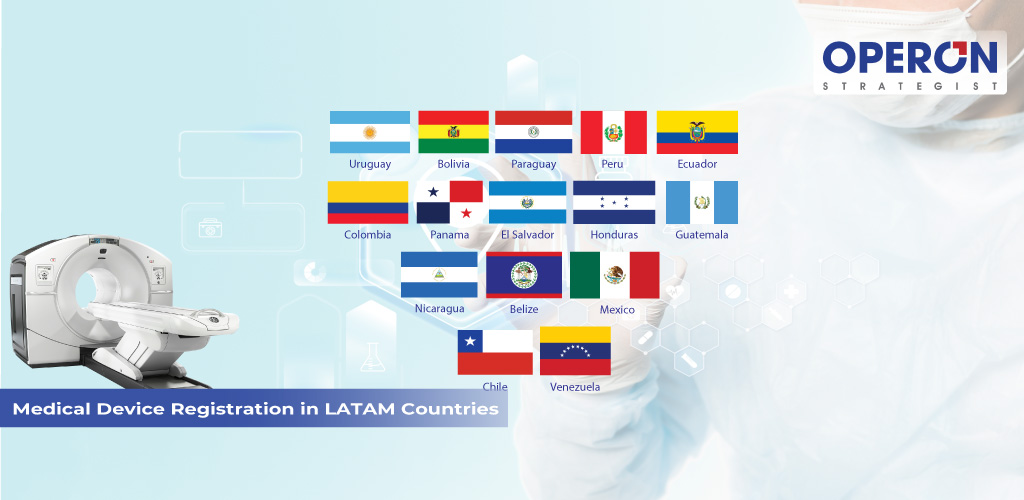
Medical Device Registration in LATAM Countries: Complete Regulatory Guide for Manufacturers
Introduction
The Latin American healthcare market is rapidly expanding, creating significant opportunities for medical device manufacturers, importers, and startups worldwide. However, medical device registration in LATAM countries can be complex due to varying regulations, country-specific approval systems, language requirements, and documentation standards.
At Operon Strategist, we help global manufacturers simplify regulatory approvals and accelerate market entry across Latin America through strategic regulatory consulting, Quality Management System implementation, and end-to-end compliance support.
Talk to Our Experts
Whether you manufacture diagnostic devices, surgical products, implants, consumables, or IVDs, understanding the LATAM regulatory framework is essential for successful commercialization.
Why LATAM is a Growing Opportunity for Medical Device Companies
Latin America has become a strategic destination for medical device businesses because of:
- Growing healthcare investments
- Increasing demand for imported medical devices
- Expanding hospital infrastructure
- Rising diagnostic and surgical procedures
- Government healthcare modernization programs
Countries like Brazil, Mexico, Argentina, Colombia, and Chile are among the largest medical device markets in the region.
For manufacturers already holding:
- ISO 13485 certification
- FDA 510(k) clearance
- CE Marking
- UKCA approval
LATAM expansion can become faster with the right regulatory strategy.
What is Medical Device Registration in LATAM Countries?
Medical device registration in LATAM countries refers to the regulatory approval process required before a medical device can be imported, marketed, distributed, or sold in Latin American countries.
The process typically includes:
- Device classification
- Technical documentation review
- Product registration submission
- Labeling compliance
- Quality Management System verification
- Clinical evidence review
- Import licensing
- Post-market surveillance obligations
Major Regulatory Authorities in LATAM Countries
Country | Regulatory Authority | Key Focus |
Brazil | ANVISA | Comprehensive device approval and GMP |
Mexico | COFEPRIS | Registration and sanitary approvals |
Argentina | ANMAT | Device classification and local compliance |
Colombia | INVIMA | Product registration and surveillance |
Chile | ISP | Healthcare product regulation |
Peru | DIGEMID | Import and product approvals |
Each authority follows different submission formats, timelines, and risk classifications.
How are Medical Devices Classified in LATAM?
Most LATAM countries classify devices according to risk levels.
Common Classification Structure
- Class I – Low Risk
- Class II – Moderate Risk
- Class III – High Risk
- Class IV – Critical/Very High Risk
Higher-risk devices require:
- Detailed technical files
- Clinical evaluation reports
- Biocompatibility data
- Sterilization validation
- Performance testing
- Post-market surveillance plans
Key Requirements for Medical Device Registration in LATAM Countries
- Quality Management System Compliance
Most regulatory authorities expect manufacturers to implement a compliant Quality Management System.
Commonly accepted certifications include:
- ISO 13485
- Country of origin approval
Having CE marking, USFDA certification can significantly improve regulatory acceptance in several markets.
- Technical Documentation
Manufacturers usually need:
- Device description
- Intended use
- Risk analysis
- Labeling and IFU
- Clinical evidence
- Sterilization reports
- Shelf-life validation
- Performance testing
- Local Authorized Representative
Many LATAM countries require foreign manufacturers to appoint:
- A local representative
- Importer
- Registration holder
This entity acts as the official liaison with regulatory authorities.
- Labeling Compliance
Labeling requirements may include:
- Spanish or Portuguese translations
- Local importer information
- Traceability details
- Safety warnings
- UDI requirements in certain regions
Country-Wise Medical Device Registration Challenges in LATAM
Brazil – ANVISA Registration
Brazil is one of the largest but most regulated markets in LATAM.
Challenges:
- Complex documentation review
- GMP inspections
- Portuguese labeling requirements
- Longer approval timelines
ANVISA approvals may require strong technical dossiers and manufacturing compliance evidence.
Mexico – COFEPRIS Registration
Mexico offers relatively faster market entry pathways for certain products.
Important Considerations:
- Third-party review pathways
- Sanitary registration requirements
- Device classification alignment
- Import licensing
Colombia and Chile
These markets are increasingly attractive because of:
- Growing healthcare investments
- Easier import pathways
- Expanding private healthcare systems
However, documentation localization and importer compliance remain critical.
Common Challenges Faced by Medical Device Manufacturers in LATAM
Regulatory Complexity
Every country has different submission procedures and timelines.
Documentation Gaps
Incomplete technical files often delay approvals.
Language Barriers
Spanish and Portuguese translations are mandatory in many countries.
Delayed Market Entry
Without a proper regulatory roadmap, approvals can take significantly longer.
Lack of Local Expertise
Manufacturers may struggle to identify the correct regulatory strategy.
How to Accelerate LATAM Market Entry
Build a Regulatory Strategy Early
Identify target countries, timelines, and approval pathways before submission.
Align with International Standards
Devices compliant with:
often gain faster regulatory acceptance.
Conduct Product Feasibility and Market Analysis
Understanding reimbursement systems, pricing, and demand can reduce commercial risks.
Partner with Experienced Regulatory Consultants
Working with a specialized consultant minimizes delays and compliance issues.
How Operon Strategist Can Help You
Operon Strategist supports medical device companies with complete LATAM market entry solutions.
Our Services Include:
Regulatory Strategy & Registration
- LATAM regulatory pathway assessment
- Device classification support
- Technical documentation preparation
- Country-specific submission management
Quality & Compliance Support
- Regulatory gap assessment
Engineering & Manufacturing Support
Market Entry Consulting
- Distributor support
- Import licensing assistance
Our experts help startups, manufacturers, and importers reduce regulatory risks and accelerate commercialization timelines.
Why Manufacturers Choose Operon Strategist
Industry Expertise
Deep experience in global medical device regulations.
End-to-End Support
From feasibility studies to regulatory approvals and manufacturing setup.
Faster Market Entry
Strategic planning reduces delays and compliance gaps.
Global Regulatory Knowledge
Support for:
FAQ
What is medical device registration in LATAM countries?
Medical device registration is the regulatory approval process required before selling or importing medical devices in Latin American countries.
Is ISO 13485 mandatory for LATAM medical device registration?
Many LATAM authorities strongly prefer or require ISO 13485-compliant Quality Management Systems for approval.
Does FDA 510(k) help in LATAM approvals?
Yes. Several LATAM countries may recognize or simplify review processes for devices already cleared through FDA 510(k) pathways.
How long does LATAM medical device registration take?
Approval timelines vary by country and device class. Registrations can take anywhere from 3 months to 24 months.