Overview
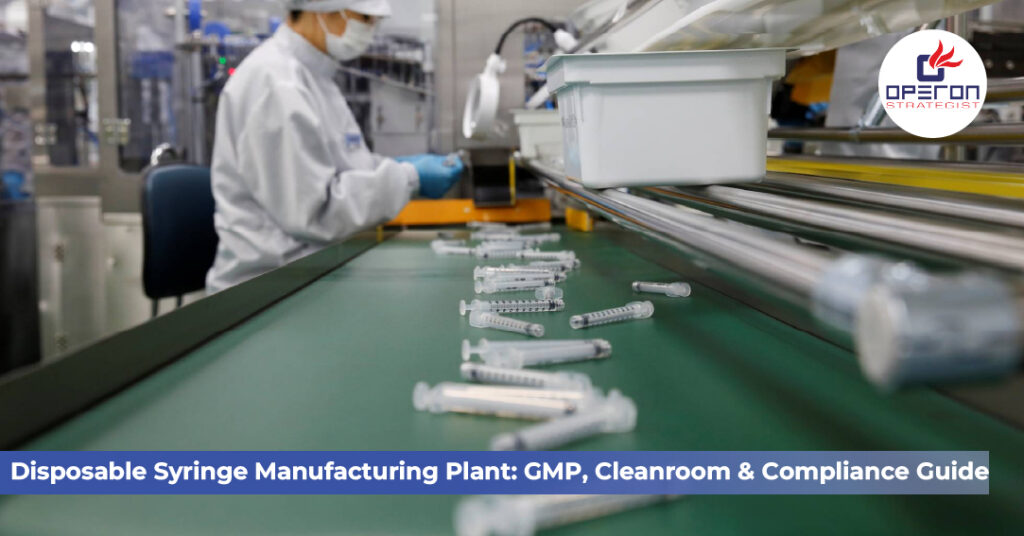
Setting up a disposable syringe manufacturing plant is more than buying machines or hiring staff—it begins with a well-designed plant layout. For manufacturers, the disposable syringe manufacturing plant layout forms the backbone of GMP compliance, cleanroom readiness, audit success, and scalable production.
In 2026, regulatory authorities like the US FDA, CDSCO, BIS, CE, and SFDA are scrutinizing facility design, material flow, segregation, and contamination control. Even experienced manufacturers face delays and audit observations due to poor layout planning.
This guide explains how to design a GMP-compliant, cleanroom-ready disposable syringe manufacturing plant layout and why consulting an expert is critical for long-term operational and regulatory success.
Looking For a Medical Device Regulatory Consultant?
Why a Disposable Syringe Manufacturing Plant Layout Matters
Disposable syringes are high-volume, high-risk medical devices that directly impact patient safety. Regulatory authorities expect your disposable syringe manufacturing plant to demonstrate:
- Controlled material and personnel flow
- Segregation of clean and non-clean areas
- Prevention of mix-ups and cross-contamination
- Cleanroom-ready design for critical processes
- Traceability and audit readiness
A poorly designed disposable syringe manufacturing plant layout can lead to:
- GMP non-compliance and FDA 483 observations
- Delays in BIS certification
- Increased rejection rates and rework
- Inefficient production and higher operational costs
Key GMP Requirements for a Disposable Syringe Manufacturing Plant
A compliant disposable syringe manufacturing plant layout must align with GMP principles, ISO 13485, and country-specific regulations.
Logical Process Flow
Design your plant with unidirectional workflow, starting from:
- Raw material receipt
- Component manufacturing (barrel, plunger, gasket)
- Assembly
- Sterilization (if required)
- Packaging and dispatch
Avoid cross-traffic, which is a common regulatory red flag.
Material & Personnel Segregation
GMP mandates separate pathways for:
- Raw materials
- Finished goods
- Rejected or quarantined products
- Personnel entry and exit
A well-planned disposable syringe manufacturing plant layout minimizes contamination and audit risks.
Dedicated Zones for Critical Operations
A typical disposable syringe manufacturing plant should clearly define zones for:
- Injection molding
- Assembly
- Needle fixing & siliconization
- Sterile or controlled environments
- Primary & secondary packaging
Each zone must be designed based on risk classification.
Cleanroom Layout Design for Disposable Syringes (ISO 14644)
Not every syringe process requires the same cleanroom classification, but regulators expect risk-based cleanroom design.
Key considerations for cleanroom-ready layouts include:
- ISO Class 7 or 8 for assembly
- Controlled HVAC systems and pressure differentials
- Gowning rooms and airlocks
- Defined material and personnel entry points
A properly designed cleanroom ensures:
- Compliance with ISO 14644
- Lower bioburden and contamination risks
- Easier facility validation and qualification
Common Layout Mistakes in Syringe Manufacturing Plants
Many disposable syringe manufacturing plants face delays due to:
- Mixing raw material and finished goods movement
- Lack of segregation for rejected products
- Improper cleanroom zoning
- Congested production lines
- No provision for future capacity expansion
These errors often require costly redesigns after regulatory inspections.
Planning a GMP-compliant disposable syringe manufacturing plant?
How Operon Strategist Supports Disposable Syringe Manufacturers
Operon Strategist provides end-to-end consulting for disposable syringe manufacturing plants, including:
- GMP-compliant plant layout design
- Cleanroom zoning & classification
- Regulatory-ready facility planning
- Alignment with FDA, CE, BIS, and CDSCO
- Integration with turnkey manufacturing projects
Our designs ensure your disposable syringe manufacturing plant is audit-ready, scalable, and production-efficient, reducing approval timelines and operational risk.
FAQs
What is a disposable syringe manufacturing plant layout?
A disposable syringe manufacturing plant layout is a planned arrangement of production zones, equipment, material flow, and cleanroom areas that ensures GMP compliance, operational efficiency, and regulatory readiness.
Why is GMP compliance important in syringe plant layout?
GMP compliance ensures that the plant prevents contamination, maintains product quality, and meets global regulatory standards like FDA, CE, and BIS.
How do cleanrooms affect disposable syringe manufacturing?
Cleanrooms maintain sterile conditions, control contamination, and ensure critical processes like assembly and needle fixing comply with ISO 14644 and GMP requirements.
Can a poorly designed syringe plant layout cause audit failures?
Yes, inadequate segregation, workflow issues, or improper cleanroom zoning can lead to FDA 483 observations, BIS delays, and CE/FDA audit non-compliance.
How can Operon Strategist help with syringe plant layout?
Operon Strategist provides end-to-end consulting, including GMP-compliant layouts, cleanroom design, regulatory-ready facilities, and turnkey project support for disposable syringe manufacturing.