
Assistant Manager
Projects & Process Engineering | 14 Years of Experience
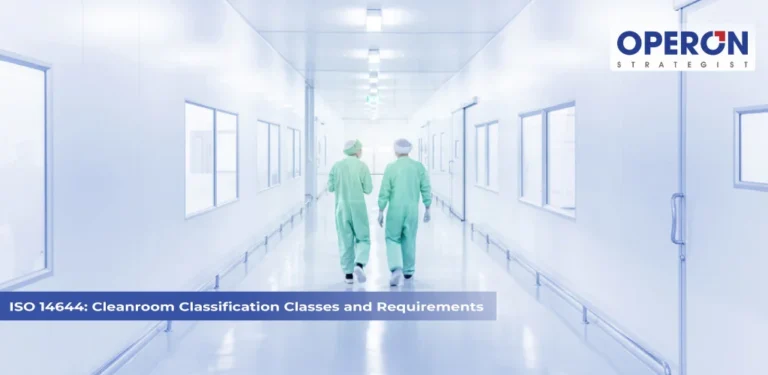
Clean room classification for medical device manufacturing is essential when manufacturing products that require controlled contamination levels. ISO 14644 provides an internationally recognized framework for classifying and monitoring airborne particle cleanliness in cleanrooms and controlled environments.
For medical device manufacturers, selecting the appropriate cleanroom classification is only one part of compliance. Facility design, airflow, pressure differentials, personnel gowning, cleaning, monitoring, maintenance, and environmental controls must also be considered.
This guide explains ISO 14644-1, cleanroom classification classes, particle concentration limits, and the practical requirements manufacturers should consider when designing and operating a medical device cleanroom.
What Is a Cleanroom?
A cleanroom is a controlled environment where airborne particle concentration is regulated and where other parameters, such as temperature, humidity, and pressure, may also be controlled according to the process requirements.
Under ISO 14644-1:2015, air cleanliness is classified according to the concentration of airborne particles within specified particle-size ranges. The standard considers particle sizes from 0.1 µm to 5 µm for classification purposes. (ISO)
Cleanrooms are commonly used in:
- Medical device manufacturing
- Pharmaceutical manufacturing
- Biotechnology
- Healthcare and laboratory operations
- Semiconductor manufacturing
- Aerospace
- Optics and precision engineering
For medical device manufacturers, cleanroom controls can help reduce contamination risks during processes such as sterile manufacturing, assembly, packaging, and other contamination-sensitive operations.
What Is ISO 14644-1?
ISO 14644-1:2015 specifies the classification of air cleanliness in cleanrooms, clean zones, and certain separative devices based on airborne particle concentration.
It uses airborne particle counters to determine the concentration of particles at designated sampling locations. Importantly, ISO 14644-1 classifies particle concentration; it does not by itself characterize whether particles are viable microorganisms, chemically hazardous substances, or other specific contaminants. (ISO)
The ISO 14644 series addresses different aspects of cleanroom management, including:
Standard | Main subject |
ISO 14644-1 | Air cleanliness classification by particle concentration |
ISO 14644-2 | Monitoring of cleanroom performance |
ISO 14644-3 | Cleanroom test methods |
ISO 14644-4 | Design, construction and start-up |
ISO 14644-5:2025 | Cleanroom operations |
ISO 14644-7 | Separative devices |
ISO 14644-8 | Air cleanliness by chemical concentration |
ISO 14644-9 | Surface cleanliness by particle concentration |
ISO 14644-10 | Surface cleanliness by chemical concentration |
What Are the ISO 14644 Cleanroom Classes?
ISO 14644-1 defines nine cleanroom classes, ISO Class 1 through ISO Class 9. ISO Class 1 represents the highest level of air cleanliness, while ISO Class 9 represents the least stringent classification within the ISO cleanroom classification system.
The classification is based on maximum permitted airborne particle concentrations at specified particle sizes.
ISO Cleanroom Classification at a Glance
ISO Class | Relative cleanliness | Maximum particles ≥0.5 µm/m³ |
ISO Class 1 | Highest | 1 |
ISO Class 2 | Very high | 4 |
ISO Class 3 | Very high | 35 |
ISO Class 4 | High | 352 |
ISO Class 5 | High | 3,520 |
ISO Class 6 | Moderate | 35,200 |
ISO Class 7 | Moderate | 352,000 |
ISO Class 8 | Lower | 3,520,000 |
ISO Class 9 | Lowest ISO class | 35,200,000 |
These values are part of the ISO 14644-1 classification framework. The complete classification table contains limits for multiple particle sizes and should be used when formally classifying a facility.
Important: ISO Class 5, for example, should not simply be interpreted as “a room with 3,520 particles.” The limit applies specifically to particles equal to or greater than 0.5 µm per cubic metre of air under the applicable classification conditions.
What Is the Best Cleanroom Classification for Medical Devices?
There is no single ISO class required for every medical device manufacturing process.
The appropriate medical device clean room classification depends on the product, manufacturing process, contamination risk, sterilization strategy, packaging configuration, and applicable regulatory requirements.
For example, a manufacturer may need tighter environmental controls for:
- Sterile device assembly
- Aseptic processing
- Implantable devices
- Sterile packaging operations
- Critical surface preparation
- Processes where particulate contamination can affect product performance
Get expert guidance on ISO 14644 classification, facility layout, contamination control, and qualification.
What Are the Main Cleanroom Requirements?
Achieving an ISO classification requires more than installing HEPA filters. A properly designed cleanroom should control the factors that can influence contamination.
Key considerations include:
1. Airflow and Filtration
The HVAC system should be designed to deliver appropriately filtered air and support the required cleanliness level.
2. Pressure Differentials
Pressure relationships between rooms should be designed according to the contamination-control strategy and process requirements.
3. Temperature and Humidity
Environmental conditions should be controlled where they can affect personnel, equipment, materials, product quality, or process performance.
4. Personnel Control
People are a major source of particulate contamination. Access controls, training, gowning, and movement procedures are therefore essential.
5. Material Transfer
Materials entering the cleanroom should follow controlled transfer procedures to minimize contamination.
6. Cleaning and Maintenance
Cleaning schedules, methods, agents, equipment, and responsibilities should be documented and validated or verified as appropriate for the process.
Cleanroom Cleaning and Monitoring
Maintaining classification after initial qualification requires continuous operational control.
ISO 14644-2:2015 specifies minimum requirements for a monitoring plan related to airborne particle concentration and cleanroom performance.
A cleanroom monitoring programme can include:
- Airborne particle monitoring
- Pressure differential monitoring
- Temperature and humidity monitoring
- HEPA filter integrity testing
- Airflow testing
- Cleaning verification
- Environmental trend analysis
Cleaning procedures should define:
- Cleaning frequency
- Approved cleaning agents
- Cleaning equipment
- Cleaning sequence
- Personnel responsibilities
- Documentation requirements
- Corrective action for failures
ISO has also published ISO 14644-13:2026, addressing cleaning of surfaces to achieve defined levels of cleanliness in terms of particle and chemical concentration.
Cleanroom Qualification for Medical Device Manufacturing
Before a cleanroom is placed into routine production, manufacturers should establish that the facility can consistently achieve its specified environmental conditions.
A qualification programme may address:
- Facility and HVAC verification
- Airflow assessment
- Pressure differential verification
- HEPA filter integrity
- Airborne particle classification
- Temperature and humidity
- Recovery characteristics, where applicable
- Environmental monitoring
- Cleaning and operational controls
The exact tests and acceptance criteria should be determined according to the applicable ISO standards, facility design, intended use, and manufacturing process.
Common Cleanroom Compliance Mistakes
Medical device manufacturers commonly encounter problems when cleanroom design is separated from the actual manufacturing process.
Common mistakes include:
- Selecting an ISO class without performing a process-risk assessment.
- Treating ISO 14644 classification as equivalent to sterility assurance.
- Ignoring personnel and material movement.
- Inadequate cleaning procedures.
- Poor pressure cascade design.
- Insufficient environmental monitoring.
- Failure to maintain calibrated particle-counting equipment.
- Inadequate documentation of qualification and requalification activities.
A cleanroom classification certificate alone does not demonstrate that the entire manufacturing process is compliant.
Cleanroom Design Consultant for Medical Devices
Designing a medical device cleanroom requires coordination between facility engineering, manufacturing processes, quality requirements, contamination control, and regulatory expectations.
Operon Strategist can support medical device manufacturers with cleanroom design and manufacturing facility planning, including:
- Cleanroom classification assessment
- Facility layout planning
- HVAC and contamination-control strategy
- Personnel and material flow planning
- Cleanroom qualification strategy
- ISO 14644 compliance guidance
- Documentation and validation support
- Integration with medical device QMS requirements
Our approach helps manufacturers design cleanroom facilities around their actual manufacturing processes instead of relying on a generic cleanroom model.
Talk to Operon Strategist about your medical device manufacturing facility requirements.
FAQ's
What is ISO 14644-1?
ISO 14644-1:2015 is the international standard for classifying air cleanliness in cleanrooms and clean zones based on airborne particle concentration. (ISO)
How many ISO cleanroom classes are there?
ISO 14644-1 defines nine classes, from ISO Class 1 to ISO Class 9. ISO Class 1 represents the highest level of air cleanliness.
What ISO class is commonly used for medical device manufacturing?
There is no universal ISO class for all medical devices. The required classification depends on the product, process, contamination risk, and applicable regulatory requirements.
Does ISO 14644 guarantee sterility?
No. ISO 14644-1 addresses airborne particle cleanliness and does not by itself establish sterility or control all forms of biological contamination. (ISO)
What does ISO 14644-2 cover?
ISO 14644-2 specifies minimum requirements for a monitoring plan used to demonstrate cleanroom performance related to airborne particle concentration. (ISO)
Assistant Manager – Projects & Process Engineering | 14 Years of Experience
Medical device manufacturing professional specializing in manufacturing plant feasibility, facility and cleanroom planning, process development, machinery selection, and equipment qualification (DQ, IQ, OQ, PQ). His expertise includes project cost estimation, procurement planning, and process optimization in alignment with ISO 13485:2016.