
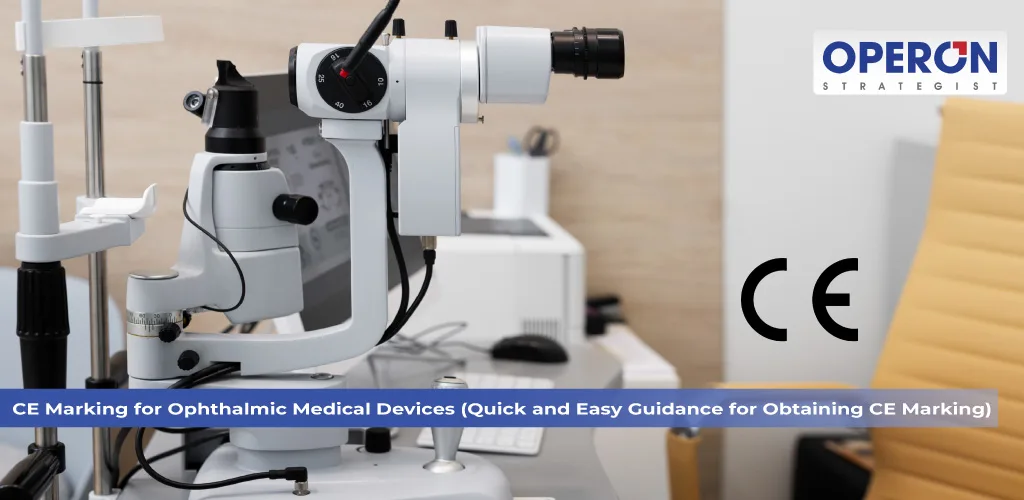
CE Marking for Ophthalmic Medical Devices (Quick and Easy Guidance for Obtaining CE Marking)
Ophthalmic medical devices are essential healthcare technologies used for diagnosing, monitoring, managing, and treating eye-related conditions and visual disorders. As the global ophthalmic industry continues to expand, manufacturers are increasingly targeting the European market due to its advanced healthcare infrastructure and growing demand for innovative eye care solutions.
However, entering the European Union medical device market requires strict compliance with the European Medical Device Regulation (EU MDR 2017/745), including mandatory CE marking certification.
CE marking demonstrates that a medical device complies with European safety, quality, and performance requirements, enabling manufacturers to legally market their products across the European Economic Area (EEA).
This comprehensive guide explains the importance of CE marking for ophthalmic medical devices, EU MDR compliance requirements, classification procedures, technical documentation, clinical evaluation, and how Operon Strategist supports manufacturers throughout the CE certification process.
Understanding Ophthalmic Medical Devices
Ophthalmic medical devices are specialized instruments, systems, and technologies used in the field of ophthalmology and eye care.
These devices assist healthcare professionals in:
- Diagnosing eye diseases
- Monitoring vision disorders
- Performing ophthalmic surgeries
- Correcting visual impairments
- Improving patient outcomes
Examples of Ophthalmic Medical Devices
Common ophthalmic devices include:
- Diagnostic Devices
- Ophthalmoscopes
- Slit lamp biomicroscopes
- Retinal imaging systems
- Refractive diagnostic tools
- Surgical Devices
- Vitrectomy systems
- Ophthalmic laser systems
- Cataract surgery instruments
- Vision Correction Devices
- Contact lenses
- Corneal inlays
- Intraocular lenses
Growing Demand for Ophthalmic Medical Devices in Europe
The European ophthalmic medical device market continues to grow rapidly due to several healthcare and demographic factors.
According to industry market research, demand for ophthalmic devices in Europe is increasing because of:
- Aging populations
- Rising prevalence of eye disorders
- Increased diabetic eye complications
- Technological advancements
- Growing awareness of vision care
The European healthcare system places strong emphasis on:
- Patient safety
- Clinical effectiveness
- Regulatory compliance
- Product quality
This makes CE marking essential for manufacturers seeking successful market entry.
What is CE Marking for Medical Devices?
CE marking is a mandatory conformity certification required for medical devices sold in the European Union and European Economic Area.
The CE mark indicates that a device complies with:
- EU safety standards
- Performance requirements
- Risk management obligations
- Regulatory compliance frameworks
For ophthalmic medical devices, CE marking demonstrates that the product meets the requirements established under:
- EU MDR 2017/745
- EU IVDR 2017/746 (for applicable IVD devices)
Why is CE Marking Important for Ophthalmic Medical Devices?
CE marking is critical for manufacturers because it enables legal commercialization within the European market.
- Legal Market Access
Without CE marking, ophthalmic medical devices cannot legally be marketed or distributed within the European Union. - Demonstrates Product Safety
CE certification confirms that the device satisfies essential safety and performance requirements. - Improves Market Credibility
Healthcare providers and distributors prefer CE-certified products due to regulatory assurance and quality confidence. - Supports Global Expansion
Many international markets recognize CE marking as evidence of regulatory reliability and quality compliance. - Enhances Patient Trust
CE-compliant products improve confidence among:- Surgeons
- Ophthalmologists
- Hospitals
- Patients
EU MDR Requirements for Ophthalmic Medical Devices
The European Commission introduced the Medical Device Regulation (EU MDR 2017/745) to strengthen medical device oversight across Europe.
Manufacturers must comply with several regulatory obligations before obtaining CE marking.
Device Classification
Under EU MDR, ophthalmic devices are classified according to:
- Intended use
- Risk level
- Degree of invasiveness
- Duration of body contact
The classification determines:
- Regulatory pathway
- Clinical evidence requirements
- Notified Body involvement
Learn more Medical Device Classifications with Example.
Technical Documentation
Manufacturers must prepare comprehensive technical documentation, including:
- Device description
- Design information
- Risk management files
- Performance evaluation
- Labeling and IFU
- Manufacturing processes
Clinical Evaluation
Clinical evaluation is a critical MDR requirement.
Manufacturers must demonstrate:
- Safety
- Clinical performance
- Benefit-risk analysis
- Clinical evidence compliance
Risk Management
Risk management must align with recognized international standards such as:
- ISO 14971
This process identifies and mitigates potential product risks.
Quality Management System (QMS)
Manufacturers should implement an effective QMS aligned with:
- ISO 13485
A compliant QMS ensures:
- Product consistency
- Process control
- Regulatory readiness
Post-Market Surveillance (PMS)
EU MDR requires continuous monitoring of device performance after market launch.
PMS activities include:
- Complaint handling
- Vigilance reporting
- Trend analysis
- Corrective actions
Steps to Obtain CE Marking for Ophthalmic Medical Devices
Manufacturers generally follow these key steps:
Step 1: Determine Device Classification
Identify the correct MDR classification based on intended use and risk profile.
Step 2: Implement Quality Management System
Establish ISO 13485-compliant quality processes and documentation systems.
Step 3: Prepare Technical Documentation
Compile regulatory files supporting device safety and performance.
Step 4: Conduct Clinical Evaluation
Collect clinical data and evidence demonstrating compliance.
Step 5: Perform Conformity Assessment
Depending on classification, a Notified Body may review the product and quality system.
Step 6: Affix CE Marking
Once compliance is confirmed, manufacturers may affix the CE mark and commercialize the device in Europe.
Challenges in CE Marking for Ophthalmic Devices
Manufacturers frequently encounter challenges such as:
- Complex MDR requirements
- Extensive technical documentation
- Clinical evidence expectations
- Classification uncertainties
- Notified Body delays
- Regulatory updates
Working with experienced regulatory consultants significantly improves approval efficiency.
Why Choose Operon Strategist?
Operon Strategist is a trusted medical device regulatory consulting company specializing in global compliance solutions for medical device manufacturers.
With extensive expertise in ophthalmic devices and EU MDR compliance, Operon Strategist supports manufacturers through every stage of the CE marking process.
How Operon Strategist Supports CE Marking Compliance
EU MDR Regulatory Consulting
- MDR pathway analysis
- Regulatory strategy planning
- Compliance gap assessment
Technical Documentation Support
- Technical file preparation
- Risk management documentation
- Clinical evaluation reports
Quality Management System Implementation
- ISO 13485 implementation
- SOP development
- Internal audit support
Clinical Evaluation Assistance
- Clinical data review
- Literature evaluation
- Performance assessment support
CE Marking Submission Guidance
- Notified Body coordination
- Submission management
- Query response support
Benefits of Working with Operon Strategist
Manufacturers benefit from:
- Faster regulatory readiness
- Reduced compliance risks
- Strong technical expertise
- End-to-end consulting support
- Improved approval success rates
Planning to launch ophthalmic medical devices in Europe? Partner with Operon Strategist for complete CE marking support.
Importance of CE Compliance for Long-Term Growth
CE marking not only enables European market access but also strengthens:
- Brand credibility
- Distributor confidence
- International competitiveness
- Patient safety assurance
Manufacturers that invest in regulatory compliance gain long-term advantages in global healthcare markets.
Conclusion
Ophthalmic medical devices play a vital role in modern eye care by enabling accurate diagnosis, effective treatment, and advanced surgical procedures.
To access the European market, manufacturers must comply with EU MDR requirements and obtain CE marking certification. This process involves:
- Device classification
- Technical documentation
- Clinical evaluation
- Risk management
- Quality management implementation
Although the regulatory pathway can be complex, partnering with experienced consultants simplifies the process significantly.
Operon Strategist provides comprehensive CE marking support for ophthalmic medical device manufacturers, helping companies achieve compliance, expand globally, and improve market success.
FAQs on CE Marking for Ophthalmic Medical Devices
What is CE marking for ophthalmic medical devices?
CE marking indicates that an ophthalmic medical device complies with European Union safety, quality, and performance requirements.
Is CE marking mandatory in Europe?
Yes, CE marking is mandatory for medical devices sold within the European Union and European Economic Area.
Which regulation governs CE marking for medical devices?
Medical devices are regulated under EU MDR 2017/745.
Why is CE marking important for ophthalmic devices?
It ensures regulatory compliance, legal market access, patient safety, and product credibility.
What documents are required for CE marking?
Manufacturers typically need:
- Technical documentation
- Clinical evaluation reports
- Risk management files
- Quality management records
Is ISO 13485 required for CE marking?
ISO 13485 is not legally mandatory but is strongly recommended and widely expected for compliance.
How does Operon Strategist support CE marking?
Operon Strategist provides MDR consulting, technical documentation support, ISO 13485 implementation, and CE submission guidance.