
Dental Implants Manufacturing: Process, Design & Regulatory Compliance
Dental implants have become the gold standard for permanent tooth replacement, driving strong demand across clinical and cosmetic dentistry. In India and globally, rising dental disorders, aging populations, and increasing preference for long-term solutions are accelerating adoption.
However, dental implant manufacturing is not conventional machining—it is a high-precision, high-risk medical device domain where success depends on controlled design, validated surface engineering, biocompatible materials, and strict regulatory compliance.
This guide provides a practical and technically sound overview of dental implant manufacturing—covering process, design, materials, plant setup, machinery, cost, and regulatory pathways.
What are Dental Implants and How Do They Work?
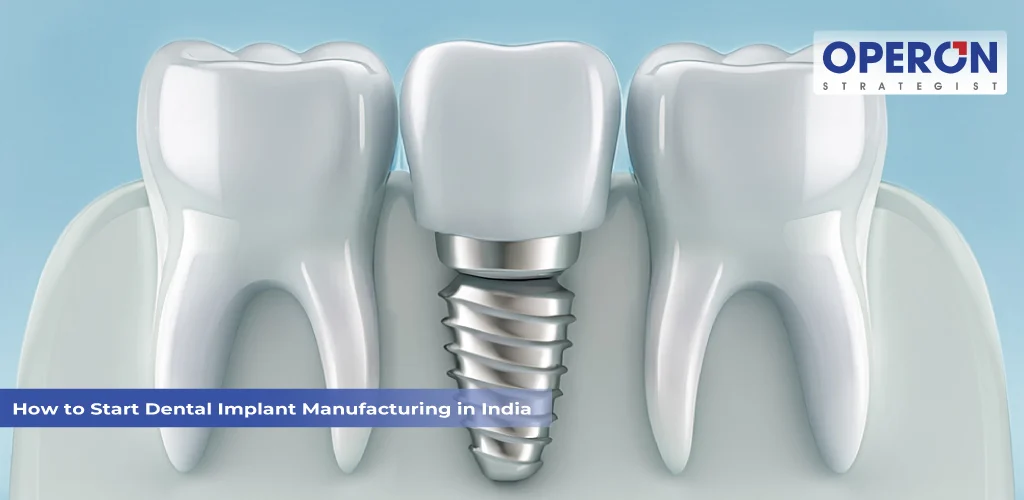
Dental implants are surgically placed devices that act as artificial tooth roots to support prosthetic restorations.
Core components:
- Implant Fixture: Threaded body placed in bone (titanium or zirconia)
- Abutment: Connector between implant and crown
- Crown: Visible prosthetic tooth
They function through osseointegration, where bone integrates with the implant surface to provide long-term stability.
Why is Dental Implant Manufacturing a High-Growth but High-Barrier Segment?
Key drivers:
- Rising tooth loss and periodontal disease
- Growth in cosmetic dentistry
- Increasing patient awareness
- Advancements in implant systems
Execution reality:
This is not a volume-driven market. It favors manufacturers with:
- Precision engineering capability
- Validated surface treatment processes
- Strong regulatory systems
What Design Factors are Critical in Dental Implants?
Implant performance depends heavily on design:
- Thread Design: Influences primary stability and load distribution
- Surface Roughness: Typically Ra ~1–2 µm for optimal osseointegration
- Implant Shape: Tapered vs parallel
- Connection Type: Internal hex, conical, Morse taper
- Diameter & Length: Based on anatomical and loading conditions
Technical insight:
Design and surface characteristics together determine implant success more than material alone.
What Materials Are Used in Dental Implant Manufacturing?
Primary materials:
Titanium (Grade 4 / Ti-6Al-4V – ASTM F67/F136)
- Excellent biocompatibility
- High fatigue strength
- Proven long-term performance
Zirconia (Y-TZP)
- Metal-free, aesthetic
- Suitable for specific clinical indications
Other materials (limited use):
- Tantalum
- Cobalt-chromium alloys
Standards:
- ISO 10993 (biocompatibility)
- ISO 13485 (quality management)
What is the Step-by-Step Dental Implant Manufacturing Process?
- Raw Material Control
- Certified medical-grade material
- Full traceability
- CNC Machining (Critical)
- Swiss-type CNC turning
- Micron-level tolerances (typically ±5–10 µm)
- Thread and geometry precision
- Surface Treatment (Most Critical Stage)
- Grit blasting and acid etching
- Target surface roughness: Ra ~1–2 µm
- Cleaning & Passivation
- Multi-stage ultrasonic cleaning
- Contaminant removal
- Corrosion resistance enhancement
- Surface Modification (ifrequired)
- Anodizing or specialized coatings
- Laser Marking
- Unique Device Identification (UDI)
- Traceability
- Sterilization & Packaging
- Gamma or EO sterilization
- Sterility Assurance Level (SAL): 10⁻⁶
- Packaging as per ISO 11607
What Cleanroom and Facility Requirements Are Needed?
- ISO Class 7 or 8 cleanroom (based on process stage)
- Segregated zones for machining, cleaning, and packaging
- Controlled material and personnel flow
Key systems:
- HVAC with HEPA filtration
- Environmental monitoring
- Temperature and humidity control
What Machinery is Required for Dental Implant Manufacturing?
Core machinery:
- Swiss-type CNC turning machines
- 5-axis CNC milling machines
- EDM machines
- Laser marking systems
Supporting equipment:
- Ultrasonic cleaning systems
- Surface treatment systems
- Passivation equipment
Quality control:
- CMM
- Surface roughness testers
- Optical inspection systems
What are the Regulatory Requirements for Dental Implant Manufacturing?
Dental implants are moderate to high-risk devices.
India (CDSCO):
- Typically Class C or D
- Manufacturing license required
Global pathways:
- USA: FDA 510(k) or PMA
- Europe: CE marking under EU MDR
Key standards:
- ISO 13485
- ISO 10993
- ISO 14971
- ISO 11607
Additional requirements:
- UDI implementation
- Technical documentation / design dossier
- Post-market surveillance
What is the Cost of Setting Up a Dental Implant Manufacturing Unit?
Major cost drivers:
- CNC machinery (largest component)
- Surface treatment systems
- Cleanroom setup
- Quality control equipment
- Regulatory and validation activities
Indicative distribution:
- Machinery: 40–50%
- Facility: 20–25%
- Validation & regulatory: 15–20%
- Others: 10–15%
What are the Common Failure and Risk Factors?
- Inconsistent surface roughness
- Contamination during manufacturing
- Improper sterilization (failure to achieve SAL 10⁻⁶)
- Machining inaccuracies
Practical insight:
Surface treatment and cleanliness are the most critical contributors to implant success.
How to Start Dental Implant Manufacturing Business?
Step-by-step approach:
- Define implant design
- Select certified materials
- Invest in precision machinery
- Develop GMP-compliant facility
- Implement ISO 13485 QMS
- Validate processes (IQ/OQ/PQ)
- Prepare regulatory documentation
How Can Operon Strategist Support Dental Implant Manufacturing Setup?
Operon Strategist provides:
- Plant layout and facility design
- Cleanroom setup guidance
- Machinery selection support
- ISO 13485 implementation
- Regulatory documentation and approvals
- Process validation and inspection readiness
Conclusion: What Defines Success in Dental Implant Manufacturing?
Dental implant manufacturing is a precision-driven and compliance-intensive segment.
Success depends on:
- Tight machining tolerances
- Controlled surface engineering
- Biocompatibility and sterility assurance
- Strong regulatory systems
Final insight:
Sustainable success is achieved through process control, validation, and regulatory alignment, not just production capability.
FAQs
What materials are used in dental implants?
Titanium and zirconia are the most commonly used materials.
What is the most critical manufacturing step?
Surface treatment and cleaning are critical for osseointegration.
What certifications are required?
What materials are used in IV set manufacturingISO 13485, ISO 10993, ISO 14971, along with regulatory approvals.
What machines are required?
CNC machines, milling systems, laser marking, and surface treatment equipment.
Is dental implant manufacturing profitable?
Yes, with the right technical capability and regulatory compliance.