
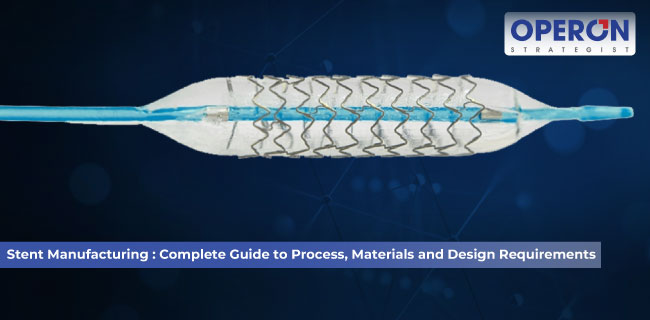
Stent Manufacturing: Complete Guide to Process, Materials and Design Requirements
Stent manufacturing plays a vital role in modern healthcare, enabling minimally invasive treatment for cardiovascular and vascular conditions. These small yet highly engineered medical devices are used to restore and maintain blood flow, helping prevent life-threatening conditions such as heart attacks and strokes.
As medical technology continues to evolve, stent manufacturing has become more advanced, requiring precision engineering, strict quality control, and deep understanding of material science. For manufacturers, success in this field depends on combining innovation with regulatory compliance and validated production processes.
Regulatory Excellence for Global Medical Device Markets
What is a Stent and Why is it Important?
A stent is a small, tube-like medical device that is inserted into narrowed or blocked blood vessels to keep them open. It supports the vessel walls and ensures continuous blood flow.
Key functions of a stent include:
- Restoring blood flow in blocked arteries
- Reducing the risk of heart attacks and strokes
- Supporting minimally invasive treatment procedures
- Improving patient recovery time compared to open surgeries
Stents have become essential in interventional procedures due to their effectiveness and reduced patient risk.
What are the Different Types of Stents?
What are the Different Types of Stents
Stents are designed for specific medical applications. Understanding the types helps in planning the manufacturing process.
Common types of stents include:
- Coronary Stents
Used in heart arteries to treat coronary artery disease - Peripheral Stents
Used in blood vessels outside the heart to treat peripheral artery disease - Esophageal Stents
Used to keep the esophagus open in case of blockages - Biliary Stents
Help maintain bile flow in blocked bile ducts - Ureteral Stents
Used in the urinary tract to relieve obstructions
Each type requires specific design considerations and material selection.
What Materials are Used in Stent Manufacturing?
Material selection is a critical factor in stent manufacturing as it directly impacts performance, flexibility, and biocompatibility.
Common materials include:
- Metals:
Stainless steel
Cobalt-chromium alloys
Nickel-titanium (Nitinol)
- Metals:
- Polymers:
Nylon
Polyurethane
- Polymers:
The choice of material depends on factors such as flexibility, strength, corrosion resistance, and compatibility with the human body.
What is the Stent Manufacturing Process?
Stent manufacturing involves high-precision processes to ensure safety, reliability, and performance.
Step-by-step manufacturing process:
- Material Selection
Selection of appropriate metal or polymer based on application - Laser Cutting
Precision cutting of stent patterns to allow expansion and flexibility - Electrochemical Polishing
Smoothing surfaces to remove imperfections and improve biocompatibility - Cleaning and Sterilization
Removal of contaminants and preparation for medical use - Inspection and Quality Control
Rigorous testing to ensure compliance with standards - Packaging
Sterile packaging to maintain product integrity until use
Each stage must be validated to ensure consistent quality and regulatory compliance.
What are the Key Design Considerations in Stent Manufacturing?
Before starting stent manufacturing, several design factors must be carefully evaluated.
Important design considerations:
- Flexibility and radial strength
- Biocompatibility of materials
- Expansion capability
- Resistance to corrosion and fatigue
- Compatibility with delivery systems
A well-designed stent ensures both performance and patient safety.
What are the Common Challenges in Stent Manufacturing?
Manufacturers often face challenges due to the complexity of the product and strict regulatory expectations.
Key challenges include:
- Achieving precise laser cutting without defects
- Maintaining consistency in micro-level design
- Ensuring surface finish and biocompatibility
- Meeting stringent quality and regulatory standards
- Validating sterilization and packaging processes
Addressing these challenges requires a combination of technical expertise and process control.
How to Improve Efficiency in Stent Manufacturing?
Practical approaches:
- Use advanced manufacturing technologies for precision
- Implement strong quality management systems
- Validate all critical processes
- Ensure proper documentation and traceability
- Conduct regular internal audits
These steps help improve product quality and reduce rejection rates.
How Can Operon Strategist Support Your Stent Manufacturing Project?
Setting up a compliant and efficient stent manufacturing process requires expertise in both regulatory and technical domains. Operon Strategist helps streamline this process with practical, end-to-end guidance.
Key support areas:
- Manufacturing plant layout design
- Cleanroom setup guidance
- Quality management system implementation
- Process validation and documentation
- Turnkey project support
With the right guidance, manufacturers can reduce delays, avoid compliance issues, and build a reliable and scalable manufacturing setup.
FAQ'S
What are the critical design considerations before starting stent manufacturing?
Key factors include flexibility, strength, biocompatibility, and expansion capability
Why is material selection important in stent manufacturing?
Material affects performance, durability, and compatibility with the human body
What quality control tests are performed during stent manufacturing?
Tests include dimensional inspection, surface analysis, and performance validation
What Class of Clean room is required for the Stent manufacturing?
Stent manufacturing follows a graded cleanroom approach: Primary packing and crimping are performed in ISO Class 5, washing, ultrasonic cleaning and drug coating in ISO Class 7, assembly, wrapping and packaging in ISO Class 8, and processes like laser cutting, descaling, annealing, and electro polishing are carried out in ISO Class 9 to ensure appropriate contamination control at each stage.