
FDA 21 CFR Part 820 Quality System Regulation
An Overview
FDA 21 CFR Part 820 is a crucial regulation from the FDA that specifies current Good Manufacturing Practice (cGMP) requirements for quality systems. These guidelines establish a Quality Management System (QMS) to ensure the delivery of safe, effective, and compliant products. Our QMS solutions are designed to help you align with the latest regulations and standards, ensuring your products meet the highest quality and regulatory standards.
What is FDA 21 CFR Part 820 - Quality System Regulation?
The U.S. FDA’s 21 CFR Part 820, also known as the Quality System Regulation (QSR), establishes the mandatory standards for the entire lifecycle of a medical device—from initial design and manufacturing to packaging, labeling, installation, and service.
This regulation applies to all manufacturers marketing medical devices in the United States, regardless of their location. Adherence to these standards is a prerequisite for FDA market approval; failure to maintain compliance can lead to severe regulatory consequences, including FDA Form 483 observations, warning letters, mandatory recalls, import bans, or formal legal action.
FDA 21 CFR Part 820 (QSR) vs. ISO 13485: Understanding the Key Differences
While both FDA QSR and ISO 13485 serve as foundational frameworks for Quality Management Systems (QMS) in the medical device industry, they differ significantly in their legal weight, geographic scope, and enforcement mechanisms.
1. FDA QSR (21 CFR Part 820)
- Legal Mandate: This is a mandatory federal regulation. Any manufacturer—domestic or international—intending to sell medical devices in the United States must comply with these requirements.
- Core Focus: Prioritizes device safety and effectiveness, with rigorous requirements for post-market surveillance, complaint handling, and product traceability.
- Enforcement: Compliance is verified through direct inspections by FDA investigators. Failure to comply can lead to legal action, including Warning Letters, product seizures, or injunctions.
2. ISO 13485
- International Standard: A voluntary, internationally recognized standard for medical device quality management. It is often a prerequisite for entering global markets, including the EU and Canada.
- Core Focus: Emphasizes process consistency, comprehensive documentation, and risk management throughout the product lifecycle.
Certification: Compliance is verified by third-party auditing bodies (Notified Bodies or Registrars) who issue certifications. While it facilitates global trade, ISO 13485 certification does not grant automatic compliance with U.S. FDA regulations.
FDA QSR Compliance for Medical Device Manufacturers:
21 CFR Part 820 is part of the FDA’s Current Good Manufacturing Practices (CGMP) for medical device manufacturers. It comes under Section 520(f) of the Federal Food, Drug, and Cosmetic Act.
This regulation ensures manufacturers consistently produce medical devices that meet safety, performance, and regulatory specifications.
What Are the Steps to Comply with 21 CFR Part 820 QMS?
Here are the essential steps for achieving full compliance:
- Understand Regulatory Requirements: Manufacturers must fully read and interpret 21 CFR 820 along with FDA guidance documents.
- Develop a QMS Aligned With Part 820: Create QMS policies, procedures, SOPs, quality plans, and documentation required under QSR.
- Implement the QMS Across the Organization: Ensure every department—from design to distribution—follows QMS procedures.
- Conduct Internal Quality Audits: Regular audits help identify gaps, weaknesses, or non-conformities in the system.
- Establish CAPA System: Implement corrective and preventive actions to resolve issues and avoid recurrence.
- Train Employees on QSR Requirements: All staff should understand their quality responsibilities.
- Monitor & Measure QMS Effectiveness: Ongoing evaluation ensures continuous improvement.
- Obtain Certification (If Required): A third-party audit can validate your QMS compliance with 21 CFR Part 820.
Following these steps ensures strong compliance and supports FDA approvals.
Why Should you Care About 21 CFR Part 820?
Medical device manufacturers must adhere to 21 CFR Part 820 regulations to avoid potential issues during inspections. Failing to meet these standards can result in an FDA warning letter, which can severely damage your reputation and adversely affect market performance. When importing devices from the U.S. to the U.S. market, it’s essential to ensure they comply with Quality System Regulation (QSR) requirements to avoid these risks.
Our Role in FDA 21 CFR Part 820 – Quality System Regulations:
Operon Strategist assists medical device manufacturers with end-to-end support:
- Conducts gap analysis to evaluate the current QMS status.
- Provides 21 CFR 820 training and documentation support.
- Performs mock audits to assess QMS implementation and readiness for FDA inspection.
- Provides post-inspection guidance to close non-conformities.
- Ensures manufacturers build strong QMS systems aligned with FDA requirements.
Why Choose Operon Strategist?
Operon Strategist is a medical device regulatory consultant for the last 12 years. We can completely assist you for FDA 21 CFR Part 820 Quality System Regulations for your medical device as per US FDA norms
Operon strategist is also a medical device regulatory consultant who helps to set up manufacturing units for different medical device (Turnkey solutions), all regulatory approvals like US FDA 510(k) registration, European CE marking, SFDA, EDA and UKCA registration. We have a global presence in 32 countries.
For more details, please contact us on
FAQ
What is FDA 21 CFR Part 820?
FDA 21 CFR Part 820, also known as the Quality System Regulation (QSR), establishes the requirements for medical device manufacturers to ensure their products meet safety and efficacy standards before entering the U.S. market.
Who needs to comply with FDA 21 CFR Part 820?
All medical device manufacturers, including those in Costa Rica exporting to the U.S., must comply with FDA 21 CFR Part 820 to meet regulatory requirements and avoid enforcement actions such as warning letters or recalls.
How does Operon Strategist help with FDA 21 CFR Part 820 compliance?
Operon Strategist assists medical device manufacturers with gap analysis, QMS documentation, internal audits, risk management, and preparation for FDA inspections to ensure full compliance with 21 CFR Part 820.
What are the key elements of FDA 21 CFR Part 820?
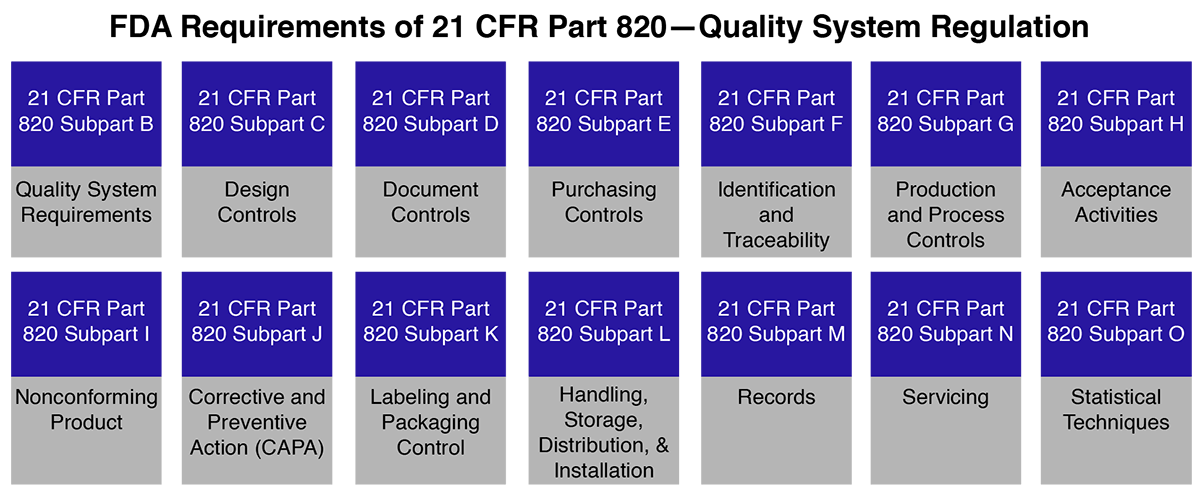
Key elements of FDA 21 CFR Part 820 include design controls, production and process controls, CAPA (Corrective and Preventive Actions), supplier management, complaint handling, and internal audits.
What is the difference between ISO 13485 and FDA 21 CFR Part 820?
ISO 13485 is an international QMS standard for medical devices, while FDA 21 CFR Part 820 is a U.S. regulatory requirement. Compliance with ISO 13485 helps with FDA QSR compliance, but additional steps may be needed to meet FDA expectations.