Planning CE Marking for Your Medical Device?
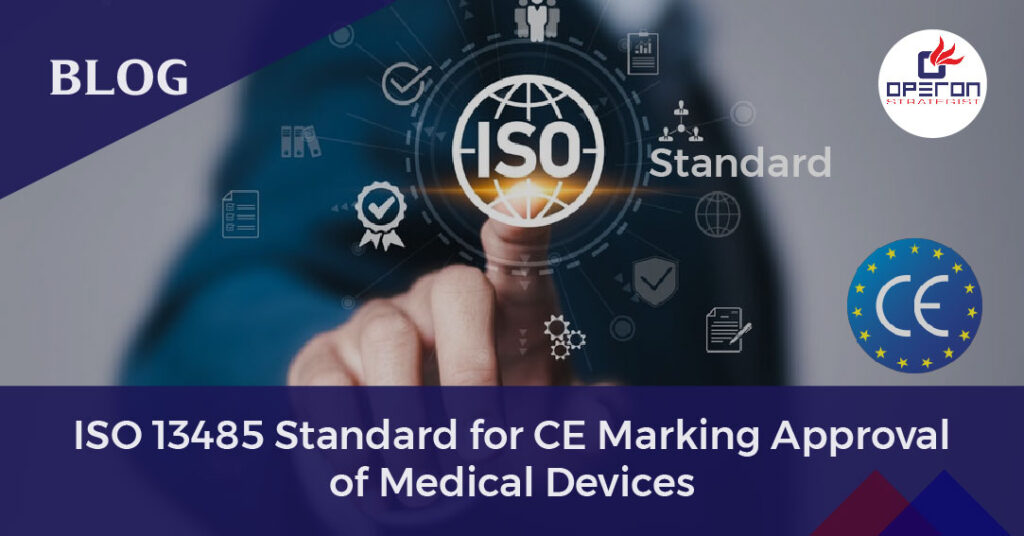
ISO 13485 plays an important role in establishing a quality management system for medical device manufacturers seeking CE marking. The standard helps manufacturers implement controlled processes for design, production, risk management, and regulatory compliance.
Companies planning to enter the European market must demonstrate that their devices meet safety and performance requirements defined under European medical device regulations. Implementing an ISO 13485 compliant quality management system helps support this process.
Operon Strategist supports global medical device manufacturers with ISO 13485 implementation and CE marking documentation to help accelerate regulatory approval.
Need guidance for CE marking of your medical device?
Contact our regulatory experts to understand the requirements for your product.
Looking For a Medical Device Regulatory Consultant?
Let’s have a word about your next project
Who Needs ISO 13485 for CE Marking?
ISO 13485 implementation is important for organizations involved in the design, manufacturing, or distribution of medical devices that plan to enter the European market.
This guidance is useful for:
- Medical device startups preparing for CE marking
- Manufacturers expanding into the European market
- Importers and private label medical device companies
- Companies upgrading compliance from MDD to MDR
- Manufacturers preparing for notified body audits
A properly implemented quality management system helps manufacturers maintain consistent product quality and meet regulatory expectations during conformity assessment.
Key Steps to Obtain CE Marking for Medical Devices
1. Determine the Medical Device Classification
Medical devices are classified based on the level of risk they pose to patients and users. Under European regulations, devices may fall under Class I, Class IIa, Class IIb, or Class III. The classification determines the level of regulatory scrutiny and whether a notified body assessment is required.
2. Identify Applicable European Regulations
Manufacturers must comply with relevant regulatory frameworks such as:
- EU Medical Device Regulation (MDR 2017/745)
- EU In Vitro Diagnostic Regulation (IVDR 2017/746)
These regulations define safety, performance, and documentation requirements for placing medical devices on the European market.
3. Implement ISO 13485 Quality Management System
ISO 13485 provides a framework for implementing a quality management system specific to medical device manufacturing. It helps establish processes for:
- design and development control
- risk management
- supplier management
- production and process validation
- complaint handling and post market surveillance
4. Prepare Technical Documentation
Technical documentation is required to demonstrate that the medical device complies with regulatory requirements. This documentation typically includes:
- device description
- design and development records
- risk management file
- clinical evaluation
- labeling and instructions for use
5. Conformity Assessment and CE Declaration
Depending on the classification of the medical device, manufacturers may need to undergo conformity assessment with a notified body. Once compliance is demonstrated, the manufacturer can issue a Declaration of Conformity and apply the CE marking.
Essential Standards And Regulations
It is critical to understand the legislation and standards governing medical devices. We’ll go over the most significant international standards and rules you need to know to better grasp how the CE certification process works.
- Regulation (EU) 2017/745.
- Directive: 2001/83/EC
- Regulation (EC) 276/2004
- Directive 2004/23/EC
- ISO 13485:2016
- ISO 14971:2019
Common Challenges in CE Marking for Medical Devices
Many medical device manufacturers experience delays in CE marking due to regulatory and documentation challenges. Some common issues include:
- incorrect device classification
- incomplete technical documentation
- gaps in ISO 13485 implementation
- difficulty preparing for notified body audits
- misunderstanding MDR regulatory requirements
Working with experienced regulatory consultants can help manufacturers avoid these challenges and prepare documentation efficiently.
ISO 13485 Standard Supports Getting Your Medical Product The CE Mark
An ISO 13485 Quality Management System for both goods and processes can allow manufacturers to have the necessary systems in place even before pursuing the CE mark for the European market because the conformity assessment procedures comprise both design verification and validation review.
Why Work With Operon Strategist?
Operon Strategist provides regulatory consulting services for medical device manufacturers worldwide. Our team supports organizations in establishing compliant quality management systems and preparing documentation required for regulatory approvals.
Our services include:
- ISO 13485 quality management system implementation
- CE marking technical documentation support
- risk management based on ISO 14971
- clinical evaluation documentation
- regulatory strategy for EU market entry
- notified body audit preparation
We work with startups, manufacturers, and global medical device companies seeking efficient regulatory approval pathways.
FAQs
ISO 13485 certification is not legally mandatory for CE marking, but it is widely recognized as the quality management system standard used by medical device manufacturers to demonstrate regulatory compliance.
ISO 13485 helps manufacturers establish documented processes for design control, risk management, supplier management, and product traceability. These processes are required during CE marking conformity assessment.
The CE marking timeline depends on the device classification, documentation readiness, and notified body review process. It may take several months to more than a year.