
Senior Regulatory Affairs Executive
4 Years of Experience Medical device regulatory professional specializing in EU MDR 2017/745
The Growing Demand for Blood Collection Tube Manufacturing in Saudi Arabia
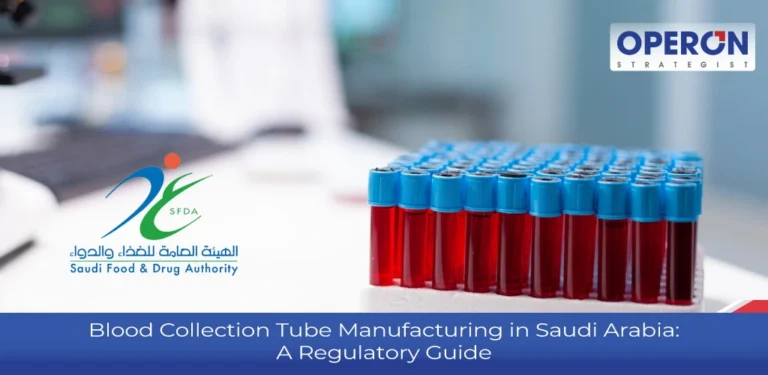
Did you know that Saudi Arabia’s healthcare sector is set to experience unprecedented growth under Vision 2030? With significant investments in medical infrastructure, the expansion of hospitals, diagnostic centers, and laboratories is accelerating rapidly. Additionally, the government’s push for local medical device manufacturing is driving demand for high-quality consumables, including blood collection tubes (BCTs). As the healthcare landscape evolves, ensuring a reliable supply of BCTs is essential for supporting advanced diagnostics, improving patient care, and meeting the growing needs of the medical industry.
Why Blood Collection Tube Manufacturing Matters
The Need for Local Medical Device Production
Saudi Arabia’s healthcare sector heavily relies on imported blood collection tubes, making local manufacturing a strategic move for economic growth and self-sufficiency.
Key Drivers of Growth
- Government Support – The Saudi Food and Drug Authority (SFDA) is actively promoting local production.
- Booming Healthcare Infrastructure – A rise in hospitals, clinics, and diagnostics centers.
- Increasing Demand for Lab Consumables – Blood sample collection is vital for diagnostics and research.
Step-by-Step Blood Collection Tube Manufacturing Process
Producing high-quality blood collection tubes requires precision, advanced technology, and regulatory compliance. Here’s a breakdown of the process:
- Raw Material Selection
- Plastics (PET or Polypropylene) – Ensuring durability and sterility.
- Rubber Stoppers & Caps – Sourced for leak-proof sealing.
- Anticoagulants & Activators – Such as EDTA, Heparin, and Sodium Citrate.
2. Injection Molding & Tube Formation
- Using high-precision molding machines to create the tubes.
- Ensuring correct dimensions and strength.
3. Siliconization & Coating
- Silicone coating prevents blood adhesion.
- Anticoagulants/clot activators were applied accurately.
4. Assembly & Capping
- Rubber stoppers & caps are securely placed.
- Vacuum sealing for certain blood collection tubes.
5. Sterilization & Quality Control
- EO sterilization or gamma radiation for sterility.
- Adherence to ISO 13485 and SFDA compliance checks.
6. Labeling & Packaging
- Tubes are labeled with expiry dates and batch numbers.
- Packaged in sterile environments.
7. Final Inspection & Distribution
- Final product validation and regulatory approvals.
- Distribution to hospitals, diagnostic centers, and laboratories.
Challenges in the Blood Collection Tube Industry
While blood collection tube production in Saudi Arabia presents significant opportunities, manufacturers face the following challenges:
🔸 Strict Regulatory Compliance – SFDA and international quality certifications (ISO 13485, GMP).
🔸 Sourcing Raw Materials – Finding high-grade plastic, rubber, and anticoagulants.
🔸 Keeping Up with Technology – Adapting to gel-based separator tubes and advanced vacuum-sealing techniques.
🔸 Market Competition – Competing with global brands in the Saudi market.
Future of Blood Collection Tube Manufacturing in Saudi Arabia
Local Manufacturing Expansion – Increased government incentives for medical device production.
Advanced Lab Consumables – Innovations in vacuum-sealed tubes & gel-based separation technology.
Global Partnerships – Collaboration with international medical technology companies.
By investing in advanced technology and regulatory compliance, manufacturers can gain a competitive edge in Saudi Arabia’s growing medical device industry.
Operon Strategist: Your Partner in Medical Device Manufacturing
For businesses looking to establish a blood collection tube manufacturing unit in Saudi Arabia, Operon Strategist offers expert consulting services. As a leading medical device regulatory and turnkey project consulting company, we help with:
✅ SFDA Registration & Compliance – Ensuring regulatory approvals.
✅ Turnkey Project Setup – Designing state-of-the-art manufacturing facilities.
✅ Regulatory Documentation – Supporting ISO 13485 certification & risk assessment.
✅ Quality Control & Process Validation – Implementing GMP standards.
FAQ
What are the regulatory requirements for blood collection tube manufacturing in Saudi Arabia?
Manufacturers must comply with SFDA regulations for medical devices and IVD products, implement an ISO 13485-certified quality management system, prepare technical documentation, perform risk management in accordance with ISO 14971, and obtain the required manufacturing and product approvals before marketing blood collection tubes in Saudi Arabia.
Are blood collection tubes classified as IVD medical devices?
Yes. Blood collection tubes intended for collecting, preserving, or transporting specimens for diagnostic testing are generally regulated as in vitro diagnostic (IVD) medical devices and must comply with applicable SFDA requirements.
Which international standards apply to blood collection tube manufacturing?
Manufacturers commonly implement ISO 13485 for quality management systems, ISO 14971 for risk management, and ISO 6710, which specifies requirements for single-use containers for venous blood specimen collection. Additional standards may apply depending on the product’s intended use and design.
What documents are required for SFDA registration of blood collection tubes?
Typical documentation includes technical files, product specifications, ISO 13485 certification, risk management documentation, performance data, labeling, manufacturing information, biocompatibility evidence where applicable, and other records required by the SFDA based on the product classification.
Senior Regulatory Affairs Executive | 4 Years of Experience
Medical device regulatory professional specializing in EU MDR 2017/745 technical documentation, CE marking, risk management, clinical and biological evaluation, and post-market surveillance. His expertise includes SFDA MDMA submissions, CDSCO licensing, ISO 13485, MDSAP, US FDA regulatory requirements, and BIS certification.