
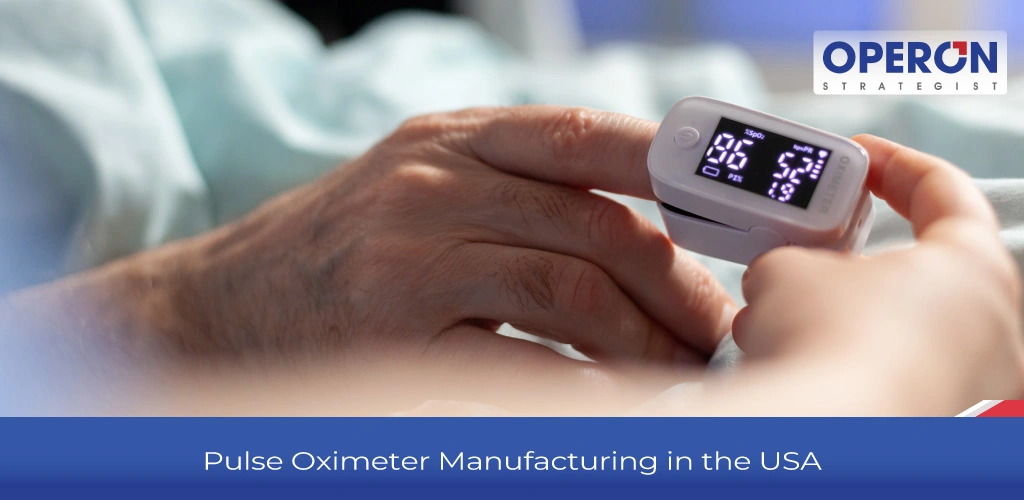
Pulse Oximeter Manufacturing in the USA
Pulse oximeters have become indispensable medical devices, widely used in hospitals, clinics, ambulances, and even at home. The spike in demand during the COVID-19 pandemic underscored the importance of reliable and accurate oxygen monitoring tools. As a result, many medical device manufacturers in the USA and globally are now exploring the pulse oximeter manufacturing process.
If you’re a startup, manufacturer, or entrepreneur planning to enter the pulse oximeter market, understanding the manufacturing process is essential not only for production efficiency but also for meeting strict regulatory standards like FDA 510(k), ISO 13485, and QSR 21 CFR Part 820.
Contact operon strategist
What Is a Pulse Oximeter?
A pulse oximeter is a non-invasive device that measures the oxygen saturation (SpO2) level in a person’s blood and pulse rate. It typically consists of a light emitter, photodetector, microcontroller, and display system.
Market Opportunity in the USA
The global pulse oximeter market was valued at over $2 billion in 2023 and is expected to grow steadily due to increasing demand for homecare monitoring and chronic disease management. The USA is a leading market for pulse oximeters due to its advanced healthcare infrastructure and increasing awareness of preventive health measures.
Now is the right time to enter this space — but only if you understand the manufacturing and compliance journey.
Step-by-Step Pulse Oximeter Manufacturing Process
1. Design & Development
This phase includes defining technical specifications such as SpO2 range, display type, battery life, signal processing, and form factor. Maintain a Design History File (DHF) per FDA 21 CFR 820.30.
Tip: Collaborate with a medical device design consultant for FDA and ISO 13485 compliance.
2. Component Sourcing
Sourcing includes red/infrared LEDs, photodiode sensors, microcontrollers, PCBs, batteries, and casing materials. Use RoHS-compliant, FDA-registered, or ISO-certified suppliers.
3. PCB Assembly
Utilize SMT and through-hole soldering for PCB assembly. Perform Automated Optical Inspection (AOI) and In-Circuit Testing (ICT) in ESD-safe environments.
4. Sensor Calibration
Use phantom tissue models and reference oximeters for calibration. Test against different skin tones, motion artifacts, and light interference. Record results in V&V documentation.
5. Enclosure Manufacturing
Produce enclosures with ABS plastic or medical-grade silicone via injection molding. Use UV printing for labeling. Ensure biocompatibility and resistance to hospital-grade disinfectants.
6. Device Assembly
Assemble in a Class 100,000 (ISO 8) cleanroom. Conduct functional, safety (IEC 60601-1), and battery tests (UN38.3 if shipped by air).
7. Software Integration
Integrate features like Bluetooth, app support, and cloud sync. Follow FDA SaMD guidelines and perform cybersecurity risk assessments.
8. Packaging and Labeling
Comply with FDA 21 CFR Part 801 for labeling (UDI, IFU, manufacturer info). Packaging must ensure tamper evidence and sterility, if required.
9. Regulatory Compliance
Submit FDA 510(k), implement a QMS per 21 CFR Part 820 and ISO 13485, register your facility, and plan post-market surveillance.
Why Compliance Matters
Non-compliance can result in FDA warning letters, product recalls, or import detentions. Working with experienced regulatory consultants helps you:
- Minimize compliance risk
- Speed up market approval
- Maintain a sustainable manufacturing operation
Schedule a Compliance Consultation
Ensure FDA QSR Compliance for German Manufacturers with Expert Guidance
How Operon Strategist Can Help
At Operon Strategist, we specialize in turnkey solutions for pulse oximeter manufacturing in the USA, including:
- Product design & documentation
- Cleanroom setup & validation
- ISO 13485 & FDA 510(k) consulting
- Regulatory strategy and submission
- Quality Management System (QMS) implementation
Whether you’re a startup or an established manufacturer, we’ll guide you through every stage of the product lifecycle — from concept to commercialization.
Contact Operon Strategist today or schedule a consultation with our medical device experts.
Schedule a Compliance Consultation
Ensure FDA QSR Compliance for German Manufacturers with Expert Guidance
FAQ's
What materials are used to manufacture pulse oximeters?
Pulse oximeters are manufactured using medical-grade plastics, electronic components, LEDs, photodiodes, sensors, printed circuit boards (PCBs), and display modules. These materials are selected to ensure durability, accuracy, biocompatibility, and compliance with medical device standards.
What regulations apply to pulse oximeter manufacturing in the USA?
Pulse oximeter manufacturers must comply with applicable FDA medical device regulations, Quality Management System (QMS) requirements, Good Manufacturing Practices (GMP), and standards such as ISO 13485 and IEC 60601 for the safety and performance of medical electrical equipment.
What quality tests are performed on pulse oximeters?
Pulse oximeters undergo rigorous testing, including oxygen saturation (SpO₂) accuracy testing, pulse rate accuracy, electrical safety, electromagnetic compatibility (EMC), environmental testing, software validation (if applicable), and calibration verification to ensure reliable clinical performance.
Is pulse oximeter manufacturing a profitable business in the USA?
Yes. The growing demand for patient monitoring devices in hospitals, clinics, home healthcare, and telemedicine has created strong market opportunities for pulse oximeter manufacturers. Success depends on regulatory compliance, product quality, technological innovation, and efficient manufacturing processes.