
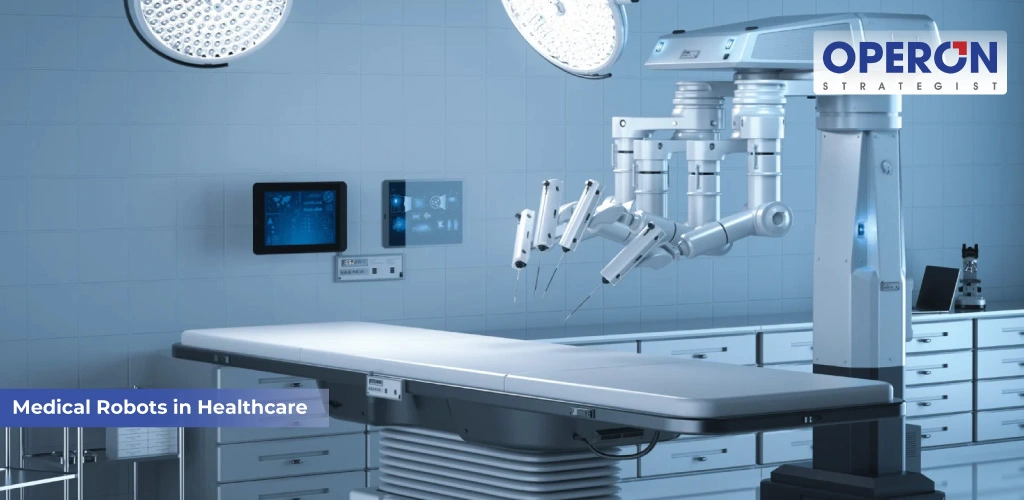
Know About Regulation of Medical Robots in Healthcare (Expert Regulatory Consultant)
Medical robots are revolutionizing healthcare by introducing unmatched precision, consistency, and automation. Once limited to industries like manufacturing and defense, robotics now plays a critical role in medicine — especially in surgical procedures, diagnostics, and patient care.
Robot-assisted surgeries are now commonplace, minimizing human error, enhancing accuracy, reducing trauma, and improving patient recovery times. With the rise of smart, AI-powered robots, healthcare providers are witnessing a technological transformation like never before.
Use of Medical Robots in Healthcare
Medical robots have brought a paradigm shift, especially in minimally invasive surgeries such as laparoscopy. These robots offer real-time 3D imaging, precision movement, and remote access capabilities.
Beyond surgery, their applications include:
- Home healthcare (elderly monitoring, medication reminders)
- Laboratory tasks (specimen handling, diagnostic automation)
- Hospital logistics (transporting samples, disinfecting rooms)
Their growing versatility highlights the need for robust regulatory frameworks to ensure safety and compliance.
Regulation of Medical Robots: What You Must Know
The increasing use of medical robots in healthcare has made regulatory oversight crucial. Each type of robotic device whether autonomous or remotely operated must meet national and international safety and performance standards.
In India:
To manufacture or import medical robots, you must comply with CDSCO guidelines under the Medical Device Rules, 2017. If the robot qualifies as a medical device (based on function and intended use), it requires:
- Device classification (Class A, B, C, or D)
- Manufacturing/import license
- Quality Management System (ISO 13485)
- Clinical evaluation/reporting
- Post-market surveillance & vigilance
Global Regulations:
- FDA (USA): Requires 510(k) clearance or PMA, depending on risk class
- EU MDR (Europe): CE Marking with clinical evaluation, UDI, and risk management
- Other regions: Local authorities often require WHO GMP or ISO-based documentation
Ensure you consult an expert regulatory partner to navigate multi-country compliance.
Types of Medical Robots in Healthcare
- Surgical Robots – For precision surgeries (e.g., Da Vinci system)
- Radiotherapy Robots – For targeted radiation delivery
- Rehabilitation Robots – For post-stroke/mobility recovery
- Laboratory Robots – For diagnostics, pipetting, and sample transport
- Robotic Prosthetics – Controlled via sensors or neural interfaces
- Hospital Service Robots – For logistics, cleaning, and disinfection
- Social Robots – For patient interaction and elderly care
Benefits of Robotics in Healthcare
- Superior Patient Care
Robots assist in minimally invasive procedures, chronic condition monitoring, and elderly care improving outcomes and freeing up time for more human interaction. - Smarter Clinical Workflows
Autonomous robots handle inventory, transport, and disinfection tasks reducing staff workload and boosting hospital efficiency. Safer Workplaces
Robots minimize exposure to pathogens, lower the risk of infections, and assist with heavy lifting, protecting healthcare workers from injury.
Advantages of Medical Robots
- Enhanced Surgical Precision – Real-time, high-accuracy movement
- Reduced Risk of Infections – Less human contact during procedures
- Consistent Performance – No fatigue, 24/7 efficiency
- Patient Monitoring – Smart sensors aid in remote care
- Workflow Optimization – Frees up staff for critical tasks
Disadvantages of Medical Robots
- High Cost – Acquisition and maintenance are expensive
- Access Limitation – Affordability limits availability in rural areas
- Technical Failures – Any malfunction could have critical effects
- Training Requirements – Requires skilled staff and continuous training
Revolutionizing Healthcare: The Rise of Intelligent Medical Robots
The future of healthcare is being reshaped by robotics powered with AI, computer vision, and advanced data analytics. These smart machines are rapidly evolving becoming more autonomous, precise, and efficient in performing critical medical tasks. From assisting in surgeries to automating diagnostics, healthcare robots are reducing human error, improving patient outcomes, and transforming clinical workflows.
At the forefront of this transformation is Intel, driving innovation through powerful collaborations. A prime example is Intel Labs China’s alliance with the Suzhou Collaborative Innovation Medical Robot Research Institute, where they’ve established a high tech incubator for medical robotics startups. By combining AI and IoT with cutting edge research, Intel is accelerating the development of next-gen healthcare robots designed to solve real world medical challenges and revolutionize patient care as we know it.
How Do We Assist Manufacturers/Importers With Combination Products Registration in India?
Preparing regulatory documents is a time-consuming and precise process. Before placing the product in India, an importer/manufacturer is already involved in numerous business elements. If a single mistake is made, it might result in a complete delay in the company plan, financial planning concerns, and supply chain disruption.
Enlist expert guidance to register your combination products.
Our dedicated and experienced team of professionals assists you in the creation and submission of technical files, provides training and guidance on the implementation of the Quality Management system, and device design documentation to speed up your regulatory process. Avail of our cost-effective services to save your time and money. Contact our experts today and discuss your requirements.
FAQ's
What are medical robots in healthcare?
Medical robots are advanced robotic systems used in healthcare for surgery, rehabilitation, diagnostics, patient monitoring, and hospital automation. These devices improve precision, efficiency, and patient outcomes.
Are medical robots considered medical devices?
Yes. In most countries, medical robots are regulated as medical devices because they directly impact patient safety and clinical performance. Their classification depends on intended use and risk level.
Which regulations apply to medical robots?
Medical robots must comply with regulations such as:
- FDA regulations in the United States
- EU MDR in Europe
- CDSCO regulations in India
- ISO 13485 quality management requirements
- IEC 60601 and software validation standards
Do AI-powered medical robots require additional regulatory approval?
Yes. AI-enabled medical robots may require additional evaluation for software validation, cybersecurity, risk management, and algorithm transparency depending on the market and intended use.
What is the role of ISO 13485 in medical robot manufacturing?
ISO 13485 helps manufacturers establish a quality management system for the design, development, manufacturing, and regulatory compliance of medical robots.