
Senior Sales Executive | 3 Years of Experience
Vyankatesh Dhavale holds a Bachelor of Pharmacy (B.Pharm) and an MBA specializing in Operations and Supply Chain Management
Blood bag manufacturing in the USA plays a critical role in the healthcare ecosystem. These bags are essential for collecting, storing, transporting, and transfusing blood and blood components. With rising demand for safe and efficient blood storage systems, the need for reliable blood bag manufacturers has increased dramatically. In this blog, we explore how blood bags are manufactured, regulatory standards involved, opportunities for entrepreneurs, and why choosing the right regulatory partner can make all the difference.
What Are Blood Bags and Why Do They Matter?
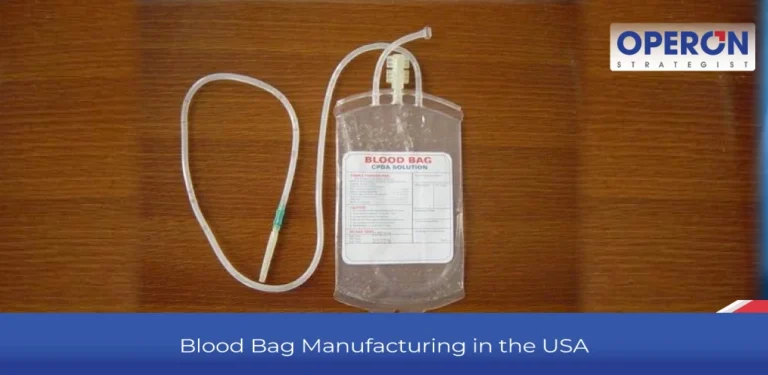
Blood bags are sterile, flexible containers made from medical-grade PVC (polyvinyl chloride) that are used to collect and preserve whole blood and its components like plasma, platelets, and red blood cells.
These bags often come with anticoagulant solutions and are designed to ensure that the blood remains viable for transfusion. In emergency situations, surgical procedures, trauma cases, or for patients undergoing chemotherapy, blood bags serve as lifesaving tools.
USA-based hospitals, blood banks, and healthcare providers rely heavily on the domestic production of blood bags to ensure quick access, reduce dependency on imports, and meet FDA standards for safety and efficacy.
Overview of the Blood Bag Manufacturing Process
Blood bag manufacturing is a sophisticated process involving precision engineering, cleanroom environments, and stringent quality control. Below is a simplified look at the main steps involved:
- Raw Material Selection
The manufacturing process begins with sourcing medical-grade DEHP-free PVC or other biocompatible materials approved by the FDA. These materials are critical as they determine the bag’s durability, flexibility, and compatibility with human blood. - Injection Molding and Extrusion
Next, the bag’s ports, tubes, and connectors are manufactured using injection molding machines. Simultaneously, PVC sheets are produced through extrusion to form the bag’s body. This ensures uniform wall thickness and optimal strength. - Bag Forming and Assembly
Using high-frequency welding technology, the PVC sheets are cut and sealed into a pouch. Tubes and connectors are attached during this stage. Multi-bag systems, such as double or triple blood bags used for component separation, are assembled here. - Sterilization
Sterilization is a critical step. Blood bags are usually sterilized using ethylene oxide (EtO) gas or gamma radiation to eliminate microbial contamination without compromising material properties. - Packaging and Labeling
The sterilized bags are then vacuum-packed or sealed in sterile pouches and labeled according to regulatory guidelines. Each label contains batch numbers, manufacturing and expiry dates, and lot traceability information. - Quality Control and Testing
Every batch undergoes rigorous testing for sterility, leakage, air permeability, strength, and biocompatibility. These checks ensure the product meets FDA, ISO 3826, and AABB standards.
Regulatory Requirements for Blood Bag Manufacturing in the USA
To manufacture and market blood bags in the USA, companies must comply with several regulatory frameworks:
FDA 510(k) Clearance
Blood bags are Class II medical devices in the USA and require a 510(k) premarket notification to demonstrate that the product is substantially equivalent to a legally marketed device.
21 CFR Part 820 Compliance
This is the FDA’s Quality System Regulation (QSR) for medical devices. Manufacturers must implement a robust quality management system covering design controls, process validation, CAPA, and complaint handling.
ISO 13485 Certification
While not mandatory under FDA, ISO 13485 is globally recognized and often expected by clients and international partners. It ensures that your quality system aligns with global best practices.
Sterilization Validation
Sterilization processes must be validated according to ISO 11135 (EtO) or ISO 11137 (Gamma) standards. This ensures that sterilization methods are consistently effective and safe.
Cleanroom Requirements
Manufacturing blood bags requires ISO Class 7 or better cleanroom environments. Maintaining proper air filtration, surface cleanliness, and gowning procedures is essential.
Market Demand and Business Opportunity
With an aging population, increased demand for surgical interventions, trauma care, and chronic illness treatments, the demand for blood and blood components continues to grow in the USA. This makes blood bag manufacturing a highly scalable business opportunity.
In addition, the USA’s focus on self-reliant medical manufacturing and reshoring of critical supplies post-COVID-19 has created a favorable environment for new players in the medical device sector. Domestic manufacturers are preferred by many healthcare institutions for faster delivery, better communication, and assured regulatory compliance.
How Operon Strategist Supports Blood Bag Manufacturers
At Operon Strategist, we specialize in end-to-end support for medical device manufacturers in the USA. For blood bag manufacturing projects, we offer:
- Turnkey project consultancy including layout design and cleanroom setup
- Assistance in obtaining FDA 510(k) clearance
- Design and implementation of QMS as per 21 CFR Part 820 and ISO 13485
- Validation of sterilization methods and cleanroom processes
- Preparation of technical files and risk management documentation
- Ongoing compliance monitoring and audit support
We understand the regulatory landscape and bring expertise that accelerates your time to market. Whether you’re a startup or an established manufacturer expanding your product line, our team ensures your blood bag manufacturing operation meets all compliance and performance benchmarks.
Looking to set up or scale your blood bag manufacturing facility in the USA? Contact Operon Strategist today for a free consultation. Let’s build something life-saving together.
FAQ's
What materials are used in blood bag manufacturing?
Blood bags are typically manufactured from medical-grade polyvinyl chloride (PVC) with specialized plasticizers to ensure flexibility, durability, biocompatibility, and safe blood storage. The materials must comply with FDA regulations and relevant international quality standards.
What FDA requirements apply to blood bag manufacturing in the USA?
Blood bag manufacturers must comply with applicable FDA medical device regulations, establish a Quality Management System (QMS), implement Good Manufacturing Practices (GMP), validate manufacturing processes, and ensure the products meet performance, sterility, and biocompatibility requirements before commercialization.
What quality tests are performed on blood bags?
Blood bags undergo rigorous quality testing, including leak testing, tensile strength testing, sterility testing, biocompatibility evaluation, anticoagulant compatibility, seal integrity testing, and visual inspection to ensure product safety, reliability, and compliance with regulatory standards.
Can blood bags be manufactured in different configurations?
Yes. Blood bags are available in single, double, triple, quadruple, and specialized transfer bag configurations to support whole blood collection, component separation, plasma storage, platelet collection, and other transfusion medicine applications.
Senior Sales Executive | 3 Years of Experience
Vyankatesh Dhavale holds a Bachelor of Pharmacy (B.Pharm) and an MBA specializing in Operations and Supply Chain Management, with a minor in Marketing. He brings experience in domestic and international business development, strategic client relationship management, and sales of medical device regulatory consulting and turnkey project services. His expertise includes supporting market entry and regulatory service requirements related to CDSCO registration, EU MDR CE marking, US FDA regulations, and ISO 13485 quality management systems.