
Senior Regulatory Affairs Executive
4 Years of Experience Medical device regulatory professional specializing in EU MDR 2017/745
Introduction
Intraocular lenses (IOLs) have revolutionized vision correction, especially for patients undergoing cataract surgery. As the demand for advanced ophthalmic devices rises in the USA, manufacturing intraocular lenses presents a significant opportunity—but it also comes with strict technical, regulatory, and quality requirements. This guide explores the complete IOL manufacturing process, critical FDA compliance standards, and how you can successfully set up or scale your IOL production facility with expert support.
What Are Intraocular Lenses?
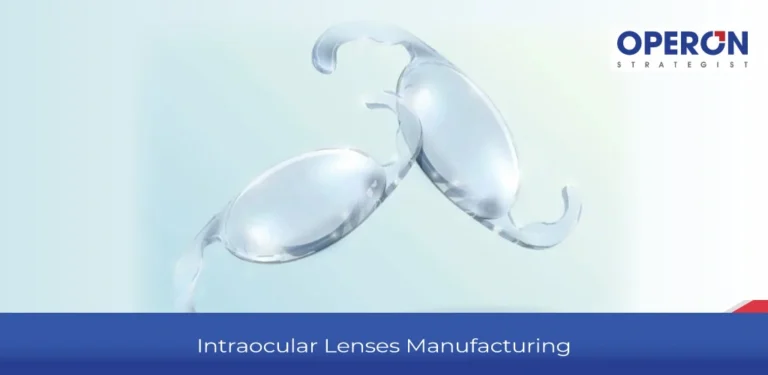
Intraocular lenses are artificial lenses implanted in the eye to replace the eye’s natural lens during cataract surgery or vision correction procedures.
These lenses are classified as Class III medical devices by the FDA, which means they pose a higher risk and require stringent regulatory approval, including Premarket Approval (PMA).
Types of Intraocular Lenses
Manufacturers can produce various types of IOLs based on optical and functional characteristics:
- Monofocal Lenses: Standard lenses providing clear vision at one distance.
- Multifocal Lenses: Offer multiple focusing zones for near and far vision.
- Toric Lenses: Correct astigmatism.
- Accommodative Lenses: Adjust focus based on eye muscle movement.
Each lens type requires precision design, material selection, and specialized production techniques.
Intraocular Lenses Manufacturing Process
Manufacturing intraocular lenses involves a multi-stage, controlled process that demands a high degree of accuracy and regulatory adherence.
1. Raw Material Selection
Materials such as PMMA, silicone, and hydrophilic or hydrophobic acrylic are used. These must be biocompatible and optically clear, with full traceability and certification.
2. Design and Prototyping
CAD and optical modeling tools are used to establish lens curvature, refractive index, and overall optical design. This stage defines the IOL’s visual performance.
3. Molding or Lathe-Cutting
Depending on the chosen material, lenses are either injection molded or lathe-cut using precision CNC machines in a cleanroom environment.
4. Finishing and Polishing
The lenses undergo polishing to achieve optical clarity and precise edge finishing. Haptic shaping is done to ensure proper intraocular placement.
5. Sterilization
Sterilization methods like ethylene oxide (EtO), gamma radiation, or autoclaving are used depending on material compatibility. Sterilization validation ensures patient safety.
6. Packaging
Lenses are packaged in ISO Class 7 or better cleanroom environments using sterile barrier systems. Packaging ensures sterility and prevents contamination during transport and storage.
Regulatory Requirements for IOL Manufacturing in the USA
Intraocular lenses (IOLs) are classified as Class III medical devices by the FDA, requiring rigorous testing, documentation, and approval processes. Below are the key regulatory requirements manufacturers must meet to produce IOLs for the US market.
1. Premarket Approval (PMA)
IOLs require Premarket Approval (PMA) from the FDA, which involves submitting comprehensive clinical and technical data to demonstrate safety and effectiveness.
2. 21 CFR Part 820 – Quality System Regulation (QSR)
Manufacturers must comply with the FDA’s QSR, which includes quality management practices such as:
- Design controls (21 CFR 820.30)
- Production and process controls
- Document and change control
- Corrective and Preventive Actions (CAPA)
- Complaint handling and internal audits
3. Biocompatibility and Product Testing
IOLs must pass ISO 10993 biocompatibility tests including cytotoxicity, irritation, and sensitization to ensure the material is safe for intraocular use.
4. Labeling and UDI Compliance
FDA requires all labeling to be accurate and user-friendly, with compliance to UDI (Unique Device Identification) regulations to support traceability and recall management.
5. Clinical Investigations and IDE
Clinical trials are often required under an Investigational Device Exemption (IDE) to gather human safety and performance data for PMA submission.
Ensure FDA QSR Compliance for German Manufacturers with Expert Guidance
Facility and Equipment Requirements
Setting up a compliant IOL manufacturing facility requires strategic planning and quality infrastructure.
- Cleanroom Setup: ISO Class 7 or better for assembly and packaging
- QMS Compliance: ISO 13485:2016 certified system
- Validation: Equipment, utilities, and processes must be validated (IQ/OQ/PQ)
- Calibration and Testing: Optical bench testing, slit lamp evaluations, and dimension analysis are vital
How Operon Strategist Can Help?
At Operon Strategist, we specialize in turnkey project consulting for ophthalmic and high-risk medical device manufacturers. Our expert team can help you:
- Design and set up an FDA-compliant IOL manufacturing facility
- Implement ISO 13485 and 21 CFR 820-compliant QMS
- Prepare and submit FDA PMA documentation
- Design product development and sterilization validation strategies
- Navigate clinical trial requirements and IDE submissions
With our USA-focused regulatory consulting and deep industry expertise, we help you reduce time to market, avoid compliance issues, and focus on innovation and scale.
Start Your IOL Manufacturing Journey with Confidence Start Your IOL Manufacturing Journey with Confidence
Ready to launch or scale your intraocular lens manufacturing in the USA?
Contact Operon Strategist Today for end-to-end project consulting and FDA compliance support.
Ensure FDA QSR Compliance for German Manufacturers with Expert Guidance
FAQ's
What materials are commonly used to manufacture intraocular lenses (IOLs)?
Intraocular lenses are typically manufactured from biocompatible materials such as hydrophobic acrylic, hydrophilic acrylic, silicone, and polymethyl methacrylate (PMMA). The choice of material depends on factors such as optical performance, flexibility, and surgical requirements.
What regulations apply to intraocular lens manufacturing?
IOL manufacturers must comply with applicable medical device regulations, including FDA requirements in the United States or the EU Medical Device Regulation (MDR) in Europe. They should also implement a Quality Management System compliant with ISO 13485 and conduct risk management in accordance with ISO 14971.
What quality tests are performed on intraocular lenses?
Intraocular lenses undergo extensive testing, including optical power verification, dimensional inspection, biocompatibility testing, sterility validation, mechanical performance testing, packaging integrity testing, and stability studies to ensure safety, effectiveness, and regulatory compliance.
Is intraocular lens manufacturing a profitable business?
Yes. The increasing prevalence of cataracts, aging populations, and growing demand for advanced vision correction solutions have created significant opportunities for intraocular lens manufacturers. Success depends on regulatory compliance, advanced manufacturing technologies, product innovation, and consistent quality standards.
Senior Regulatory Affairs Executive | 4 Years of Experience
Medical device regulatory professional specializing in EU MDR 2017/745 technical documentation, CE marking, risk management, clinical and biological evaluation, and post-market surveillance. His expertise includes SFDA MDMA submissions, CDSCO licensing, ISO 13485, MDSAP, US FDA regulatory requirements, and BIS certification.