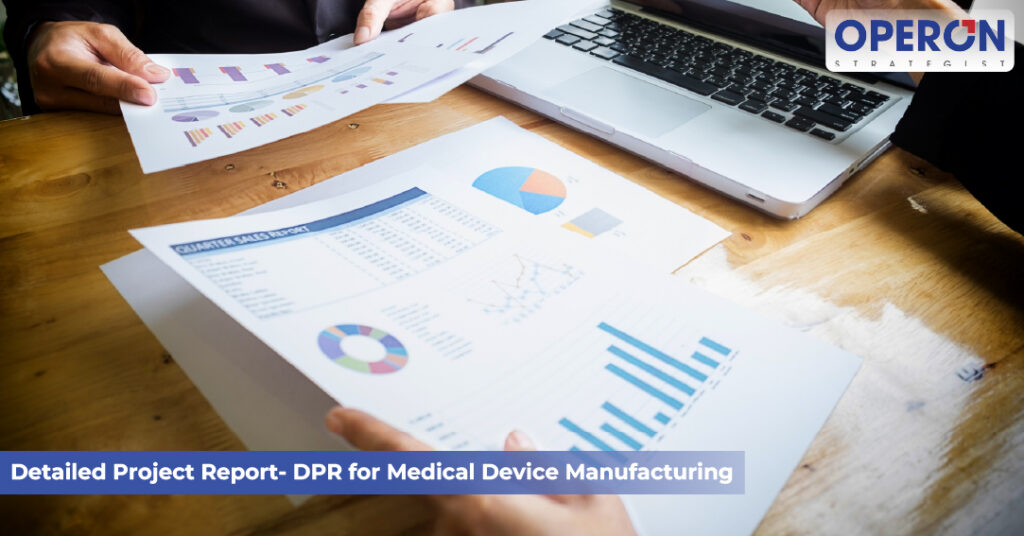
DPR for Medical Device Manufacturing: The First Step Toward a Compliant & Scalable Facility
The global medical device sector is expanding rapidly, driven by increasing healthcare demand, localization initiatives, and regulatory emphasis on quality manufacturing. In India and other emerging markets, government-backed medical device parks and import substitution policies are accelerating new investments.
However, success in this highly regulated industry depends on one critical foundation — a well-prepared Detailed Project Report (DPR).
Looking For a Medical Device Regulatory Consultant?
A DPR is not just a report. It is a technical, regulatory, and financial execution roadmap that transforms an idea into a compliant manufacturing operation.
Operon Strategist develops DPRs that align engineering design, GMP compliance, and commercial viability, ensuring projects are implemented “Right First Time.”
What is a DPR for Medical Device Manufacturing?
A Detailed Project Report is a comprehensive evaluation document that defines:
- Technical feasibility of the product and process
- Infrastructure and facility requirements
- Regulatory strategy (CDSCO, ISO 13485, CE, US FDA readiness)
- Market demand and competitive landscape
- Capital investment and profitability projections
- Risk, scalability, and operational sustainability
It is essential for investors, banks, manufacturers, and companies entering the medical device sector.
Who Needs a DPR for Medical Device Manufacturing?
A DPR is critical for:
- New investors entering medical device manufacturing
- Pharma companies diversifying into devices
- OEMs planning domestic production
- International companies establishing facilities in India
- Organizations applying for funding or government incentives
- Businesses setting up units in medical device parks (e.g., YEIDA, AMTZ, UJJAIN, KHORDHA)
Key Components of a Medical Device DPR
1. Project Location & Site Assessment
Site selection directly affects logistics, compliance, and cost efficiency.
Assessment Includes:
- Industrial ecosystem and connectivity
- Skilled workforce availability
- Utility infrastructure (power, water, HVAC feasibility)
- Environmental and geotechnical suitability
- Proximity to hospitals and supply chain networks
Proper site evaluation reduces long-term operational risks.
2. Product & Technical Overview
Understanding the device is essential before designing manufacturing systems.
DPR Defines:
- Product classification and applications
- Component-level design analysis
- Material selection (medical-grade polymers, metals, packaging)
- Applicable ISO and regulatory standards
Example: For disposable syringes, DPR evaluates needle geometry, polymer selection, sterility compatibility, and safety features.
3. Manufacturing Process Engineering
The DPR translates product requirements into a validated manufacturing workflow.
Includes:
- Injection molding process planning
- Assembly automation strategies
- Printing, marking, and packaging systems
- Sterilization methodology (ETO/Gamma)
- End-to-end process flow from raw material to finished goods
This ensures reproducibility, traceability, and regulatory compliance.
4. GMP Facility Layout & Cleanroom Planning
Medical device plants must be designed to meet ISO 13485 and GMP expectations from day one.
Layout Planning Covers:
- Cleanroom zoning and classification
- Controlled material and personnel flow
- HVAC and contamination control strategy
- Warehousing, sterilization, and dispatch integration
- Validation-ready infrastructure (IQ/OQ/PQ)
Good layout design prevents costly redesign during audits.
5. Machinery Selection & Capacity Planning
The DPR identifies optimal production technologies aligned with market demand.
- Injection molding systems and automation levels
- Assembly and inspection solutions
- Supplier evaluation and technical comparison
- Scalability for future product expansion
Operon Strategist emphasizes lifecycle efficiency, not just initial cost.
6. Raw Material & Supply Chain Strategy
Medical-grade sourcing is critical for compliance and traceability.
DPR Maps:
- Approved polymer and component suppliers
- Packaging and sterilization materials
- Consumables and laboratory requirements
- Vendor qualification strategy
7. Market Analysis & Demand Forecasting
A DPR validates commercial viability through detailed market research.
Analysis Includes:
- Indian demand trends and import substitution opportunities
- Government procurement programs
- Global consumption patterns
- Competitive benchmarking
- Export potential and regulatory-driven demand
This ensures capacity planning matches real market needs.
8. Regulatory Pathway & Quality Strategy
Regulatory readiness must be integrated at the planning stage — not after construction.
DPR Defines:
- CDSCO registration roadmap
- ISO 13485 Quality Management System framework
- CE / US FDA alignment strategy
- Validation master planning
- Risk management (ISO 14971)
9.Financial Modeling & Investment Feasibility
The DPR converts technical planning into a clear financial structure.
Includes:
- Capital expenditure (land, building, machinery)
- Working capital estimation
- Cost of production and pricing models
- Break-even analysis and IRR projections
- Debt-equity structuring and funding viability
- Sensitivity analysis for price and demand variations
This enables confident decision-making by promoters and lenders.
10. Operational Economics & Sustainability
Beyond setup, DPR evaluates long-term operational performance:
- Utility consumption modeling
- Manpower planning and training
- Maintenance and lifecycle costing
Expansion readiness and scalability
Why DPR for Medical Device Manufacturing is Essential Before Plant Setup
Without a DPR, companies often face:
- Regulatory non-compliance delays
- Inefficient plant layouts affecting validation
- Underestimated capital investment
- Market misalignment and excess capacity
- Cost overruns and redesign risks
A DPR ensures structured execution from concept to commercialization.
Ready to Develop Your Medical Device DPR?
How Operon Strategist Adds Value
Operon Strategist provides integrated DPR solutions combining:
- Technical feasibility and process engineering
- GMP-compliant facility design
- Machinery identification and supplier coordination
- Regulatory and validation planning
- Financial modeling aligned with real manufacturing scenarios
- Support for greenfield and brownfield medical device projects
We bridge the gap between concept, compliance, and commercialization.
FAQs
Is a DPR mandatory for medical device manufacturing?
While not always legally mandated, it is essential for regulatory planning, funding approvals, and risk-free project execution.
How long does it take to prepare a DPR?
Typically 4–8 weeks depending on product complexity and project scale.
Can a DPR be used for bank or investor funding?
Yes. DPRs provide the financial and technical justification required by lenders and investors.
Does DPR include regulatory strategy like CDSCO or ISO 13485?
A properly developed DPR integrates regulatory pathways from the initial planning stage.
Can DPR support expansion of an existing facility?
Yes. It is equally valuable for brownfield modernization, automation, or product diversification.