
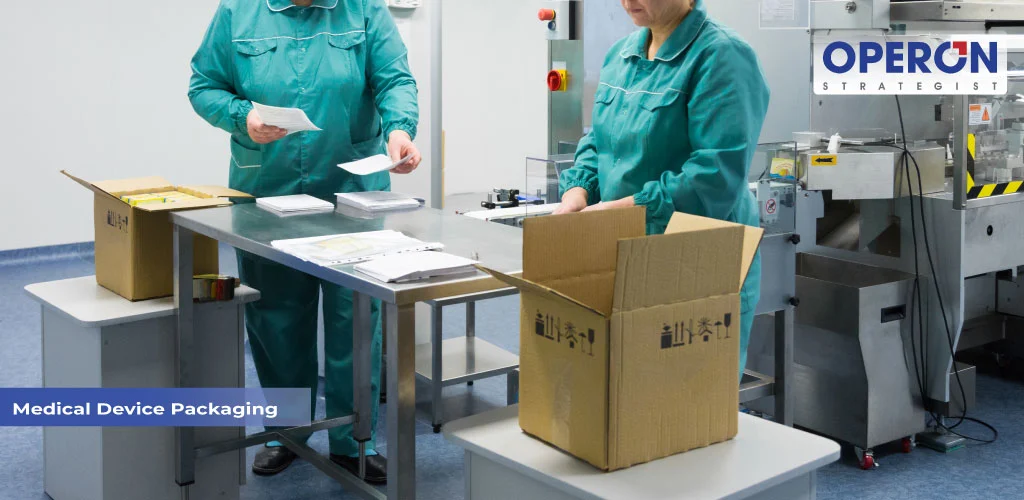
Medical Device Packaging: Process, ISO 11607 Standards & Regulatory Compliance
Overview
Medical device packaging plays a vital role in protecting product integrity, maintaining sterility, and ensuring patient safety throughout transport and storage. Regulated primarily by ISO 11607-1 (material & sterile barrier system requirements) and ISO 11607-2 (process validation for forming, sealing, and assembly), packaging systems must satisfy strict global standards set by the US FDA, EU MDR, and CDSCO. A compliant sterile barrier system (SBS) guarantees terminally sterilized medical devices remain sterile until opened at the point of care.
Need medical device packaging consultants?
Proper medical device packaging is far more than a shipping container—it is an integral part of the medical device itself. Poor packaging design or compromised seals can lead to loss of sterility, product contamination, or physical damage, exposing patients to severe health risks and manufacturers to costly product recalls.
Whether you are launching a non-sterile diagnostic tool or a terminally sterilized surgical implant, understanding global packaging validation standards and the importance of medical device packaging is essential for market clearance.
The 3 Levels of Medical Device Packaging
Medical product packaging is divided into three distinct levels, each serving a specific protective and regulatory function:
| Packaging Level | Definition & Common Materials | Primary Regulatory Function |
| Primary Packaging (Sterile Barrier System) | Direct contact with the device (e.g., Tyvek pouches, thermoformed blister packs, glass vials). | Maintains microbial sterility, prevents physical degradation, and ensures sterile presentation at the point of use. |
| Secondary Packaging | Outer box or carton housing one or multiple primary packs. | Protects the primary package during handling and displays essential regulatory information, including barcode tracking and labeling. |
| Tertiary Packaging | Shipping containers, corrugated boxes, and transport pallets. | Protects products against environmental stressors, shock, and vibration during transit and bulk distribution. |
Primary Regulatory Standards: ISO 11607-1 and ISO 11607-2
Compliance with international packaging standards is mandatory for gaining market approvals from the US FDA, European Union (EU MDR 2017/745), and CDSCO.
ISO 11607-1: Requirements for Materials, Sterile Barrier Systems, and Packaging Systems
ISO 11607-1:2019 specifies the requirements and test methods for packaging materials, preformed sterile barrier systems, and full packaging systems designed to maintain sterility until the point of use.
Key expectations include:
Material Compatibility: Materials must withstand the chosen sterilization process (e.g., Ethylene Oxide, Gamma Radiation, Autoclave, or E-beam) without degradation.
Microbial Barrier Properties: Verifying that non-porous or porous materials effectively block microbial penetration under specified environmental conditions.
Biocompatibility & Toxicity: Materials must not leach toxic substances into the device, aligning with ISO 10993 standards.
ISO 11607-2: Validation Requirements for Forming, Sealing, and Assembly
ISO 11607-2:2019 focuses on process validation for sealing and assembling packaging systems. Manufacturers must prove that sealing processes are consistent and repeatable through:
Installation Qualification (IQ): Confirming packaging machinery and heat sealers are installed correctly according to operational specifications.
Operational Qualification (OQ): Establishing optimal process windows (temperature, dwell time, pressure) to produce acceptable seal strength.
Performance Qualification (PQ): Demonstrating long-term process stability and seal integrity during routine production runs.
Integrating packaging process controls directly into your site’s overall Quality Management System (QMS) ensures full audit readiness and continuous ISO 13485 compliance.
Need expert assistance validating your packaging process?
Ensure full ISO 11607 compliance and seamless seal validation. Partner with Operon Strategist today!
Key Principles for Designing Compliant Medical Packaging
When engineering a packaging solution, medical device manufacturers must balance four fundamental pillars:
1. Safety & Sterility Assurance
The primary material used in sterile medical device packaging must maintain physical integrity against temperature fluctuations, atmospheric pressure shifts, and handling shocks during transport.
2. Device Identification & Label Clarity
Clear identification on primary and secondary packaging prevents clinical errors. Packaging design must incorporate space for Unique Device Identifiers (UDI), lot numbers, expiration dates, and sterile symbol indicators. Learn more about complying with global medical device labeling standards and implementing electronic Instructions for Use (eIFU) in medical devices.
3. Usability & Aseptic Presentation
Packaging must allow healthcare providers to easily open pouches or blister trays without tearing or shedding particulates, enabling aseptic presentation in surgical or sterile clinical fields.
4. Shelf Life & Transit Durability
Real-time and accelerated aging testing must validate that seal strength and package integrity remain compromised-free across the device’s stated shelf life.
Primary Packaging Compliance: ISO 15378 & Type III DMF
For manufacturers operating in India or exporting globally, regulatory requirements for primary packaging materials (PPM) involve specialized certifications:
CDSCO & Indian Regulations: While primary packaging material manufacturers do not always require a separate medical device manufacturing license in India, they must adhere to rigorous quality control frameworks.
ISO 15378 Certification: This standard specifies Good Manufacturing Practice (GMP) requirements tailored specifically for primary packaging materials for medicinal products and medical devices.
US FDA Type III Drug Master File (DMF): Suppliers providing primary packaging to the US market maintain a Type III DMF. This allows medical device manufacturers to reference secret material composition data in their US FDA 510(k) and QMSR registrations without compromising supplier intellectual property.
How Operon Strategist Ensures End-to-End Medical Device Packaging Compliance
Operon Strategist offers comprehensive technical and regulatory consulting services to streamline your medical device packaging validation and global market authorization:
ISO 11607 Validation Strategy: Designing and executing comprehensive packaging validation protocols (IQ, OQ, PQ) for heat sealing, pouch forming, and automated packaging lines.
ISO 15378 & DMF Preparation: Supporting primary packaging manufacturers with ISO 15378 QMS implementation and US FDA Type III Drug Master File (DMF) creation.
Regulatory File Integration: Incorporating packaging validation, shelf-life studies, and labeling data seamlessly into technical documentation for US FDA 510(k), EU MDR CE marking, and CDSCO filings.
Streamline your packaging compliance and regulatory filings
Fast-track your Type III DMF submissions and ISO 15378 audit preparation.
FAQ's
What is the difference between ISO 11607-1 and ISO 11607-2?
ISO 11607-1 covers testing and material requirements for sterile barrier systems, while ISO 11607-2 focuses on process validation for forming, sealing, and assembling those packaging systems.
What is a Sterile Barrier System (SBS)?
A Sterile Barrier System (SBS) is the minimum primary packaging configuration that prevents microbial ingress and allows aseptic presentation of the medical device at the point of use.
What tests are required for medical device packaging validation?
Common validation tests include seal strength testing (ASTM F88), leak integrity testing (ASTM F1929), visual inspection (ASTM F1886), and transit simulation testing (ASTM D4169).
Do primary packaging material manufacturers require ISO 15378 certification?
While not always legally mandatory in every jurisdiction, ISO 15378 certification demonstrates compliance with specialized GMP standards for primary packaging, making suppliers highly preferred by global medical device and pharmaceutical manufacturers.
How long are accelerated aging studies conducted for medical device packaging?
Accelerated aging studies (governed by ASTM F1980) use elevated temperatures to simulate real-time shelf life, typically spanning a few weeks to several months depending on the target expiration period (e.g., 1, 3, or 5 years).