
Senior Sales Executive | 3 Years of Experience
Key Takeaways
- Strategic Sector: Medical tubing forms the critical fluid pathway in nearly all clinical treatments, from intravenous (IV) therapy to hemodialysis and mechanical ventilation.
- Core Process: Industrial manufacturing encompasses four tightly controlled phases: medical polymer selection (ISO 10993), high-precision extrusion tooling, ISO Class 7/8 cleanroom downstream assembly, and validated EtO/Gamma terminal sterilization.
- Algerian Regulatory Mandates: Facility licensing is governed by the Ministry of Pharmaceutical Industry (MIP) and product registration by the National Agency of Pharmaceutical Products (ANPP), requiring mandatory ISO 13485:2016 certification and bilingual Arabic/French technical documentation.
- Global Export Pathways: Compliant Algerian plants can leverage bilateral trade pacts and obtain CE Marking under EU MDR (2017/745) or US FDA 510(k) clearances to access Europe, the Middle East, and broader African markets.
Overview: What Is Medical Tubing Manufacturing in Algeria?
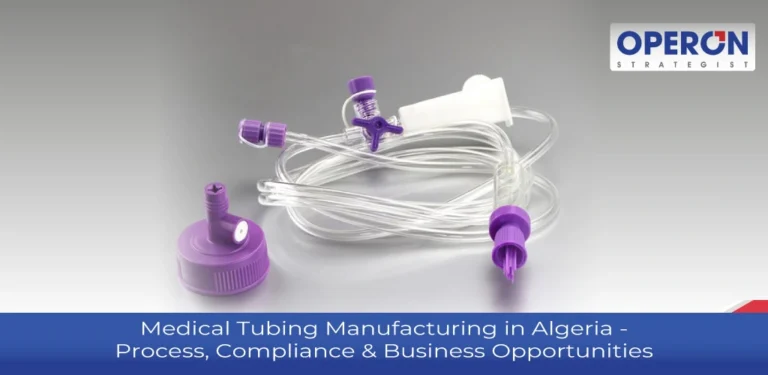
Medical tubing manufacturing in Algeria involves the precision polymer extrusion and controlled cleanroom assembly of specialized, medical-grade thermoplastic materials—such as polyvinyl chloride (PVC), liquid silicone rubber (LSR), polyurethane (PU), and thermoplastic elastomers (TPE)—to produce single-use, biocompatible tubing systems. These precision conduits are engineered for intravenous (IV) infusion sets, vascular catheters, enteral feeding lines, hemodialysis bloodlines, and critical-care respiratory circuits.
Under national industrial directives aimed at strengthening health system resilience and substituting foreign imports, establishing local medical tubing manufacturing in Algeria represents a high-value industrial opportunity to support domestic healthcare facilities while building an export gateway to Europe, the Middle East, and Africa.
The Growing Scope & Importance of Medical Tubing Manufacturing in Algeria
Algeria’s healthcare landscape is undergoing aggressive modernization through state-financed hospital construction, localized drug manufacturing, and strategic medical device self-sufficiency policies. Medical tubing serves as the indispensable backbone of patient care—delivering medications, sustaining ventilation, and transporting vital fluids.
Historically, Algeria relied heavily on imported medical tubing sets, creating vulnerabilities during global supply chain disruptions and consuming foreign currency reserves. Domestic manufacturing bridges this critical gap, ensuring an uninterrupted supply of sterile disposables to both public hospital networks (Pharmacie Centrale des Hôpitaux – PCH) and private clinics.
Key Clinical Applications Driving Domestic Demand:
- Intravenous (IV) Infusion Sets: High-volume disposable drip sets, extension lines, and gravity infusion tubing.
- Catheters & Feeding Tubes: Biocompatible single-lumen and multi-lumen tubing for vascular access, urinary drainage, and enteral nutrition.
- Hemodialysis & Blood Transfusion Lines: High-precision, kink-resistant, non-thrombogenic tubing designed for extracorporeal blood circuits.
- Ventilators & Respiratory Therapy: Smooth-bore, corrugated, and expandable tubing for mechanical ventilators, CPAP circuits, and oxygen delivery.
- Surgical & Diagnostic Suction Lines: Reinforced and co-extruded tubing engineered for minimally invasive endoscopic procedures, irrigation, and surgical suction.
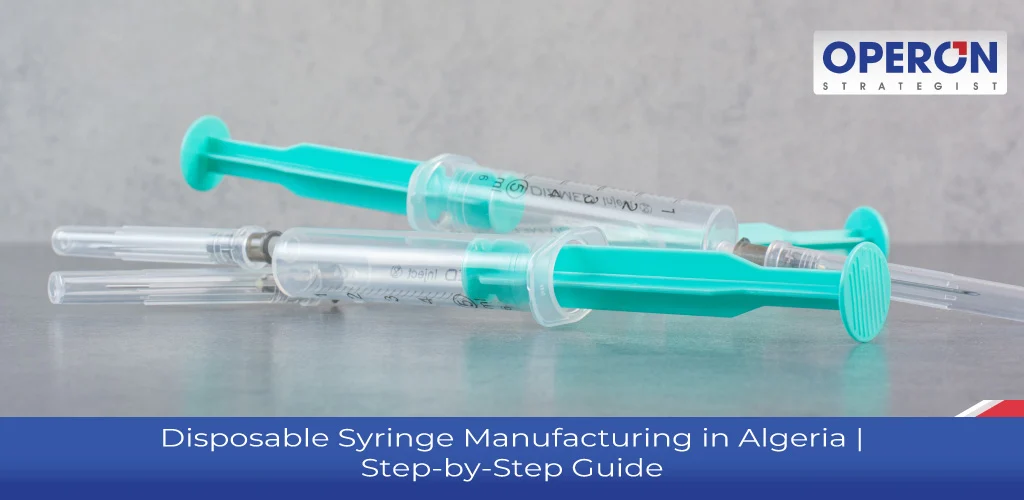
Read Next: Explore how complementary sterile production lines are scaling across Algeria in our comprehensive guides on Disposable Syringe Manufacturing in Algeria: A Step-by-Step Setup Guide and Blood Collection Tubes Manufacturing in Algeria.
Step-by-Step Medical Tubing Manufacturing Process
Producing medical-grade tubing demands strict dimensional tolerances, controlled cleanroom environments, and uncompromising compliance with ISO 13485:2016 and FDA 21 CFR Part 820 / QMSR principles.
4-Step Medical Tubing Manufacturing Process
Material Selection & Biocompatibility
Medical PVC, Silicone, PU, TPE selection compliant with ISO 10993 cytotoxicity and hemolysis standards.
Precision Extrusion & Calibration
Single/multi-lumen micro-die extrusion, vacuum cooling tanks, and continuous laser outer/inner diameter gauging.
Cleanroom Assembly & Fabrication
Downstream cutting, tip flaring, solvent bonding, luer lock fitting, and laser printing in ISO Class 7/8 cleanrooms.
Sterilization & Sterile Barrier Packaging
Tyvek pouch sealing, Ethylene Oxide (EtO) or Gamma irradiation sterilization, and SAL 10⁻⁶ batch release testing.
Step 1: Material Selection & Biocompatibility (ISO 10993 Compliance)
Raw material formulation directly dictates tube flexibility, clarity, kink resistance, chemical compatibility, and patient safety:
- Medical-Grade PVC: Highly cost-effective and flexible, standard for IV sets and blood bags (using DEHP-free or TOTM/DOTP plasticizers).
- Liquid Silicone Rubber (LSR): Exceptional biocompatibility, thermal stability, and low compression set, essential for long-term catheters, dialysis access, and drainage.
- Polyurethane (PU): Superior mechanical strength, thin-wall pressure resistance, and thermal softening at body temperature, ideal for central venous catheters (CVC).
- Polyethylene (PE) & Polypropylene (PP): Inert fluid-contact layers used in co-extruded tubing for aggressive oncology drugs and lipid infusions.
- Thermoplastic Elastomers (TPE): Latex-free, recyclable polymer gaining adoption as an environmentally safe alternative to plasticized PVC.
- Mandatory Biocompatibility Testing: Polymers must pass ISO 10993 (Biological Evaluation of Medical Devices) assays, verifying non-cytotoxicity (ISO 10993-5), non-sensitization, non-irritation (ISO 10993-10), and hemocompatibility (ISO 10993-4). Early technical feasibility studies help choose the optimal resin strategy tailored to regional tender specifications.
Step 2: Precision Extrusion: Single & Multi-Lumen Production
Precision polymer pellets are dried and fed into a specialized clean-extrusion line:
- Melt Homogenization: The resin is plasticized in a precision screw extruder under strict temperature zones (160°C to 220°C, depending on resin chemistry).
- Tooling & Micro-Dies: Melted polymer is forced through hardened steel dies and pin mandrels to produce single-lumen, multi-lumen (double, triple, or quad lumen for simultaneous drug infusion and pressure sensing), co-extruded (multi-layer), or radio-opaque striped configurations.
- Vacuum Calibration & Water Quench: The extruded tube enters a vacuum sizing tank to fix outer diameter (OD) and wall thickness dimensions, followed by temperature-controlled closed-loop cooling baths.
- In-Line Laser Gauging: Continuous multi-axis laser gauges measure OD, inner diameter (ID), and wall concentricity with sub-micron tolerances, automatically feeding back adjustments to puller speed.
Step 3: Secondary Downstream Processing & Assembly (ISO Class 7/8 Cleanrooms)
Extruded master tubing undergoes finishing inside ISO 14644-1 Class 7 or Class 8 cleanroom environments:
- Precision Cutting & Thermoforming: Automated high-speed rotary cutting to specified lengths, followed by radio-frequency (RF) tip forming, hole punching (eyeleting for drainage), and tip flaring.
- Component Bonding & Assembly: Assembly of luer-lock connectors, male/female adapters, stopcocks, flow regulators, injection sites, and drip chambers using UV-curable adhesives or solvent bonding (e.g., cyclohexanone).
- In-Line Laser Marking: Printing depth marks, graduations, batch identifiers, and French/Arabic regulatory labeling along the tube length.
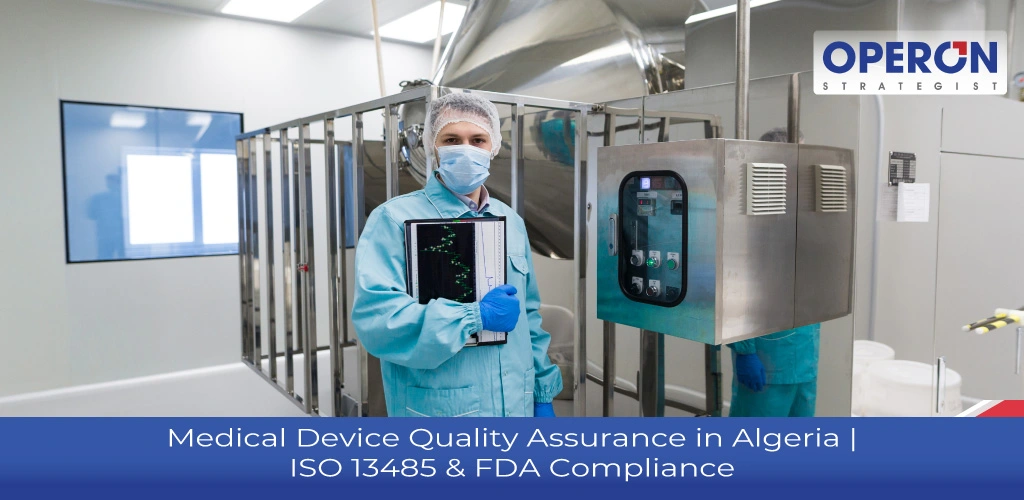
Read Also: Learn how cleanroom validation and contamination controls protect medical devices in our guide on Manufacturing Sterile Medical Devices in Algeria: Cleanroom Practices.
Step 4: Sterilization & Sterile Barrier Packaging (EtO & Gamma Irradiation)
Final medical tubing assemblies must maintain sterility until point-of-use:
- Sterile Barrier Packaging: Products are sealed in medical-grade pouches (breathable spunbond polyethylene Tyvek bonded to medical film) satisfying ISO 11607 (Packaging for Terminally Sterilized Medical Devices).
- Ethylene Oxide (EtO) Sterilization: The predominant method for plasticized tubing assemblies, controlling gas concentration, humidity, temperature (45°C to 55°C), and validated aeration cycles to keep residual EO/ECH levels below ISO 10993-7 thresholds.
- Gamma / E-Beam Irradiation: Alternative for radiation-stable polymers (such as specialty polypropylene or silicone), providing immediate release without degassing requirements.
- Sterility Assurance Validation: Validating a Sterility Assurance Level of 10⁻⁶ (SAL) per ISO 11135 (EtO) or ISO 11137 (Radiation).
Read Also: For comprehensive validation protocols, review our dedicated guide on Medical Device Validation Master Plan (VMP) in Algeria.
Regulatory Framework for Medical Tubing Manufacturing in Algeria
To distribute medical tubing locally and capture high-margin export markets, manufacturers must establish compliance systems aligned with national Algerian authorities and international target markets.
| Regulatory Category | Local Market Access (Algeria) | International / Export Markets |
| Product & Access Registrations | • ANPP Product Registration | • EU CE Marking (EU MDR) • US FDA 510(k) Clearance • UKCA Marking (UK) |
| Facility & Quality Standards | • MIP Facility Licensing • ISO 13485 QMS Audit • Local GMP Verification | • ISO 14971 Risk Management |
1. Local Algerian Regulatory Mandates
- Governing Regulatory Bodies: Medical device manufacturing in Algeria is under the dual authority of the Ministry of Pharmaceutical Industry (MIP) and the National Agency of Pharmaceutical Products (ANPP – Agence Nationale des Produits Pharmaceutiques).
- Risk Classification: Depending on contact duration and invasiveness:
- Class I (Transient / Non-Invasive): General suction tubing, external drainage connectors, fluid transfer tubes.
- Class IIa (Short-Term Invasive): Standard IV infusion sets, enteral feeding tubes, tracheostomy connections.
- Class IIb (Long-Term / High Risk): Central venous catheters (CVC), hemodialysis bloodlines, parenteral nutrition conduits.
- Quality Management Mandate: Operating licenses require full implementation of Medical Device Quality Assurance in Algeria aligned with ISO 13485 Quality Management Systems.
2. Export Compliance Requirements
- European Union (CE Marking): Mandatory technical documentation conforming to the EU MDR (Regulation EU 2017/745), Clinical Evaluation Reports (CER), and Notified Body certification.
- United States (US FDA): Clearance under US FDA 510(k) or establishment registration under 21 CFR Part 820 / Quality Management System Regulation (QMSR).
- Middle East & Africa: Mutual recognition pathways leveraging ISO 13485 certificates and Free Sales Certificates (FSC) to access growing MENA and African Union public health tenders.
Read Also: Review our step-by-step regulatory submission roadmap in Simplifying Medical Device Registration in Algeria.
Accelerate your cleanroom engineering, extrusion line qualification, and ANPP licensing with proven MedTech specialists
Business Opportunities & Industry Challenges in Algeria
Investing in a domestic extrusion and cleanroom tubing plant delivers substantial commercial advantages while demanding technical precision:
Commercial Market Opportunities:
- High-Volume Consumable Demand: Capturing multi-million dollar annual contracts with the Central Hospital Pharmacy (PCH) for standard infusion sets, blood transfusion lines, and suction tubes.
- Integrated Syringe & Blood Bag Manufacturing: Supplying extruded tubing directly to local downstream medical device assemblers.
- Competitive Production Economics: Attractive utility tariffs, industrial land allocations, and qualified local engineering talent yielding favorable production costs compared to European and Asian producers.
- Regional Export Hub: Direct maritime and air shipping routes to Mediterranean Europe, North Africa, and sub-Saharan healthcare markets.
Technical & Operational Challenges:
- Maintaining strict micro-particulate and bioburden limits inside ISO Class 7/8 cleanrooms.
- Sourcing validated medical-grade resins with continuous batch traceability.
- Calibrating high-speed puller tooling to prevent tube ovality and wall variations.
- Navigating multi-stage ANPP registration dossiers and technical file validations.
How Operon Strategist Accelerates Your Medical Tubing Setup in Algeria
Establishing an internationally accredited medical tubing extrusion and assembly facility requires integrated engineering expertise and rigorous regulatory guidance. Operon Strategist provides end-to-end turnkey consulting for companies establishing or scaling medical tubing manufacturing in Algeria:
- Turnkey Facility Design & Cleanroom Engineering: Complete conceptual and detailed architectural engineering for ISO 14644-compliant Class 7 and Class 8 cleanrooms, unidirectional material/personnel airlocks, and extrusion heat-load management. Our turnkey medical device manufacturing consultancy oversees projects from greenfield planning to final commissioning.
- Extrusion Line Selection & Equipment Qualification: Assisting in the selection and commissioning of precision extruders, vacuum sizing baths, closed-loop laser diameter gauges, and cutting machinery with complete DQ, IQ, OQ, and PQ validation protocols.
- ISO 13485:2016 Quality Management System (QMS): Designing customized standard operating procedures (SOPs), batch production records (BMR), material traceability matrices, and internal quality audit frameworks through our Quality Management System (QMS) consultancy.
- ANPP Product Registration & MIP Licensing: Preparing comprehensive technical files, biocompatibility summaries, sterilization validations, and bilingual Arabic/French labeling to secure fast-track Algerian health authority authorizations.
- Global Market Expansion (CE Marking & US FDA): Compiling General Safety and Performance Requirements (GSPR) documentation for CE Marking under EU MDR and US FDA 510(k) submissions.
- Process Validation & Technical Staff Training: Delivering hands-on training for operational teams on cleanroom hygiene, GMP documentation, extrusion troubleshooting, and bioburden controls.
Ensure seamless ISO 13485 certification, ANPP licensing, and international market clearance with Operon Strategist.
FAQ's
What materials are commonly used in medical tubing manufacturing in Algeria?
Medical-grade polymers include plasticized PVC for IV lines, liquid silicone rubber for long-term biocompatibility, polyurethane (PU) for vascular catheters, and thermoplastic elastomers (TPE) tested under ISO 10993.
What regulatory approvals are required to start medical tubing manufacturing in Algeria?
Manufacturers require an operating license from the Ministry of Pharmaceutical Industry (MIP), technical product registration from the ANPP, ISO 13485 QMS certification, and cleanroom validation under ISO 14644.
What quality control tests are performed on medical tubing?
Standard tests include tensile strength, kink resistance, dimensional laser gauging (inner/outer diameter and wall thickness), burst pressure testing, ISO 10993 biocompatibility, and sterility assurance level (SAL) validation.
Can medical tubing manufactured in Algeria be exported to Europe?
Yes. Exporting to Europe requires compliance with Regulation (EU) 2017/745 (EU MDR), CE Marking certification through an EU Notified Body, ISO 13485 QMS compliance, and an EU Authorized Representative.
Is medical tubing manufacturing a profitable business opportunity in Algeria?
Yes. Driven by national import substitution policies, high clinical demand for disposable infusion sets, and duty incentives, local production offers strong ROI and scalable export potential across Africa and Europe.
Senior Sales Executive | 3 Years of Experience
He brings experience in domestic and international business development, strategic client relationship management, and sales of medical device regulatory consulting and turnkey project services. His expertise includes supporting market entry and regulatory service requirements related to CDSCO registration, EU MDR CE marking, US FDA regulations, and ISO 13485 quality management systems.