
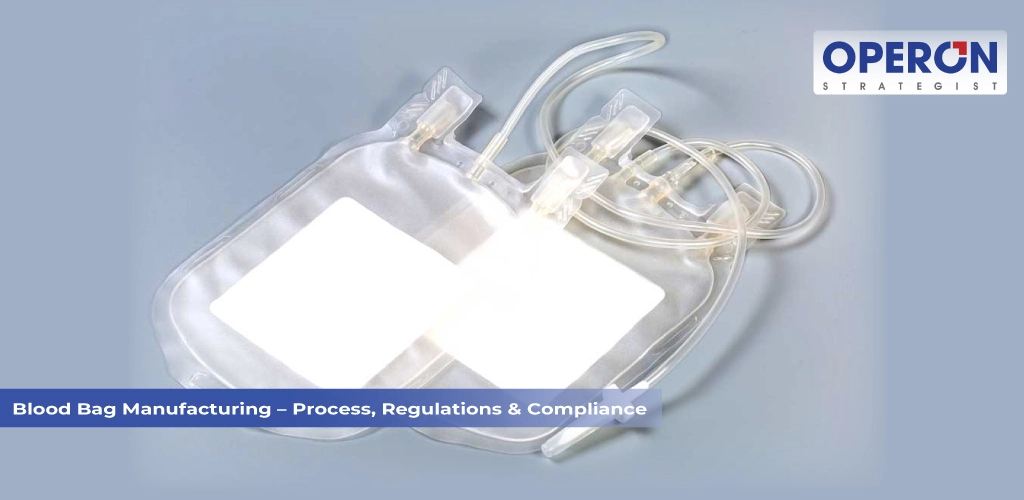
Blood Bag Manufacturing: Process, Regulatory Requirements & Compliance Guide
Blood bags are among the most critical medical devices used in modern healthcare systems. They play a vital role in blood collection, storage, processing, and transfusion, supporting emergency care, surgeries, trauma treatment, cancer therapy, and blood banking operations worldwide.
With rising healthcare demands and growing focus on blood safety, the blood bag manufacturing industry is witnessing significant growth. However, manufacturing blood bags requires strict adherence to quality standards, sterilization protocols, and global regulatory requirements.
This comprehensive guide explains the blood bag manufacturing process, regulatory compliance requirements, quality standards, market trends, and how Operon Strategist supports manufacturers in establishing compliant production facilities.
What Are Blood Bags?
Blood bags are sterile, flexible medical containers used for collecting, storing, transporting, and separating blood and blood components.
They are generally manufactured using medical-grade polyvinyl chloride (PVC) and are designed to maintain the integrity, sterility, and safety of blood during storage and transfusion.
Blood bags have replaced traditional glass bottles due to their:
- Improved safety
- Better storage flexibility
- Reduced contamination risk
- Easier blood component separation
- Enhanced transfusion efficiency
Key Components of Blood Bags
A standard blood bag system consists of several essential components:
- Blood Collection Bag
Used to collect and store donated blood safely.
- Tubes and Clamps
Help regulate and control blood flow during collection and processing.
- Needle and Needle Cover
Enable safe blood withdrawal while minimizing contamination risk.
- Anticoagulants and Preservatives
Special solutions such as CPDA-1 prevent clotting and maintain blood viability during storage.
Key Functions of Blood Bags
Blood bags are essential across hospitals, blood banks, diagnostic centers, and emergency healthcare facilities.
- Blood Collection and Storage
Blood bags allow sterile collection and safe storage of donated blood. - Blood Component Separation
Modern blood bag systems support separation into:- Red Blood Cells (RBCs)
- Plasma
- Platelets
- Cryoprecipitate
- Safe Blood Transfusion
Flexible sterile bags reduce contamination and infection risks compared to traditional storage systems. - Emergency and Critical Care Applications
Blood bags are widely used in:
- Trauma care
- Surgeries
- Organ transplants
- Cancer treatment
- Anemia management
- Intensive care units
Global Market Trends in Blood Bag Manufacturing
The global blood bag market is expanding rapidly due to increasing healthcare infrastructure and rising blood transfusion requirements.
Key Market Drivers
- Growing Demand for Blood Transfusions
Increasing accidents, surgeries, chronic diseases, and aging populations are driving blood transfusion needs globally.
- Technological Advancements
Manufacturers are introducing:
- Leukoreduction filters
- Bacterial filters
- Multi-compartment blood bag systems
- Advanced anticoagulant technologies
- Rising Healthcare Investments
Governments and healthcare organizations are investing heavily in blood safety infrastructure and medical device manufacturing.
- Expansion of Blood Banking Networks
Growing blood donation awareness programs and mobile blood collection systems are increasing demand for reliable blood storage products.
Blood Bag Manufacturing Process
Blood bag manufacturing involves highly controlled production processes to ensure sterility, durability, biocompatibility, and regulatory compliance.
Step 1: Raw Material Selection
The manufacturing process begins with selecting high-quality medical-grade raw materials.
Common Materials Used:
- Medical-grade PVC
- Plasticizers
- Tubing materials
- Sterile connectors
Anticoagulant Preparation
Special anticoagulant solutions such as CPDA-1 (Citrate Phosphate Dextrose Adenine) are prepared to preserve blood quality and prevent clotting.
Importance
Raw material quality directly impacts:
Product safety
Shelf life
Flexibility
Biocompatibility
Step 2: Extrusion and Molding
PVC materials are processed into blood bag components using extrusion and molding technologies.
Manufacturing Activities:
- Sheet extrusion
- Tube formation
- Bag molding
- Port manufacturing
- Connector assembly
Assembly Process
The tubing, clamps, needle ports, and collection chambers are integrated into the final blood bag configuration.
Step 3: Sealing and Sterilization
Sterility is one of the most critical aspects of blood bag manufacturing.
Heat Sealing
Heat sealing ensures leak-proof integrity and maintains sterile barriers.
Sterilization Methods:
- Gamma Sterilization
Uses ionizing radiation to eliminate microorganisms. - Ethylene Oxide (EtO) Sterilization
A chemical sterilization method used for temperature-sensitive medical devices.
Objective
Sterilization ensures:
- Patient safety
- Microbial elimination
- Product reliability
- Regulatory compliance
Step 4: Quality Control and Testing
Strict quality testing is conducted throughout the manufacturing process.
Common Quality Tests:
- Leak Testing
Verifies bag integrity and sealing performance. - Sterility Testing
Ensures absence of microbial contamination. - Tensile Strength Testing
Checks material durability and flexibility. - Anticoagulant Effectiveness Testing
Validates blood preservation performance. - Biocompatibility Testing
Ensures materials are safe for medical use.
Step 5: Packaging and Distribution
After successful quality checks, blood bags are packaged under controlled sterile conditions.
Packaging Requirements:
- Sterile barrier packaging
- Labeling compliance
- Batch traceability
- Storage instructions
Controlled Storage
Products are stored in temperature-controlled environments before shipment and distribution.
Regulatory Compliance for Blood Bag Manufacturing
Blood bags are classified as medical devices and must comply with stringent regulatory standards before commercialization.
Key Regulatory Standards for Blood Bags:
International Organization for Standardization ISO 13485 defines quality management system requirements for medical device manufacturers.
Key Benefits:
- Improved product quality
- Regulatory compliance
- Risk management
- Global market acceptance
Manufacturers targeting the United States market must comply with the requirements of the U.S. Food and Drug Administration.
FDA 510(k) Requirements Include:
- Substantial equivalence demonstration
- Performance testing
- Sterility validation
- Labeling compliance
Blood bags sold in Europe must comply with the European Medical Device Regulation (MDR).
CE Compliance Includes:
- Clinical evaluation
- Risk assessment
- Technical documentation
- Post-market surveillance
CDSCO Manufacturing License in India
Manufacturers operating in India require approval from the Central Drugs Standard Control Organization.
CDSCO Compliance Requirements:
- Manufacturing site approval
- Device classification
- Quality management compliance
- Technical documentation
- Regulatory submissions
Challenges in Blood Bag Manufacturing
Manufacturers commonly face several operational and regulatory challenges.
- Regulatory Complexity
Managing compliance across multiple international markets can be difficult.
- Sterility Assurance
Maintaining contamination-free production environments requires advanced infrastructure.
- Documentation Burden
Extensive technical documentation is necessary for regulatory approvals.
Manufacturing processes must be validated to ensure consistent quality.
- Supply Chain Management
Raw material consistency and traceability are critical for production reliability.
Role of Operon Strategist in Blood Bag Manufacturing
Operon Strategist provides end-to-end regulatory and manufacturing support for blood bag manufacturers and medical device companies.
How Operon Strategist Supports Blood Bag Manufacturers
Plant Setup and Validation
- Manufacturing facility planning
- Cleanroom design guidance
- Utility planning
- Equipment qualification
- Process validation support
Regulatory Compliance Support
- CDSCO manufacturing license assistance
- FDA 510(k) guidance
- CE Marking support
- Global regulatory strategy
ISO 13485 QMS Implementation
Risk Management Services
- ISO 14971 implementation
- Hazard analysis
- Production risk mitigation
Documentation and Training
- Technical file preparation
- Device Master File support
- Employee training programs
- Compliance documentation
- Vigilance reporting
- Complaint handling systems
- Regulatory updates and compliance monitoring
Planning to start a blood bag manufacturing facility? Connect with Operon Strategist for complete regulatory and compliance support.
Why Regulatory Compliance Matters in Blood Bag Manufacturing
Compliance is essential to:
- Ensure patient safety
- Prevent contamination risks
- Achieve global market access
- Maintain product consistency
- Reduce regulatory penalties
- Build trust with healthcare providers
Manufacturers with strong regulatory systems gain a competitive advantage in both domestic and international markets.
Conclusion
Blood bags are indispensable medical devices that support life-saving healthcare procedures worldwide. As demand for safe blood storage and transfusion systems continues to rise, manufacturers must focus on quality production, sterilization, and strict regulatory compliance.
Successful blood bag manufacturing requires:
- Advanced production systems
- Quality management implementation
- International regulatory approvals
- Robust documentation practices
Operon Strategist helps medical device manufacturers establish compliant blood bag manufacturing operations with complete regulatory, technical, and quality support.
FAQs on Blood Bag Manufacturing
What materials are used in blood bag manufacturing?
Blood bags are commonly manufactured using medical-grade PVC materials designed for flexibility, durability, and biocompatibility.
Why is ISO 13485 important for blood bag manufacturers?
ISO 13485 ensures that manufacturers maintain an effective quality management system for medical device production.
Is CDSCO approval mandatory for blood bag manufacturing in India?
Yes, manufacturers must obtain approval from the Central Drugs Standard Control Organization before commercial manufacturing in India.
What sterilization methods are used for blood bags?
Gamma sterilization and Ethylene Oxide (EtO) sterilization are commonly used to ensure sterility.
What is FDA 510(k) clearance?
FDA 510(k) clearance is a regulatory pathway required for marketing medical devices in the United States.
Why are blood bags preferred over glass bottles?
Blood bags reduce contamination risk, allow easier blood component separation, and improve storage efficiency.
How does Operon Strategist help blood bag manufacturers?
Operon Strategist provides regulatory consulting, plant setup guidance, quality management implementation, documentation support, and global compliance assistance.