
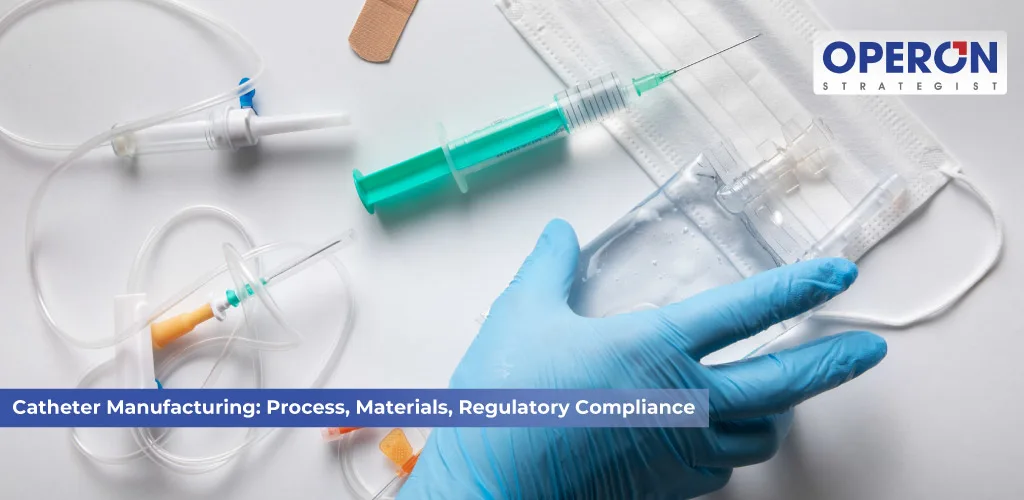
Catheter Manufacturing: Process, Materials, Regulatory Compliance
Catheter manufacturing is a highly specialized segment of the medical device industry, requiring precision engineering, stringent regulatory compliance, and advanced material science. With increasing demand for minimally invasive procedures, the global catheter market is evolving rapidly driven by innovations in biocompatible materials, antimicrobial coatings, and automated production technologies.
This guide provides a practical, expert-level overview of catheter manufacturing, focusing on real-world processes, regulatory frameworks, and critical quality considerations aligned with current industry expectations.
What is a Catheter?
A catheter is a flexible, tubular medical device inserted into the body for diagnostic or therapeutic purposes. Depending on the application, catheters may be used in cardiovascular, urology, neurovascular, or gastrointestinal procedures.
Common types include:
- Urinary catheters (Foley, intermittent)
- Cardiovascular catheters (angiography, PTCA)
- Neurovascular catheters
- Central venous catheters (CVC)
Each type demands different material properties, dimensional tolerances, and performance characteristics, directly influencing manufacturing complexity.
What Are the Critical Steps in the Catheter Manufacturing Process?
- Material Selection (Critical Foundation)
Material choice determines catheter flexibility, strength, and biocompatibility. Common materials include:
- Polyurethane (PU) → balance of flexibility and strength
- Silicone → high biocompatibility
- Polyethylene (PE) → cost-effective, less flexible
- PTFE (Teflon) → low friction surface
Expert Insight:
Material selection is not just functional it must align with regulatory standards like ISO 10993 for biocompatibility testing.
- Extrusion Process (Core Manufacturing Stage)
Extrusion is the backbone of catheter manufacturing. It involves melting polymer resins and forming continuous tubing using precision dies.
Key parameters controlled:
- Outer diameter (OD) & inner diameter (ID) tolerance
- Wall thickness consistency
- Surface finish
Advanced Practice:
Multi-lumen extrusion is used for complex catheters (e.g., balloon or drug-delivery catheters), requiring high-end tooling and process validation.
- Tip Forming & Thermal Processing
Catheter tips are shaped using controlled heat processes to achieve:
- Soft atraumatic tips
- Curved or angled geometries
Techniques include:
- Radiofrequency (RF) forming
- Hot air forming
- Laser-assisted shaping
- Balloon Forming (For Balloon Catheters)
Balloon catheters require blow molding techniques where a balloon is formed under controlled pressure and temperature.
Critical parameters:
- Burst pressure resistance
- Compliance characteristics
- Wall uniformity
- Assembly & Bonding
Multiple components are assembled, including:
- Connectors (luer locks)
- Hubs
- Reinforcement braids or coils
Bonding techniques:
- Thermal bonding
- Adhesive bonding (medical-grade adhesives)
- Laser welding
Risk Area:
Improper bonding is a leading cause of catheter failure requiring validated processes and tensile strength testing.
- Coating Application
To enhance performance, coatings are applied such as:
- Hydrophilic coatings → reduce friction
- Antimicrobial coatings → reduce infection risk
Industry Trend:
Drug-eluting coatings are increasingly used in cardiovascular catheters.
- Sterilization
Catheters must be sterile before use. Common methods include:
- Ethylene Oxide (EtO) sterilization
- Gamma radiation
Each method requires validation for:
- Sterility assurance level (SAL 10⁻⁶)
- Material compatibility
- Packaging (Barrier System)
Medical-grade packaging ensures sterility is maintained.
Includes:
- Tyvek pouches
- Blister packaging
Packaging validation includes:
- Seal integrity testing
- Transportation simulation
What Regulatory Requirements Apply to Catheter Manufacturing?
- Quality Management System
Manufacturers must comply with:
- ISO 13485 (mandatory for global markets)
- Product Approval Pathways
Depending on the market:
- USA → FDA 510(k) clearance
- Europe → MDR (CE Marking)
- India → CDSCO registration
- Biocompatibility & Safety Testing
Key standards:
- ISO 10993 (biological evaluation)
- ISO 10555 (intravascular catheters)
Testing includes:
- Cytotoxicity
- Sensitization
- Hemocompatibility
What Are the Key Quality Control Parameters in Production?
Manufacturers must closely monitor:
- Dimensional accuracy (micron-level tolerance)
- Tensile strength
- Kink resistance
- Flow rate performance
Real Industry Challenge:
Maintaining consistency in high-volume production while meeting tight tolerances is one of the biggest operational hurdles.
What Challenges Do Catheter Manufacturers Commonly Face?
- Material variability affecting extrusion quality
- Complex multi-lumen designs
- Regulatory compliance across multiple regions
- Sterilization compatibility issues
- Scale-up from prototype to mass production
What Are the Latest Trends in Catheter Manufacturing?
- Automation & AI-driven inspection systems
- Use of bioresorbable materials
- Smart catheters with sensors
- Increased demand for minimally invasive devices
- Sustainability in medical-grade plastics
How Operon Strategist Supports Catheter Manufacturers ?
Operon Strategist provides end-to-end consulting support including:
- Technical documentation & risk management
- Process validation and QMS implementation
FAQ's
What materials are best for catheter manufacturing?
Polyurethane and silicone are widely preferred due to flexibility and biocompatibility.
Is catheter manufacturing highly regulated?
Yes, it requires compliance with ISO 13485, FDA, MDR, and other regional regulations.
What is the biggest challenge in catheter production?
Maintaining precision and consistency in extrusion and assembly processes.
Which sterilization method is commonly used?
Ethylene Oxide (EtO) is the most commonly used method.
Can startups enter catheter manufacturing?
Yes, but they must invest in cleanroom infrastructure, regulatory compliance, and process validation.