
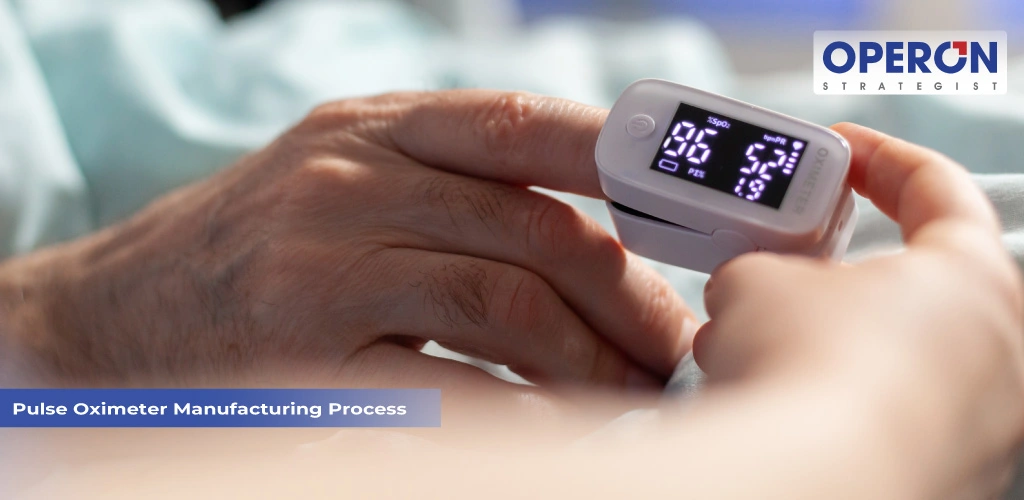
Pulse Oximeter Manufacturing Process and Their Types
An Overview of Pulse Oximeter Manufacturing
The manufacturing of oximeters, vital medical devices that measure oxygen saturation levels, poses unique challenges for aspiring manufacturers. From establishing efficient plants and ensuring product feasibility to meeting stringent regulatory requirements, the journey to producing these crucial devices can be complex. This blog aims to shed light on the process of oximeter manufacturing, providing valuable insights into layout design, clean room requirements, and the necessary steps to obtain the required regulatory approvals. By the end of this exploration, you’ll have a comprehensive understanding of the intricate world of oximeter production and the vital role these devices play in modern healthcare.
The Pulse Oximeter Manufacturing Process
The pulse oximeter manufacturing process involves precise engineering and strict quality control. Here’s a breakdown of the process:
- Procurement of Electronic Components: Microprocessors, resistors, capacitors, and sensors are sourced for assembly.
- PCB Assembly Using SMT: Components are placed on printed circuit boards (PCBs) using Surface Mount Technology (SMT).
- Sensor Integration: The core sensor, which detects oxygen saturation, is integrated and calibrated.
- User Interface & Power Source: The device’s display, buttons, and battery (rechargeable or disposable) are installed.
- Testing & Calibration: Rigorous quality checks ensure accuracy and reliability before packaging and distribution.
Machinery Used for Pulse Oximeter Manufacturing Process
- Surface Mount Technology (SMT) Machines
- Reflow Soldering Machines
- Automatic Test Equipment (ATE)
- Calibration Equipment
- Assembly and Packaging Machines
- Screen Printing Machines
- CNC Machines (Computer Numerical Control)
- Injection Moulding Machines
- Testing and Quality Control Devices
Raw Materials and Other Requirements for Pulse Oximeter Manufacturing Process
- Print circuit boards
- Electronic components
- Light-emitting diodes
- Adhesive materials
- Photodetector
- Optical components
- Display screen
- Labels and packaging materials
- Battery
- Casing material – Plastic or metal
- User interface components
Manpower Required
- Machine operators
- Skilled/ unskilled worker
- Helpers
- Manager cum Accountant
- Sales Personnel
- Marketing executive
Types of Pulse Oximeters
- Finger Pulse Oximeters
- Compact and battery-powered
- Designed for personal use
- Provides SpO2 readings and heart rate
- Handheld or Portable Pulse Oximeters
- Digital display with detachable sensors
- Used in hospitals for spot-checks or continuous monitoring
- Includes alarm functions for patient safety
- Tabletop Pulse Oximeters
- Stationary units with advanced monitoring features
- AC-powered with multiple sensor connectivity
- Can monitor ECG, blood pressure, and temperature
Application of Pulse Oximeters
- Hospital Monitoring: Used in emergency rooms and ICUs
- Neonatal Care: Vital for premature infants
- Home & Remote Monitoring: Patients can track oxygen levels at home
- Sleep Apnea Management: Helps detect nighttime oxygen fluctuations
- Fitness & High-Altitude Use: Monitors athletes and mountaineers
Regulations and Standard Compliance
Pulse oximeters are medical devices, and their manufacturing, distribution, and usage are subject to various regulations and standards to ensure their safety and effectiveness. Some of the key regulations and standards regarding pulse oximeters include:
India:
- Central Drugs Standard Control Organization (CDSCO)
International:
- International Electrotechnical Commission (IEC) Standards:
- ISO 80601-2-61
- CE Marking (EU)
- FDA Regulations (USA) : under the Code of Federal Regulations (CFR) Title 21, Part 820.
- ISO 13485
- ISO 14971
How Operon Strategist Can Help
Our Services Include:
- GMP-compliant plant layout design aligned with CDSCO, US FDA, CE, and other regulatory requirements
- Turnkey project execution and complete manufacturing plant setup
- Product and process engineering for medical device manufacturing
- Medical device product design & development
- Cleanroom design, setup, and compliance (ISO 14644)
- Detailed Project Report (DPR) with technical and financial planning
- Product financial feasibility and market analysis
- Regulatory due diligence and compliance strategy
- Quality Management System (QMS) setup and documentation
- ISO 13485 certification support
- Global regulatory approvals and certifications (CDSCO, US FDA, CE, SFDA, UKCA, MDSAP)
- Medical device product registrations across multiple countries
- Import license registration and regulatory documentation
- Market intelligence for global product registration and expansion
FAQ
What is the pulse oximeter manufacturing process?
The pulse oximeter manufacturing process involves PCB assembly using SMT technology, sensor integration, software installation, calibration, quality testing, casing assembly, and final packaging. Manufacturers must also comply with medical device regulations and quality standards.
Which raw materials are required for pulse oximeter manufacturing?
Pulse oximeter manufacturing requires printed circuit boards (PCBs), sensors, LEDs, photodetectors, batteries, display screens, plastic or metal casing materials, electronic components, and packaging materials.
Is a clean room required for pulse oximeter manufacturing?
Yes, maintaining a controlled manufacturing environment is important to prevent contamination and ensure product quality, especially during electronic assembly and sensor integration.
Can startups enter the pulse oximeter manufacturing business?
Yes, startups can enter the pulse oximeter manufacturing industry with proper planning, regulatory guidance, manufacturing setup, and quality compliance support.