
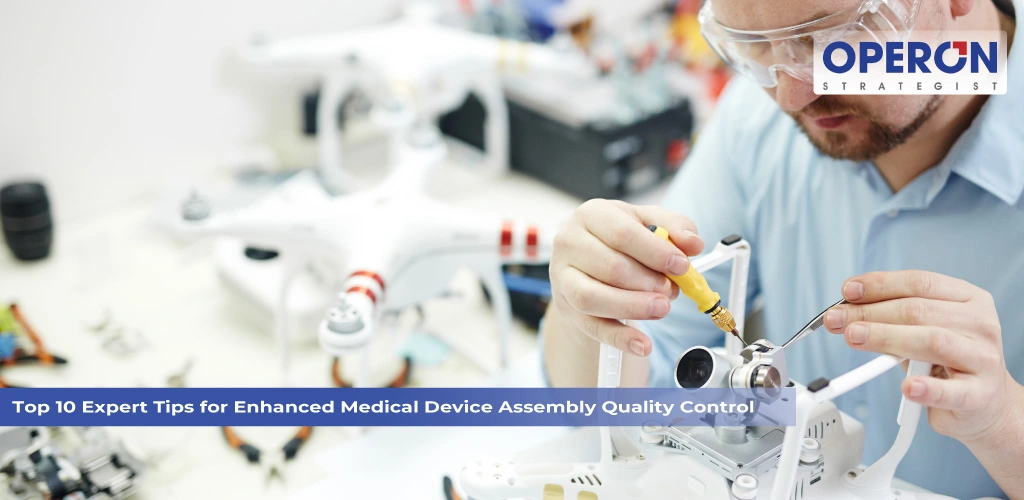
Top 10 Tips for Medical Device Assembly Quality Control
Overview
Medical device assembly quality control is the structured framework of technical inspections, process validations, and documentation practices used to ensure every manufactured device meets strict safety and performance standards. Key strategies include robust ISO 13485 document control, full component serialization, three-phase process validation (IQ/OQ/PQ), automated Poka-Yoke error detection, proactive ISO 14971 risk management, and integrated CAPA systems.
In medical device manufacturing, quality control during assembly is not merely an operational checklist—it is a critical regulatory safeguard. Whether assembling Class A low-risk diagnostics or Class D active life-support devices, maintaining high standards during assembly prevents dangerous product defects, minimizes costly recalls, and ensures full compliance with international standards such as ISO 13485, US FDA 21 CFR Part 820, and CDSCO MDR 2017.
Implementing an optimized quality control process for medical devices protects patient health while streamlining assembly efficiency.
Regulatory Excellence for Global Medical Device Markets
Top 10 Strategies to Enhance Medical Device Assembly Quality Control
| Tip # | Quality Control Strategy | Primary Focus / Regulatory Standard |
| 1 | Meticulous Document Control | ISO 13485 & DHR / Batch Records |
| 2 | Rigorous Supplier Qualification | Raw Material Quality & Traceability |
| 3 | Component Serialization & Tracking | Barcode & RFID Part Identification |
| 4 | Comprehensive Process Validation | IQ, OQ, PQ Operational Testing |
| 5 | Advanced Defect & Inspection Analysis | Root Cause Analysis (RCA) & In-line QC |
| 6 | Automated Poka-Yoke Error Detection | Automated Sensors & Optical Verification |
| 7 | Standardized Operator Training | Work Instructions & Qualification Logs |
| 8 | Closed-Loop Nonconformance & CAPA | ISO 13485 Clause 8.5 Corrective Actions |
| 9 | Proactive ISO 14971 Risk Management | FMEA & Hazard Control Protocols |
| 10 | Continuous Audit & Process Improvement | Data Analytics & Management Reviews |
1. Enforce Meticulous Documentation and ISO 13485 Document Control
Thorough documentation of every step on the assembly line forms the bedrock of medical device quality assurance. Standard Operating Procedures (SOPs), Device History Records (DHRs), and Batch Manufacturing Records (BMRs) must accurately reflect real-time production activities. Maintaining strict ISO 13485 document control guarantees full audit readiness and allows engineering teams to trace batch deviations directly to their root cause.
2. Perform Strict Supplier Evaluation and Material Traceability
Product integrity on the assembly line begins long before components reach the cleanroom. Manufacturers must institute comprehensive supplier audit programs, evaluating component suppliers based on quality certifications, historical defect rates, and material purity. Working exclusively with certified suppliers who provide full Certificate of Analysis (CoA) documentation prevents sub-standard materials from compromising final device assembly.
3. Implement Component Serialization and Barcode Tracking
Tracking components across sub-assembly and final assembly stages reduces assembly errors and simplifies recall readiness. By integrating 2D DataMatrix barcodes, serial numbers, or RFID tagging, quality control teams can instantly verify that the correct sub-components are installed. Complete material serialization ensures end-to-end supply chain visibility and rapid isolation of defective component lots.
Ready to optimize your medical device assembly quality control?
Connect with Operon Strategist’s QA experts today.
4. Conduct Comprehensive Process Validation (IQ, OQ, PQ)
Assembly processes that cannot be fully verified by subsequent inspection must undergo rigorous process validation. Executing structured process validation in medical device assembly guarantees that equipment and assembly workflows consistently operate within established technical specifications.
To achieve full compliance, production lines must undergo rigorous IQ, OQ, and PQ protocol execution:
Installation Qualification (IQ): Verifies correct equipment setup and environmental connections.
Operational Qualification (OQ): Tests operational boundaries and challenge conditions.
Performance Qualification (PQ): Demonstrates long-term process stability under real manufacturing conditions.
5. Utilize In-Line Automated Inspection Techniques
Relying solely on final product testing is risky and inefficient. Incorporate automated optical inspection (AOI), vision systems, and electronic torque monitoring directly into the assembly line. Utilizing real-time defect analysis and Five-Why root cause analysis allows quality control personnel to intercept assembly errors before sub-assemblies move to downstream packaging steps.
6. Integrate Automated Error-Proofing (Poka-Yoke)
Human error remains one of the leading drivers of assembly line nonconformances. Integrating physical and digital Poka-Yoke (error-proofing) mechanisms prevents incorrect component orientation or missing fasteners. Automated pick-to-light systems, force sensors, and automated vision checks stop the line automatically whenever an assembly step deviates from set parameters.
7. Mandate Standardized Work Instructions and Staff Training
Even the most advanced assembly technology relies on human execution. Manufacturers must establish clear, visual Work Instructions (WI) at every assembly workstation. Assembly line technicians should undergo routine competency re-evaluations and cross-training to ensure strict compliance with cleanroom protocols, electrostatic discharge (ESD) safety, and manual assembly techniques.
8. Establish a Closed-Loop Nonconformance & CAPA System
When an assembly defect is flagged, line supervisors must execute formal nonconformance handling procedures immediately. Quarantining defective lots, documenting root causes, and implementing an effective CAPA system elements framework prevents recurring defects and turns assembly failures into actionable process improvements.
9. Apply Proactive Risk Management (ISO 14971) Throughout Assembly
Quality control plans must align with a dedicated ISO 14971 medical device risk management strategy. Performing Process Failure Mode and Effects Analysis (PFMEA) enables engineering teams to rank potential assembly risks based on severity, occurrence, and detectability—allowing teams to apply targeted engineering controls to high-risk assembly sequences.
10. Foster a Culture of Continuous Improvement and Data Analytics
Medical device quality control is an evolving discipline. Establish key performance indicators (KPIs) such as First Pass Yield (FPY), Scrap Rate, and Defect Per Million Opportunities (DPMO). Reviewing assembly metrics during routine management reviews ensures that quality control measures continuously adapt to higher production volumes and evolving regulatory demands.
How Operon Strategist Can Help
Operon Strategist provides end-to-end medical device quality management and manufacturing consulting, helping companies build robust, compliant assembly control systems:
Turnkey QMS Setup: Designing ISO 13485 and US FDA 21 CFR Part 820 compliant Quality Management Systems tailored to your assembly workflows.
Process Validation Assistance: Execution of Installation, Operational, and Performance Qualifications (IQ/OQ/PQ) for automated and manual assembly lines.
Risk Management: Development of ISO 14971 compliant risk management files and assembly line hazard analyses.
Supplier & Internal Auditing: Conducting comprehensive supplier quality audits, mock FDA inspections, and ISO 13485 readiness reviews.
CAPA & Nonconformance Remediation: Streamlining root-cause analysis procedures and establishing closed-loop CAPA workflows to resolve production line bottlenecks.
Schedule your strategy session now
Streamline your manufacturing line with turnkey ISO 13485 and QMS consulting
FAQ's
What is medical device assembly quality control?
It is the system of procedures, inspections, and validations used during assembly to ensure every medical device meets defined safety, performance, and regulatory requirements.
Why is process validation necessary in assembly quality control?
Process validation proves that an assembly process consistently produces devices meeting all quality specifications when the final product cannot be fully verified by routine inspection alone.
How does ISO 14971 apply to medical device assembly?
ISO 14971 guides manufacturers in identifying potential assembly hazards, assessing risk levels via PFMEA, and implementing risk controls to prevent device failure during production.
What role does an Indian Authorized Agent play in CDSCO approval?
An Indian Authorized Agent (IAA) acts as the official local legal representative for overseas manufacturers, submitting regulatory filings and holding import licenses on their behalf.
What are Poka-Yoke systems in medical device manufacturing?
Poka-Yoke systems are automated error-proofing tools (such as sensors, interlocks, or visual guides) designed to prevent assembly mistakes before they occur.