
Senior Sales Executive | 3 Years of Experience
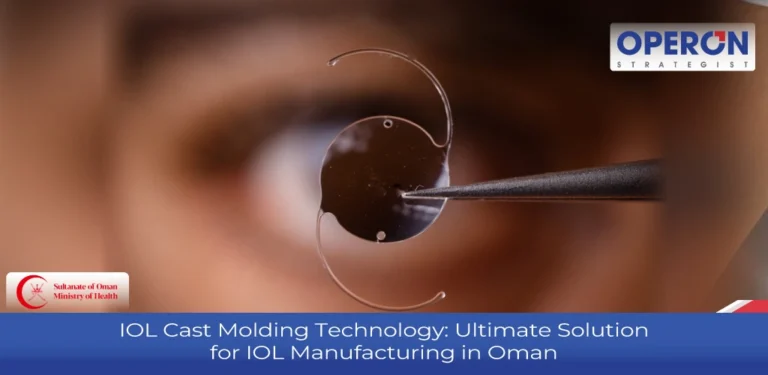
Intraocular lenses (IOLs) are precision medical devices implanted in the eye, most commonly during cataract surgery. As demand for cataract treatment and advanced vision correction grows, manufacturers are exploring production technologies that deliver consistent optical quality, reliable performance and scalable output.
IOL cast molding technology enables manufacturers to form lenses by polymerizing a liquid monomer or pre-polymer mixture inside a precision mold. The process can support the production of foldable IOLs made from hydrophobic acrylic, hydrophilic acrylic and silicone materials, depending on the product design.
For companies considering IOL manufacturing in Oman, the project involves more than selecting molding equipment. Manufacturers must plan the facility, qualify materials and processes, establish an ISO 13485-compliant quality management system, validate inspection and sterilization processes where applicable, and determine the regulatory requirements for the intended market.
Why Consider IOL Cast Molding Technology in Oman?
Oman can be considered as a manufacturing and regional market-entry location by companies assessing opportunities in ophthalmic medical devices. Before investing, manufacturers should evaluate local demand, import competition, healthcare procurement channels, production economics and access to export markets.
Cast molding may be suitable for manufacturers seeking repeatable production of soft, foldable IOLs. Its potential advantages include:
- Repeatable lens geometry: Precision molds and controlled polymerization help maintain dimensional consistency.
- Production scalability: Molding can support higher-volume production once the process is established and validated.
- Design options: Depending on the material and mold design, manufacturers can develop monofocal, toric, multifocal and other IOL configurations.
- Material efficiency: In-mold polymerization can reduce material waste compared with some subtractive manufacturing approaches.
- Controlled optical surfaces: A well-designed mold can produce a smooth optical surface and reduce the amount of downstream finishing required.
The actual benefits depend on lens design, material formulation, mold accuracy, process capability and inspection results. Manufacturers should confirm these factors through product development and process validation before making production or cost claims.
What Is IOL Cast Molding Technology?
IOL cast molding is a manufacturing method in which a liquid monomer or pre-polymer formulation is introduced into a precision mold and cured or polymerized to form the lens.
The mold defines important lens characteristics, including optical surfaces, curvature and overall geometry. Process parameters such as material composition, filling conditions, temperature, curing time and demolding technique influence the finished product.
Cast molding is commonly considered for soft foldable IOLs made from:
- Hydrophobic acrylic: Used in foldable IOL designs with specific optical and mechanical characteristics.
- Hydrophilic acrylic: Used where the material’s hydration and handling properties suit the intended lens design.
- Silicone: Used in selected foldable IOL designs based on the required optical and mechanical properties.
Material selection should be supported by design verification, biological evaluation and performance testing. Manufacturers should also assess how the material behaves during storage, sterilization and its intended clinical use.
Types of Intraocular Lenses Manufactured Using Molding Technology
The IOL design determines the optical performance and intended correction. Cast molding may be used for several lens configurations, depending on the validated manufacturing process.
1. Monofocal IOLs
Monofocal lenses provide a single focal point and are commonly used to restore distance vision after cataract surgery. Their production requires consistent control of refractive power, optical geometry and surface quality.
2. Toric IOLs
Toric IOLs are designed to correct corneal astigmatism. Their manufacture requires control of cylinder power, axis markings, rotational orientation and dimensional accuracy.
3. Multifocal IOLs
Multifocal lenses are designed to provide more than one focal point. Their optical zones and surface geometry require precise design control and appropriate optical performance testing.
4. Extended Depth of Focus (EDOF) IOLs
EDOF lenses are designed to extend the range of functional vision. Their optical design and performance characteristics should be verified against defined product specifications.
Not every IOL design or material is automatically suitable for every cast molding process. The manufacturing route should be selected and qualified for the specific device design.
Step-by-Step IOL Cast Molding Manufacturing Process
A typical IOL cast molding process includes the following stages. The exact sequence and controls vary with the material, lens design and production technology.
1. Precision Mold Design and Fabrication
Molds are designed to achieve the required optical surfaces, lens curvature and dimensional characteristics. Mold surface quality and dimensional accuracy directly influence the finished lens.
Manufacturers should establish controls for:
- Mold material selection and compatibility
- Optical surface finish
- Dimensional inspection
- Mold cleaning and handling
- Mold maintenance and replacement criteria
2. Polymer and Raw Material Preparation
The selected monomer or pre-polymer formulation is prepared under controlled conditions. Material identity, purity, storage conditions, mixing parameters and handling time should be documented.
Depending on the formulation, the process may require filtration, degassing or other preparation steps to control contamination and air entrapment. Initiators and additives should be selected according to the validated material formulation. UV initiators are not a universal requirement for every IOL polymer.
3. Mold Filling or Injection
The prepared material is introduced into the mold cavity using controlled filling conditions. The objective is to achieve complete and consistent mold filling while limiting bubbles, contamination and other defects.
Critical parameters may include material temperature, filling rate, pressure, mold condition and the time between preparation and filling.
4. Polymerization and Curing
The filled mold undergoes polymerization or curing according to the material chemistry. Depending on the formulation, curing may use controlled heat, UV exposure or another validated method.
Temperature, exposure conditions and curing time should be monitored because incomplete or non-uniform polymerization can affect optical properties, mechanical behavior and dimensional consistency.
5. Demolding and Lens Finishing
After curing, the lens is carefully removed from the mold. The lens is inspected for visible defects and damage.
Additional operations may include edge finishing, polishing, hydration for applicable hydrophilic materials, cleaning or surface treatment. The need for each operation depends on the lens design and the quality achieved during molding.
6. Optical, Dimensional and Visual Inspection
Finished lenses undergo inspection against approved product specifications. Depending on the IOL design, testing may include:
- Refractive power and diopter accuracy
- Optical quality and surface defects
- Dimensions and overall geometry
- Haptic dimensions and mechanical characteristics
- Visual inspection for inclusions, bubbles or other defects
- Relevant performance tests specified for the product
The ISO 11979 series is an important reference for intraocular lens requirements and testing. Manufacturers should identify the applicable parts and editions based on the device type and regulatory market.
7. Cleaning, Sterilization and Packaging
The cleaning and sterilization process must be compatible with the IOL material and finished device. The selected sterilization method should be validated for the product and packaging configuration.
Manufacturers should also establish packaging controls to maintain product integrity and, where applicable, sterility throughout storage and distribution. Labeling and traceability records should identify the product, batch or lot, sterilization status and relevant handling information.
Quality and Facility Requirements for IOL Manufacturing
IOL production requires controlled manufacturing conditions because small variations in material, geometry or surface quality can affect optical performance.
A manufacturing facility should be designed around the product, process risks and contamination-control strategy. Cleanroom classification should be determined through risk assessment and applicable requirements rather than assuming one classification applies to every production area.
Important facility and quality-system considerations include:
- Controlled areas for material preparation, molding, finishing and packaging
- Appropriate HVAC and environmental monitoring
- Defined material and personnel movement
- Equipment qualification and maintenance
- Cleaning procedures and contamination controls
- Trained personnel and documented work instructions
- Traceability of raw materials, in-process products and finished lenses
- Documented nonconformance, CAPA and change-control procedures
ISO 13485 Quality Management System
ISO 13485 provides the quality management system framework for medical device manufacturers. For IOL production, the QMS should address design and development controls, supplier qualification, production controls, risk management, inspection, traceability, nonconforming products and corrective actions.
Certification alone does not demonstrate that a specific IOL manufacturing process is capable. Manufacturers must also maintain objective evidence that their equipment, processes and product inspections meet defined requirements.
Risk Management and Biocompatibility
Risk management should be integrated throughout product development and manufacturing. ISO 14971 provides a framework for identifying, evaluating and controlling medical device risks.
Biological evaluation should be planned according to the nature and duration of patient contact, material composition and intended use. The ISO 10993 series may be relevant to this assessment. The required tests and evidence should be determined through a documented biological evaluation rather than applying a fixed test list to every IOL.
Regulatory Requirements for IOL Manufacturing in Oman
Manufacturers planning to produce or market IOLs in Oman should confirm the applicable regulatory pathway with the Oman Ministry of Health and its responsible medical device regulatory directorate.
The regulatory classification and documentation requirements should be confirmed for the specific product and intended use. IOLs are generally considered high-risk implantable medical devices in major regulatory systems, but manufacturers should not assume that a single class designation applies identically across every jurisdiction.
A regulatory preparation plan for Oman may include:
- Manufacturer and product information
- Device description, intended purpose and product specifications
- Risk classification rationale
- Quality management system evidence, including ISO 13485 where applicable
- Risk management documentation
- Biological evaluation and relevant performance evidence
- Clinical evaluation or other clinical evidence, as required
- Sterilization and packaging validation, where applicable
- Labels, Instructions for Use and traceability information
- Relevant approvals or certificates from reference markets, where requested
Foreign manufacturers should also confirm local representation and submission requirements before placing products on the Omani market. Requirements can change, so the current MOH/DGPADC guidance should be checked at the time of application.
For detailed support, see Operon Strategist’s medical device registration services in Oman.
International Regulatory Considerations for IOL Manufacturers
Companies planning to export IOLs from Oman should develop a market-specific regulatory strategy. Requirements differ by jurisdiction and depend on device classification, intended use, design and existing approvals.
United States
The US FDA pathway depends on the specific IOL device and applicable classification. Manufacturers should determine whether a 510(k), PMA or another applicable regulatory route is required. Quality system requirements, design controls, risk management, clinical evidence and product-specific testing should be addressed as applicable.
European Union
IOLs are regulated under the EU Medical Device Regulation (EU MDR). Manufacturers must determine the applicable classification and conformity assessment route, prepare technical documentation, conduct clinical evaluation and meet the relevant requirements for CE marking.
India
In India, IOLs are regulated under the Medical Devices Rules, 2017. Manufacturers and importers should identify the applicable CDSCO licensing and documentation requirements for the product and manufacturing activity.
An approval in one market does not automatically authorize marketing in another. Each target market requires its own regulatory assessment.
How Operon Strategist Supports IOL Manufacturers in Oman
Setting up an IOL manufacturing facility requires coordination between product design, process engineering, facility planning, quality management and regulatory documentation.
Operon Strategist supports medical device manufacturers through services that may include:
- Manufacturing facility planning and plant layout engineering
- Cleanroom and controlled-area planning
- Manufacturing process engineering and validation support
- ISO 13485 quality management system implementation
- Risk management and technical documentation support
- Regulatory pathway assessment and Oman medical device registration support
- Sterilization and packaging validation guidance, where applicable
Manufacturers can also explore Operon’s medical device plant layout and detail engineering services and medical device QMS consulting when planning a new facility or strengthening an existing operation.
Planning an IOL manufacturing project in Oman?
Contact Operon Strategist to discuss facility requirements, process engineering, quality systems and the regulatory documentation needed for your intended markets.
FAQ
What is IOL cast molding technology?
IOL cast molding is a manufacturing process in which a liquid monomer or pre-polymer formulation is placed inside a precision mold and polymerized to form an intraocular lens. It can be used for selected foldable IOL designs.
Which materials are used in IOL cast molding?
Common materials include hydrophobic acrylic, hydrophilic acrylic and silicone. The appropriate material depends on the lens design, optical and mechanical requirements, biocompatibility evidence and validated manufacturing process.
Which standards are relevant to IOL manufacturing?
Relevant standards may include ISO 13485 for quality management, ISO 14971 for risk management, ISO 10993 for biological evaluation and the ISO 11979 series for intraocular lenses. Applicable sterilization and packaging standards should also be considered when relevant to the product.
What regulatory requirements apply to IOLs in Oman?
Manufacturers should confirm the applicable Oman MOH/DGPADC classification and registration pathway. The regulatory file may include product details, technical documentation, quality system evidence, risk management, biological and clinical evidence, labeling and sterilization information where applicable.
Does IOL cast molding require a cleanroom?
IOL manufacturing requires suitable contamination-controlled production conditions. The cleanroom classification and environmental controls should be determined according to the manufacturing steps, product risks, process requirements and applicable standards.
Discuss your IOL manufacturing plans with Operon Strategist to assess facility design, process controls, ISO 13485 implementation and Oman regulatory requirements.
Senior Sales Executive | 3 Years of Experience
He brings experience in domestic and international business development, strategic client relationship management, and sales of medical device regulatory consulting and turnkey project services. His expertise includes supporting market entry and regulatory service requirements related to CDSCO registration, EU MDR CE marking, US FDA regulations, and ISO 13485 quality management systems.