
Senior Regulatory Affairs Executive | 4 Years of Experience
Introduction
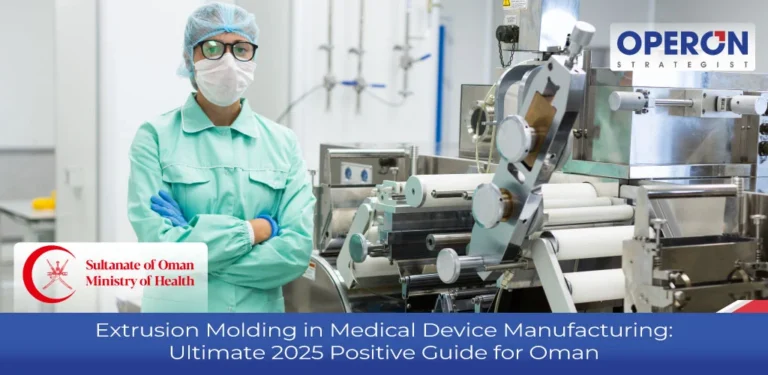
Medical device manufacturing involves the use of extrusion molding to make precision-machined plastic parts used in medical devices. The process involves the production of a variety of products from IV tubes and catheters to respiratory circuits and drainage systems.
There is a need for manufacturers of medical devices to locate their manufacturing operations in the Sultanate of Oman, where there is increasing demand for medical devices. This will be necessary because medical device component manufacture will require more than choosing the right polymer and running extrusion machinery.
Manufacturers have to consider the issue of material compatibility, dimensional tolerances, validation, traceability of components and other regulatory requirements when producing medical devices. It will also involve putting in place a quality management system (QMS) in line with ISO 13485 and the relevant risk management activities of ISO 14971.
This guide gives the information on the process, materials, techniques, medical applications, manufacturing challenges and quality considerations of extrusion molding for Oman based manufacturers of medical device components.
What Is Extrusion Molding in Medical Device Manufacturing?
In extrusion molding for the manufacturing of medical devices, the procedure is a continuous process, whereby medical grade thermoplastics are melted and fed through a specially designed mold in order to form parts that have the same cross-sectional shape throughout the process.
This type of manufacturing procedure is highly ideal for producing medical tubing, catheter shafts, sheaths, drainage tubes, among others.
Medical device extrusion presents manufacturing benefits such as:
- Consistent dimensions: Supports control over the internal and external diameters of medical tubing.
- Design flexibility: Allows the production of single-lumen, multi-lumen, and customized tubing profiles.
- Production scalability: Supports continuous manufacturing and high-volume production.
- Material flexibility: Accommodates different medical-grade thermoplastic materials according to product requirements.
- Repeatable manufacturing: Controlled processing parameters help maintain consistency between production batches.
This method is quite handy for cases where medical devices need tubing with specific sizes, thicknesses, flexibility, or several channels inside.
Step-by-Step Extrusion Process in Medical Device Manufacturing
Tubing extrusion process in the field of medical industry has various stages which are well-controlled. Each stage is responsible for the quality of the final product.
1. Material Selection
The first step is to choose a suitable medical-grade polymer depending on the purpose, mechanical strength, flexibility, chemical stability, and biocompatibility considerations.
Some of the commonly used polymers include:
- Polyvinyl Chloride (PVC): Used in various medical tubing and fluid-management applications.
- Polyethylene (PE): Used for flexible tubing and other medical components.
- Thermoplastic Polyurethane (TPU): Suitable for applications requiring flexibility and mechanical durability.
- Polyether Ether Ketone (PEEK): Used in specialized applications requiring high mechanical and thermal performance.
The choice of material must take into account patient contact, sterilization process, chemicals used, and biological safety assessment. Proper supplier documentation should be obtained to support the suitability of the material chosen.
2. Feeding and Melting
The polymer pellets or granules selected are then fed into the extrusion machine via the hopper.
In the extrusion barrel, the screw inside moves the material along the process at varying temperatures. The polymer starts melting and forming a homogeneous molten mass.
The temperature, speed, pressure, and time of material stay in the system have to be regulated.
3. Die Formation
The liquid polymer is forced through an extrusion die.
This die gives the component its cross-sectional profile and dimensions. Depending upon the design of the product, it may form:
- Standard single-lumen tubing.
- Multi-lumen medical tubing.
- Specialized catheter profiles.
- Customized tubing and sheath configurations.
Designing dies and process control are critical in the manufacture of parts that require precision in dimensions or parts with complex internal structures.
4. Cooling and Sizing
The process of cooling and sizing occurs after extrusion from the dies.
This is made possible through water baths, vacuum sizing techniques, and any other effective method of cooling.
Careful control of cooling rate, line speed, vacuum, and temperature will reduce dimensional change and deformation.
5. Cutting and Inspection
After the tubing has cooled down and become stable, it is measured and cut to the desired size.
Manufacturers can employ laser measurement systems as well as other inspection systems to check:
- Inner diameter.
- Outer diameter.
- Wall thickness.
- Concentricity.
- Length.
- Surface defects.
The inspection techniques chosen must be determined by the product specifications and risks. The results must be recorded as evidence that the product meets the set acceptance criteria.
6. Packaging and Documentation
Finished parts should be packed using the proper packaging materials and methods.
Manufacturing documentation, inspection data, batch number, and traceability information should be kept according to the quality management system applicable.
If a manufacturing facility is ISO 13485 compliant, then there should be written procedures for production control, identification, traceability, preservation, and documentation.
Manufacturing consideration: A process controlled extrusion process would link together material specification, machinery settings, inspection information, and batch information.
Types of Extrusion Used in Medical Device Manufacturing
Selection of various extrusion methods depends upon the design and dimensional considerations of medical parts.
1. Single-Lumen Extrusion
Single-lumen extrusion produces tubing with one continuous internal channel.
It is commonly used for:
- IV tubing.
- Fluid transfer tubes.
- Oxygen supply tubing.
- General-purpose medical tubing.
These diameters need to be consistent in order to meet the desired flow and connections.
2. Multi-Lumen Extrusion
Multi-lumen Extrusion results in the production of tubing having two or more internal lumens in one extruded tube.
This method finds applications in catheter manufacturing and special diagnostic purposes.
Some of the applications are listed below:
- Multi-lumen catheters.
- Diagnostic instrument tubing.
- Tubing for medical fluids.
- Special tubing.
This technique demands very high accuracy in die designing and process control.
3. Co-Extrusion
Coextrusion is the combination of two or more polymer materials using one extrusion machine to create a multi-layered or multi-region component.
It can be employed where a medical device needs different property levels for each region.
For instance, it could be needed where there is need for flexibility, structural strength, or special surface properties.
Compatibility and bonding between materials needs evaluation.
4. Micro-Extrusion
Microextrusion technology is employed in making tubing profiles which are very small or very thin.
It is relevant for applications such as:
- Micro-surgical equipment.
- Specialized catheters.
- Minimal invasive surgical devices.
- Diagnostic equipment.
Due to the small dimensions required, there is a need for proper measuring systems, processing systems, and inspecting systems.
Quality Standards for Medical Device Extrusion: ISO 13485, ISO 14971 and ISO 80369
Quality management and risk management are key components to medical device extrusion manufacturing.
Medical devices manufacturers in Oman need to have documented systems addressing quality of products, process uniformity, relevant regulations, and patient safety.
ISO 13485: Quality Management System
ISO 13485 provides requirements for quality management systems for organizations active in the life cycle of medical devices.
In case of extrusion manufacturing of medical devices, ISO 13485 compatible QMS will allow for:
- Control of manufacturing processes and relevant cleanroom procedures.
- Documentation of manufacturing and process validation.
- Maintenance and calibration of equipment.
- Material identification and traceability.
- Control of suppliers.
- Inspection and acceptance activities.
- Management of nonconformities and corrective actions.
- Process documentation and document retention.
It is recommended that manufacturers perform process validation in situations where results of a process cannot be fully verified by subsequent monitoring or measurement.
Learn more about Implementation of ISO 13485 Quality Management System.
ISO 14971: Medical Device Risk Management
ISO 14971 outlines the process of assessing, evaluating, controlling, and monitoring risks involved with the usage of medical devices over their lifetime.
Some potential risks related to the production of extruded medical devices could be:
- Inaccurate tubing measurements.
- Contamination of material.
- Varied wall thickness.
- Leakage or malfunctioning.
- Degradation of material.
- Patient contact material risks.
- Risks from connectors.
ISO 80369: Safety of Small-Bore Connectors
ISO 80369 relates to the use of small-bore connectors in health care applications to mitigate the possibility of connecting to different medical delivery systems by mistake.
It is especially applicable to applications in which there are enteral, respiratory, intravascular, and other types of medical fluid or gas delivery systems.
Medical tubing and connector manufacturers need to determine which parts of the ISO 80369 series apply to their products.
Medical Devices Produced Using Extrusion Molding Technology
There are several medical devices that are produced using extrusion molding technology, including:
Common applications include:
| Medical product | Typical application |
|---|---|
| Intravenous (IV) tubes | Fluid and medication delivery |
| Catheters | Fluid administration, drainage, and specialized medical procedures |
| Suction and drainage tubes | Removal of fluids from the body |
| Feeding tubes | Enteral nutrition delivery |
| Oxygen supply tubes | Respiratory support and oxygen delivery |
| Diagnostic tubing for IVD devices | Fluid transfer and diagnostic system applications |
This is because the requirements will be determined by the uses that the medical equipment will serve.
Planning an ISO 13485-compliant medical device manufacturing facility?
Explore Operon’s QMS implementation support.
Common Challenges in Extrusion Molding for Medical Devices
Extrusion can be done through continuous process but achieving consistency in the quality of the product needs control of several aspects.
| Manufacturing challenge | Recommended approach |
|---|---|
| Maintaining tight dimensional tolerances | Use calibrated measurement systems and closed-loop feedback control where appropriate. |
| Biocompatibility of materials | Select suitable medical-grade polymers and evaluate biological safety according to intended use and applicable requirements. |
| Wall thickness variation | Optimize die design, melt pressure, cooling rate, and extrusion parameters. |
| Process inconsistency | Establish controlled operating parameters and appropriate process validation. |
| Documentation and traceability | Maintain controlled manufacturing records, specifications, inspection results, and applicable design and production documentation. |
1. Keeping Tolerances
The medical tubes should be manufactured with specific internal and external diameter requirements.
The deviations in dimensions can impact fluid transport, compatibility, mechanical performance, and the functionality of the product.
The manufacturer should define appropriate measurements and process controls for maintaining required tolerances.
2. Ensuring Biocompatibility
Medical devices should use appropriate material based on the specific application.
The choice of material should be based on the extent of the patient contact, duration of contact, chemical properties of the material, exposure to sterilization and biological evaluation requirements.
FDA recognized material or supplier certification does not automatically guarantee that the finished device is biocompatible.
3. Controlling Wall Thickness Deviations
The variation in wall thickness impacts the mechanical performance of the tubing.
The design of dies, extrusion pressure, cooling conditions, and line speed control can minimize these deviations.
4. Maintaining Manufacturing Records
To prove that the process of extrusion runs in a controlled manner, the manufacturer should maintain the following documents:
Specifications of material and supplier records.
Equipment qualifications and maintenance records.
Process validation records.
Inspection and test results.
Batch records.
Design specifications and related design history files.
Records of non-conformances and corrective actions.
An adequate QMS will facilitate record
Regulatory Compliance for Medical Device Manufacturers in Oman
If manufacturers are thinking about starting extrusion-based manufacturing operations in Oman, it would be best for them to take into account the MOH regulations that apply to them.
These regulations are under the jurisdiction of the DGPADC, specifically the Drug Safety Center and its Medical Devices Control Department.
The regulatory path will depend on the manufacturer’s classification, the intended use of the device, the risk classification, and whether the device is manufactured in-house or imported.
Key Regulatory Considerations
1. Medical Device Classification
The classification of medical devices is performed based on the medical device risk category and relevant Omani regulatory requirements.
The manufacturer should classify the medical device correctly prior to the submission of the registration documentation.
Currently, Oman registration guidance covers risk categories A, B, C, and D.
2. Medical Device Manufacturer Registration
Manufacturers planning to register their medical devices in Oman are encouraged to familiarize themselves with the requirements of the MOH concerning the registration of medical device manufacturers.
Manufacturer registration process contains information concerning the legal manufacturer, manufacturing site, quality management system, and relevant certification.
3. ISO 13485 Quality Management System
ISO 13485 certification is one of the requirements of the medical device manufacturer registration process as per the current Omani registration guidance.
The manufacturer should provide proper quality system documentation and certification.
4. ISO 14971 Risk Management Documentation
The risk management documentation should cover possible risks related to the medical device, its materials, intended use, and manufacturing processes.
5. Local Authorized Representative
Foreign manufacturers are advised to review the requirements concerning the local authorized representative and set up such representation in Oman for their registration process.
6. Product Registration and Regulatory Documentation
Suitable manufacturers must carry out the process of medical device registration before marketing and distribution of their products in Oman.
Depending on the nature of the medical device and its classification, some of the documents below may apply:
- Description of the medical device and its purpose.
- Technical documentation.
- Certificates of quality management systems.
- Risk management files.
- Applicable test results and evidence.
- Labeling and instructions for use of the device.
- Documents regarding local representation and establishment, where relevant.
Further information can be requested from the Ministry of Health depending on the nature of the product and the registration pathway needed.
Note: The extruded tube that is part of the medical device will be assessed according to its intended use and the regulation classification and marketing pathway. The requirements of the medical device registration should not be blindly applied to each manufacturing components.
Please refer to medical device manufacturer registration guidelines by Oman Ministry of Health for current information regarding this issue.
For further information, consider medical device registration requirements in Oman.
How Operon Strategist Supports Medical Device Extrusion Manufacturing Projects
Operon Strategist is an international company specializing in regulatory and project consulting that helps medical devices manufacturers create manufacturing facilities that comply with all requirements and acquire necessary certifications around the world, including Oman.
If you plan to conduct extrusion molding, our company will assist in the following areas:
Our assistance includes:
- Turnkey Manufacturing Project Support: Support in planning and implementation of capabilities for extrusion molding in medical device manufacturing.
- ISO 13485 Documentation and Quality Management System Support: Development of QMS documents in compliance with the requirements of ISO 13485 standard.
- Design History File (DHF) Support: Support in the development of DHF and related design documents and controls.
- Medical Device Manufacturer and Product Registration: Support in all necessary registrations required by Oman MOH regulations for medical device manufacturers and products.
- Cleanroom and Process Validation Support: Support in design and process validation.
- Training: Training on quality management, cleanroom, validation and documentation.
If necessary, for the scope of product and packaging, Operon Strategist can also assist with documentation in line with ISO 15378 standards for the primary packaging materials of medicinal products.
Our unique consulting approach includes manufacturing project planning via Operon BuildNext and regulatory/quality management via Operon ElevatePlus.
Conclusion
Extrusion molding is one such technology that is vital for the manufacture of medical grade tubes, catheters, breathing equipment and drainage components among other healthcare items.
Medical devices manufacturing using extrusion requires that there is proper polymer selection, good extrusion molding conditions, good design of die for extrusion, good cooling and sizing and proper inspection practices.
To make medical device manufacturing in Oman viable, all these technical aspects need to be backed up by proper quality management systems, risk management documentation and conformance to ministry of health guidelines.
Manufacturing controls coupled with ISO 13485, ISO 14971 and specific product guidelines will create more consistent manufacturing process for the manufacturer.
With the right manufacturing and regulatory strategies in place, it becomes easy to create extrusion based manufacturing of medical devices in anticipation of future needs.
Need regulatory guidance for your medical device manufacturing project in Oman?
Connect with Operon’s regulatory experts.
FAQ
What is extrusion molding in medical device manufacturing?
It is a continuous manufacturing process in which melted medical-grade polymers are shaped through a die to produce tubing, catheters, and other medical components.
Which polymers are commonly used in medical tubing extrusion?
Common materials include PVC, polyethylene (PE), thermoplastic polyurethane (TPU), and PEEK, depending on the intended application.
Does Oman require ISO 13485 certification for medical device manufacturers?
Oman’s medical device manufacturer registration guidance specifies a quality management system and supporting certification, including ISO 13485.
What are the main types of medical device extrusion?
The main types include single-lumen extrusion, multi-lumen extrusion, co-extrusion, and micro-extrusion.
What regulations and standards apply to medical device extrusion in Oman?
Relevant considerations include Oman MOH manufacturer and product registration requirements, ISO 13485 for quality management, ISO 14971 for risk management, and applicable ISO 80369 connector standards.
Senior Regulatory Affairs Executive | 4 Years of Experience
Medical device regulatory professional specializing in EU MDR 2017/745 technical documentation, CE marking, risk management, clinical and biological evaluation, and post-market surveillance. His expertise includes SFDA MDMA submissions, CDSCO licensing, ISO 13485, MDSAP, US FDA regulatory requirements, and BIS certification.