Introduction
If you work with digital health products, you will often hear the terms SiMD and SaMD. Both sound similar, but they are not the same. Understanding the difference matters a lot because the regulatory path, risk controls, documentation needs, and approvals are different for each. Getting this wrong can slow down approvals, increase cost, or even stop your product from entering the market.
What is SiMD?
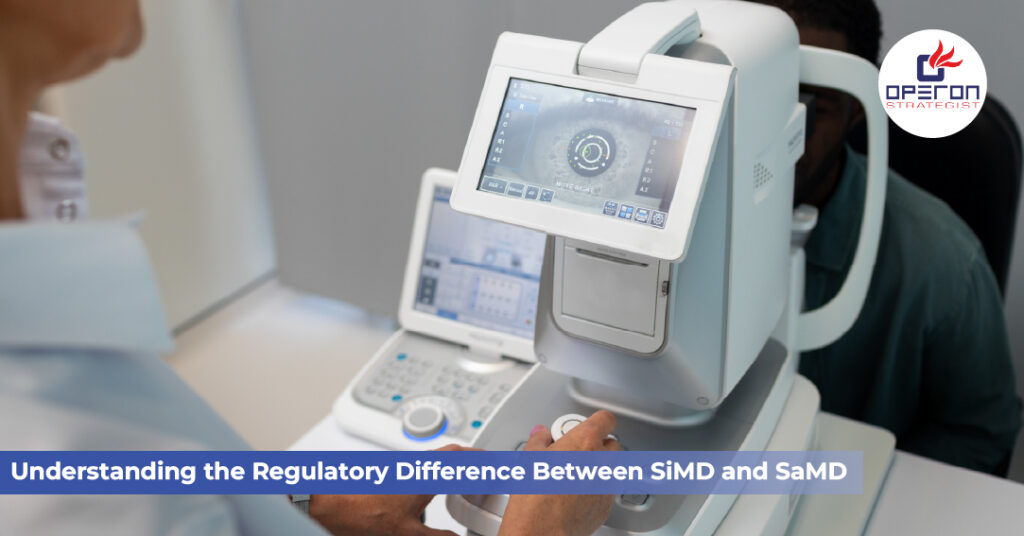
SiMD (Software in a Medical Device) is software that is part of the hardware medical device itself.
It works inside the device and helps the device perform its intended function.
Looking For a Medical Device Regulatory Consultant?
Let’s have a word about your next project
Examples include:
- Software controlling an infusion pump
- Software inside an MRI machine
- Embedded software in pacemakers
- Firmware inside a glucose monitor
Here, the software and hardware work together as one medical device. So regulators evaluate them as a single unit.
Read related blog: SaMD and SiMD in Medical Device Regulation
What is SaMD?
SaMD (Software as a Medical Device) is software that performs a medical function on its own, without being part of a physical medical device.
Examples include:
- AI based diagnostic apps
- Clinical decision support tools
- Imaging analysis software
- Remote patient monitoring apps
- Mobile apps that analyze ECG data
Here, the software itself is the medical device.
Key Regulatory Difference Between SiMD and SaMD
Here is where things get serious for manufacturers. Even though both involve software, the regulatory approach is different.
1. Device Dependency
SiMD
- Always linked to a physical device
- Approval considers both hardware and software together
SaMD
- Works independent of hardware
- Approved purely as software
2. Intended Use Drives Classification
Regulators always look at risk to the patient.
If your software supports diagnosis, treatment, prevention, or monitoring, it falls under medical device regulations.
For SiMD, the classification usually follows the hardware device class.
For SaMD, classification depends on:
- seriousness of the condition
- role of the software in clinical care
- risk of harm if the software fails
Higher clinical risk = stricter controls.
3. Regulatory Standards and Controls
Both require strong quality systems, but the focus varies.
SiMD must comply with:
- Hardware safety standards
- Embedded software standards like IEC 62304
- Design controls under 21 CFR 820
- Validation tied to the device
SaMD must comply with:
- IEC 62304
- Clinical evaluation specific to software
- Cybersecurity and data privacy controls
- Real world performance monitoring
SaMD usually requires more clinical evidence because it is the primary decision tool.
4. Updates and Change Management
This is a big difference that many miss.
SiMD updates often require:
- Re validation of the full device
- Possible re submission if risk changes
- Strong traceability between hardware and software
SaMD updates may:
- Require frequent updates
- Need risk review per release
- Trigger regulatory notification depending on impact
Since SaMD evolves faster, regulators expect clear change control and risk assessment.
5. Cybersecurity Expectations
Both need cybersecurity, but SaMD is usually more exposed because it relies on networks, cloud, and external devices.
You must show:
- secure data handling
- access control
- encryption
- vulnerability management
- incident response plans
Cybersecurity is now a key approval factor.
Why Understanding This Difference Matters
If you mix up SiMD and SaMD, you may:
- Follow the wrong approval pathway
- Miss required documentation
- Delay market entry
- Increase regulatory risk
- Lose investor confidence
Clear positioning helps you plan:
- clinical validation
- risk classification
- documentation strategy
- regulatory submission
- go to market timeline
Facing FDA regulatory challenges? Contact Us Today!
Want Expert Help With SiMD and SaMD Compliance?
This is where a strong regulatory partner makes a real difference.
About Operon Strategist
Operon Strategist is a Medical Device Regulatory and Quality Consulting Company that supports manufacturers, startups, and importers in building compliant and profitable medical device businesses.
We help you move from idea to compliant product in a structured, simple, and guided way.
Our key services include:
- US FDA 510(k) Consulting
- FDA QSR and 21 CFR 820 Compliance
- ISO 13485 Certification Consulting
- MDSAP Implementation
- CE Marking for Medical Devices
- UKCA Marking
- Medical Device Registration Support
- Technical Documentation and File Preparation
- Design Control and Risk Management Consulting
- Cleanroom Planning and Validation Support
- Turnkey Medical Device Project Consulting
Our goal is simple:
help you launch and scale compliant medical devices in global markets with confidence.
Ready to get the right regulatory strategy for your SiMD or SaMD product? Operon Strategist helps startups, manufacturers, and importers meet FDA, ISO 13485, MDSAP, CE, and UKCA requirements with confidence. If you want expert guidance, faster approvals, and strong documentation, get in touch with our team today. Let’s make your medical device compliant and market ready.
FAQs
What is the difference between SiMD and SaMD?
SiMD (Software in a Medical Device) is software that runs inside a physical medical device and supports its function.
SaMD (Software as a Medical Device) is software that performs a medical function on its own without being part of a physical device.
Is SaMD considered a medical device?
Yes. SaMD itself is treated as a medical device because it performs medical functions such as diagnosis, monitoring, or support for clinical decisions. It must meet regulatory rules like FDA, CE, ISO, and other country specific laws.
Does SiMD follow the same regulations as SaMD?
Not fully. Both must follow software and quality standards, but SiMD is regulated together with the hardware device, while SaMD is regulated as a standalone product. Risk classification and documentation needs may also differ.