
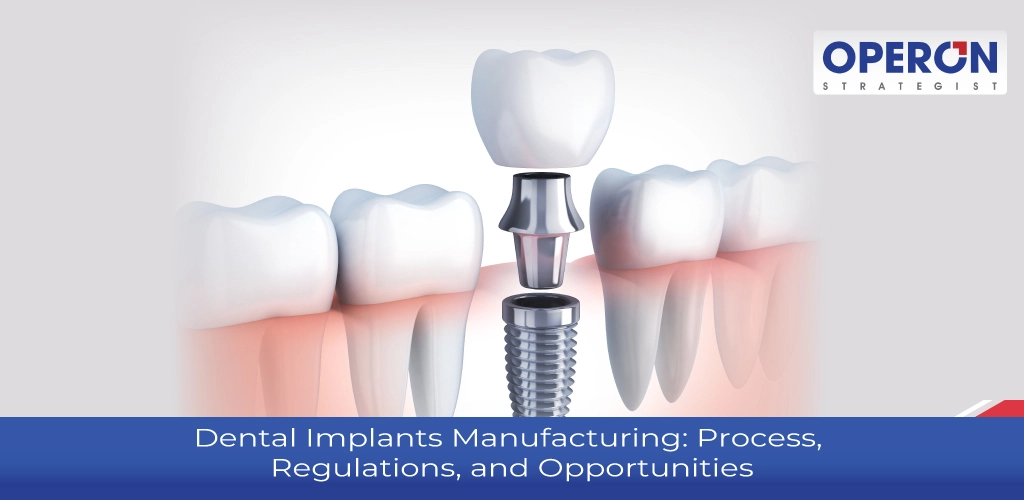
Dental Implants Manufacturing: Process, Regulations, and Opportunities
Dental implants have become the gold standard for replacing missing teeth. With growing awareness and demand for advanced dental solutions, the dental implants manufacturing industry is witnessing rapid growth. If you’re a startup, manufacturer, or medical device investor exploring this space, understanding the manufacturing process, regulatory requirements, and market opportunities is crucial.
This blog covers the step-by-step process of dental implant manufacturing, regulatory compliance, and key considerations for setting up a manufacturing unit.
Talk to our experts
What Are Dental Implants?
Dental implants are artificial tooth roots made of biocompatible materials, typically titanium or zirconia. These implants are surgically placed into the jawbone to support dental prostheses such as crowns, bridges, or dentures.
Their popularity stems from long-term durability, natural aesthetics, and better functionality compared to traditional dentures.
Why Invest in Dental Implants Manufacturing?
The global dental implant market is projected to grow steadily due to:
- Aging population
- Rise in dental tourism
- Advancements in implant technology
- Growing demand for cosmetic dentistry
As a result, manufacturers and medical device startups have a significant opportunity to tap into this expanding sector by producing high-quality, compliant dental implants.
Dental Implants Manufacturing Process
Dental implants must meet strict biocompatibility, precision, and durability standards. Here’s an overview of the manufacturing process:
1. Material Selection
The most commonly used materials are:
- Titanium (Grade 4 or 5): High strength, corrosion resistance, excellent biocompatibility
- Zirconia: A metal-free alternative preferred for aesthetic and hypoallergenic applications
Material quality directly impacts the implant’s integration with the jawbone (osseointegration) and long-term performance.
2. CNC Machining
Titanium or zirconia rods are shaped using Computer Numerical Control (CNC) machines. This ensures micrometer-level precision in thread design, diameter, and length.
Key components manufactured:
- Fixture (implant body)
- Abutment (connects implant to crown)
- Screws and accessories
3. Surface Treatment
To promote better bone integration, implants undergo surface treatments such as:
- Sandblasting: Creates a roughened surface to enhance osseointegration
- Acid etching: Further improves the surface topography for cell attachment
- Anodizing (for titanium): Increases surface oxide layer and improves biocompatibility
4. Cleaning and Decontamination
Implants are ultrasonically cleaned in multiple stages to remove particles, oils, and residues. They are then sterilized using gamma radiation or ethylene oxide gas.
5. Quality Control
Each implant goes through:
- Dimensional inspection
- Surface integrity check
- Mechanical testing (tensile, fatigue, torque)
- Biocompatibility testing
Strict quality standards ensure patient safety and product performance.
6. Packaging
Implants are packed in sterile, tamper-evident packaging under clean room conditions (ISO 7 or ISO 8). Proper labeling and traceability information are added.
Read Next: Dental Scanners Manufacturing & Regulatory Compliance
Regulatory Requirements for Dental Implants Manufacturing
Dental implants are classified as medical devices and must meet country-specific regulatory requirements. Here’s a breakdown for major markets:
1. United States (FDA)
- Class II medical device (requiring 510(k) clearance)
- Must comply with 21 CFR Part 820 (Quality System Regulation)
- Biocompatibility per ISO 10993
- Sterilization validation per ISO 11135 or ISO 11137
2. European Union (EU MDR)
- Class IIb medical device under EU MDR 2017/745
- Requires CE Marking and conformity assessment by a Notified Body
- Technical documentation, clinical evaluation, and post-market surveillance required
3. India (CDSCO)
- Dental implants are classified as Class C devices
- Requires registration under Medical Device Rules (MDR) 2017
- Importers and manufacturers must apply through the CDSCO portal
z
- Follows UK MDR 2002
- Requires UKCA marking and conformity assessment
- Quality Management System as per ISO 13485:2016
Setting Up a Dental Implants Manufacturing Unit
To start manufacturing dental implants, here are the essential components:
1. Facility Planning
You will need a production area with:
- CNC machining section
- Surface treatment area
- Clean rooms (ISO Class 7 or 8)
- Quality control and testing labs
- Sterilization setup (in-house or outsourced)
2. Clean Room Standards
Clean room validation is critical for maintaining product sterility. Validation should follow ISO 14644 guidelines, including:
- Air quality monitoring
- HEPA filter integrity testing
- Particle count and microbial testing
3. Quality Management System
Implementing ISO 13485 is essential for regulatory approvals and product consistency. It covers:
- Risk management (ISO 14971)
- Supplier controls
- Document control
- Internal audits
- CAPA processes
4. Documentation
Maintain comprehensive records, including:
- Device Master Record (DMR)
- Device History Record (DHR)
- Technical files
- Validation protocols
How We Help?
At Operon Strategist, we offer end-to-end consultancy for dental implants manufacturing, including:
- Regulatory pathway planning (FDA, CE, CDSCO, UKCA)
- Facility layout and clean room design
- QMS implementation (ISO 13485)
- Technical documentation support
- Product classification and risk assessment
- 510(k) submission or CE Marking process
Whether you’re planning to set up a new manufacturing unit or expand your product portfolio, we help you meet global regulatory expectations and go to market faster.
Ready to Start Your Dental Implant Manufacturing Journey?
Get in touch with our team to discuss your project, understand regulatory requirements, and get expert support at every step.
Also Read: How Dental 3D Printing Is Revolutionizing the Dental Industry
FAQ's
What materials are commonly used in dental implant manufacturing?
Dental implants are primarily manufactured from medical-grade titanium and titanium alloys due to their strength, corrosion resistance, and biocompatibility. Zirconia is also used for metal-free dental implants, offering excellent aesthetics and tissue compatibility.
What regulations apply to dental implant manufacturing?
Dental implant manufacturers must comply with applicable medical device regulations, including FDA requirements in the United States, ISO 13485 Quality Management System standards, ISO 14971 risk management requirements, and other country-specific regulatory frameworks before marketing their products.
What is the manufacturing process for dental implants?
The manufacturing process typically involves raw material selection, CNC machining or precision manufacturing, surface treatment, cleaning, sterilization, quality inspection, packaging, and regulatory documentation. Each step is carefully controlled to ensure product safety, performance, and consistency.
Is dental implant manufacturing a profitable business opportunity?
Yes. The growing demand for dental restoration procedures, increasing adoption of implant dentistry, an aging population, and advancements in dental technology have created significant opportunities for dental implant manufacturers in both developed and emerging healthcare markets.