
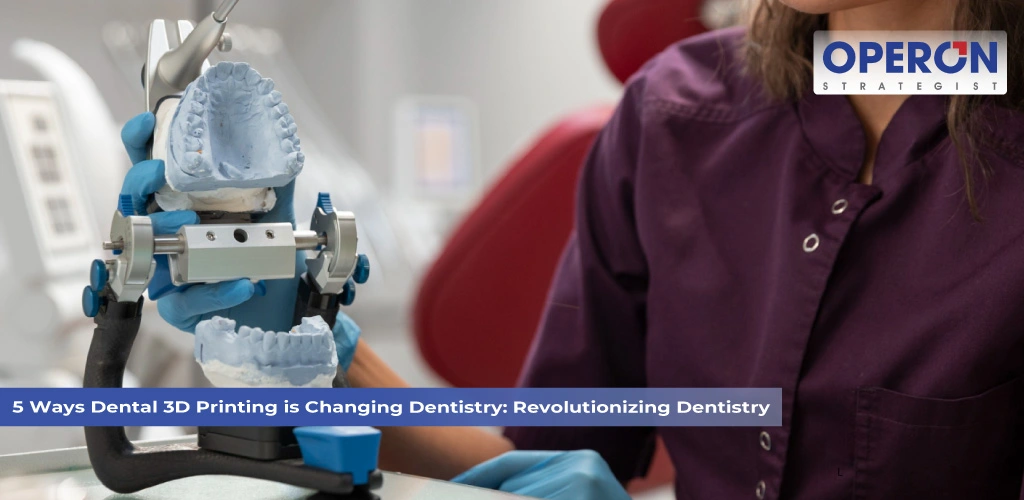
How Dental 3D Printing Is Revolutionizing the Dental Industry
An Overview of 3D Printing in Dentistry
3D printing is a rapidly growing technology across a variety of medical fields, particularly within dental laboratories and clinical practices. As a result of these new additive technologies, production speed and product quality increase significantly, benefiting both doctors and patients by making the clinical experience more pleasant while reducing costs and treatment time.
Science and technology play an essential role in streamlining healthcare. The application of 3D printing in medicine is expanding rapidly, with significant growth occurring in dentistry in recent years. Modern dental professionals utilize a range of tools and instruments—including digital X-rays, 3D printers, and digital modeling devices—to improve screening effectiveness and deliver precise remedies for patient care.
Looking for Medical Device Consultants?
What Are the Dental 3D Printing Workflow Steps?
Transitioning from physical impressions to a complete digital dentistry workflow involves several streamlined steps:
Digital Scanning: An intraoral scanner captures a digital impression of the patient’s teeth and oral cavity, eliminating uncomfortable physical molds. For hardware manufacturers establishing regulatory-compliant production, precision optical components developed through specialized dental scanners manufacturing form the baseline of digital imaging.
CAD Design: Scans are imported into dental modeling software where technicians and clinicians design custom appliances, such as crowns, bridges, or surgical guides.
3D Printing Setup: Designed CAD blueprints are transferred to the 3D printer software for slicing and orientation, followed by layer-by-layer fabrication using specialized filaments or biocompatible resins under UV light.
Post-Processing: Printed dental appliances undergo cleaning, UV post-curing, and final finishing to ensure safety, durability, and accurate fit.
Where Can a 3D Printer Be Used in the Dental Field?
Dental 3D printing supports a wide variety of clinical and prosthetic applications, helping dentists, orthodontists, and prosthetists in their day-to-day operations:
Surgical Guides: High-precision anatomical models and drill templates built from digital blueprints help surgeons plan and execute complex procedures, leading to better clinical outcomes, shorter surgery times, and lower overall expense.
3D Printed Crowns: Additive manufacturing allows rapid, independent production of crowns directly by the dentist. It is currently among the most common 3D printing applications in dentistry. In restorative workflows requiring secure placement, these crowns are fixed using clinical materials developed via compliant dental cement manufacturing.
3D Printed Dentures: Digital technology enables the fabrication of full dentures and 3D printed false teeth with higher accuracy, streamlining production for clinical trials and widespread adoption.
3D Printed Dental Implants: Compared to conventional methods, 3D printing allows patients to receive replacement teeth faster, more accurately, and at a lower cost, delivering a simpler procedure with a high-quality aesthetic finish.
Planning to manufacture or register dental 3D printers?
Consult Operon Strategist for medical device compliance support.
5 Ways Dental 3D Printing Is Revolutionizing the Dental Industry
Digital dentistry is expanding rapidly across dental labs and practices because it eliminates time-consuming physical impressions. Here are 5 key ways dental 3D printing is transforming the industry:
1. Superior Product Quality
Using software-controlled 3D printers in denture and appliance manufacturing allows for the creation of delicate, highly complex anatomical structures. The resulting 3D models provide durable, stable, and long-lasting alternatives to traditional hand-cast models.
2. Fast and Accurate Dental Services
Manual model-making requires significant labor and time. Dental 3D printing enables the simultaneous printing of multiple appliances on a single build plate once digital files are received electronically. This digital process minimizes human error, streamlines labor, and delivers accurate results for clinicians and patients.
3. Satisfied and Happy Customers
Digital elements remove redundant manual steps, making patient visits quicker, easier, and less invasive. Accurate treatment planning leads to a more pleasant overall patient experience, increasing satisfaction and repeat clinic visits.
4. Cost-Effective and Time-Saving Operations
While lifetime operational costs include ongoing printing materials and resins, operating a 3D printer remains significantly less expensive than maintaining full traditional dental lab infrastructure. Eliminating repetitive remakes saves substantial time and money.
5. In-House Dental Lab Capabilities
Dentists can operate 3D printers directly within their practices to rapidly manufacture crowns, molds, models, bridges, and prosthetics. Bringing lab production in-house reduces turnaround times from weeks to hours.
What Is the Market Size and Growth of Dental 3D Printing?
Hospitals, private practices, and dental laboratories worldwide are increasingly adopting emerging technologies like 3D printing to digitally view and interact with patient anatomy non-invasively. The global dental 3D printing market continues to move steadily upward, driven by key industry factors:
The need to enhance patient and healthcare provider safety while speeding up chairside appointments.
Improvements in preventive and restorative dental treatments.
An aging global population requiring increased dental prosthetics and implantology.
Strong healthcare infrastructure and active investment from major medical technology manufacturers.
How Operon Strategist Accelerates Regulatory Compliance for Dental 3D Printing Technologies
Bringing 3D printers, CAD software, and biocompatible printing resins to market requires adherence to global medical device standards. Operon Strategist provides complete regulatory consulting to help manufacturers and importers navigate compliance smoothly:
Device & Material Classification: Assisting in identifying risk classes for dental 3D printers, software (SaMD), and biocompatible printing resins under CDSCO, US FDA, and EU MDR guidelines.
ISO 13485 QMS Implementation: Setting up Quality Management Systems tailored for manufacturing facilities producing dental additive equipment and consumables.
Technical File & Dossier Compilation: Preparing comprehensive technical documentation, including biocompatibility test plans (ISO 10993) and software validation reports.
CDSCO & CE Mark Licensing: Managing registration applications, Indian Authorized Agent (IAA) representation, and Notified Body submissions.
Post-Market Surveillance (PMS): Structuring PMS procedures, risk management files (ISO 14971), and vigilance reporting to maintain long-term market access.
Partner with Operon Strategist
Ensure your medical 3D printing technologies meet global regulatory standards.
FAQ's
How does dental 3D printing improve clinical accuracy compared to traditional methods?
Dental 3D printing uses intraoral digital scans and CAD software, eliminating physical impression distortion and producing micron-accurate prosthetics, models, and surgical guides.
Are 3D printed dental materials safe for long-term intraoral use?
Yes, dental appliances intended for patient contact use specialized medical-grade, biocompatible resins certified under ISO 10993 standards for biological evaluation.
What dental appliances can be produced using a dental 3D printer?
Dental 3D printers can produce surgical guides, crown models, full dentures, bridges, night guards, clear aligner models, and custom implant components.
Can dental practices set up in-house 3D printing labs?
Yes, compact dental 3D printers and intuitive CAD software allow clinics to bring dental laboratory work in-house, enabling chairside production of crowns, models, and aligner trays.
What regulatory approvals are required for dental 3D printing materials and equipment?
Dental 3D printers, software, and biocompatible resins are regulated as medical devices requiring compliance with authorities such as CDSCO (India), EU MDR (Europe), or US FDA depending on the target market.