
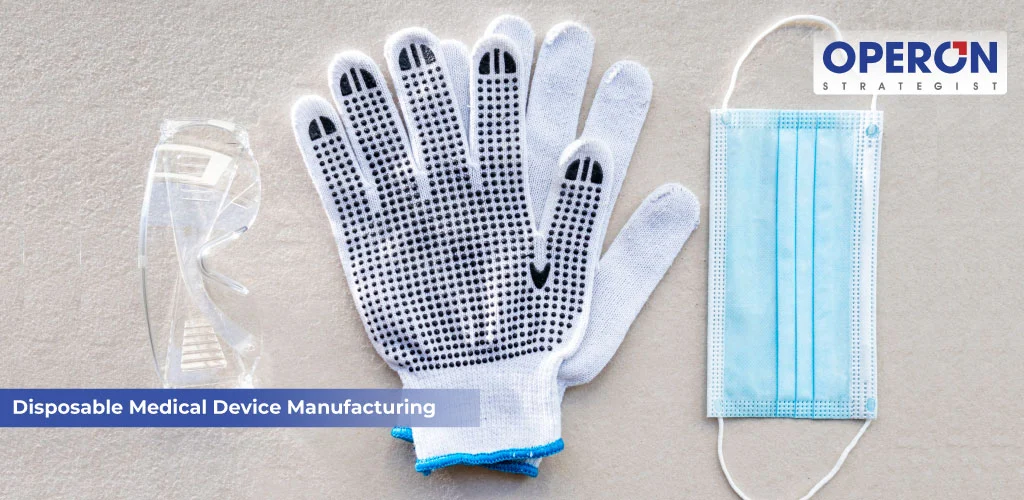
Disposable Medical Device Manufacturing: Process, Plant Setup, Sterilization & Regulatory Requirements
Disposable medical devices have become essential to modern healthcare systems due to their role in infection prevention, operational efficiency, and patient safety. From syringes and IV sets to surgical masks and catheters, single-use medical products are widely used across hospitals, laboratories, diagnostic centers, and home healthcare environments.
The increasing focus on infection control, rising healthcare demand, and expansion of medical infrastructure have significantly accelerated the global disposable medical device market.
talk to our experts
However, manufacturing disposable medical devices is not simply a high-volume plastic production activity. It requires medical-grade materials, validated sterilization processes, automated manufacturing systems, and strict regulatory compliance.
This guide provides a practical and technically aligned overview of disposable medical device manufacturing, covering materials, machinery, process flow, plant setup, sterilization, quality control, and regulatory requirements.
However, success in this highly regulated industry depends on one critical foundation a well-prepared Detailed Project Report (DPR).
What Are Disposable Medical Devices?
Disposable medical devices, also known as single-use medical devices, are products intended for one-time use and disposal after application.
These devices help:
- Reduce cross-contamination risks
- Eliminate reprocessing and resterilization dependency
- Improve patient safety and infection control
What are Common Examples of Disposable Medical Devices?
Common products include:
- Syringes and needles
- IV sets and infusion sets
- Blood bags and blood collection tubes
- Catheters and cannulas
- Surgical gloves
- Face masks and PPE kits
- Surgical drapes and gowns
- Suction tubes and specimen containers
Industry insight:
Many disposable medical devices are used in critical clinical procedures, making consistency, sterility, and traceability essential.
Why is Disposable Medical Device Manufacturing Growing Rapidly?
The market is expanding due to increasing healthcare demand and stronger infection control requirements.
Key Growth Drivers
- Rising awareness of hospital-acquired infections (HAIs)
- Growing healthcare infrastructure globally
- Increased use of PPE and infection-control products
- Expansion of home healthcare and diagnostic services
- Shift toward single-use systems in hospitals
Market insight:
The disposable medical device segment is highly volume-driven, but long-term success depends on automation, compliance, and manufacturing efficiency.
What Materials Are Used in Disposable Medical Device Manufacturing?
Material selection directly affects safety, flexibility, sterility, and regulatory approval.
Common Materials Used
Polypropylene (PP)
Used for:
- Syringes
- Containers
- Diagnostic components
Properties:
- Lightweight
- Chemical resistant
- Sterilization compatible
Polyethylene (PE)
Used for:
- Flexible tubing
- Packaging films
Properties:
- Flexibility
- Moisture resistance
Polyvinyl Chloride (PVC)
Used for:
- IV sets
- Blood bags
- Catheters
Properties:
- Transparency
- Flexibility
Latex and Nitrile
Used for:
- Examination gloves
- Surgical gloves
Nonwoven Fabrics
Used for:
- Surgical masks
- PPE gowns
- Drapes
Material Compliance Requirements
Materials must comply with:
- ISO 10993 (Biocompatibility)
- USP Class VI (where applicable)
- Sterilization compatibility requirements
Technical insight:
Improper material selection can lead to sterilization degradation, chemical leaching, or product failure.
What is the Step-by-Step Disposable Medical Device Manufacturing Process?
Disposable device manufacturing is a high-volume, validation-driven process.
- Product Design and Development
- Intended use definition
- Risk analysis as per ISO 14971
- Design verification and validation
- Raw Material Procurement
- Medical-grade certified materials
- Supplier qualification and traceability systems
- InjectionMoldingand Component Manufacturing
Common processes:
- Injection molding
- Blow molding
- Extrusion
Applications:
- Syringe barrels
- Connectors
- Tubing
- Containers
Critical factor:
Dimensional consistency is essential in high-speed production environments.
- Assembly and Automation
- Automated assembly lines
- Needle assembly
- Tube joining and sealing
- Leak-proof component integration
Execution insight:
Automation improves:
- Production speed
- Consistency
- Contamination control
- Sterilization (Critical Stage)
Disposable medical devices often require terminal sterilization.
Common sterilization methods:
Ethylene Oxide (EtO) Sterilization
Suitable for:
- Heat-sensitive products
Gamma Radiation
Suitable for:
- High-volume disposable products
Sterilization Requirements
- Sterility Assurance Level (SAL): 10⁻⁶
- Sterilization validation as per ISO 11135 or ISO 11137
Technical insight:
Sterilization must eliminate microorganisms without degrading material properties or packaging integrity.
- Packaging and Sealing
Common packaging systems:
- Tyvek packaging
- Blister packaging
- Peelable sterile pouches
Validation requirements:
- Seal strength testing
- Packaging integrity testing
- Accelerated aging studies
- Transit testing
Applicable standard:
ISO 11607 for sterile barrier packaging validation.
- Labelingand Traceability
Requirements include:
- Batch traceability
- Manufacturing and expiry dates
- UDI (Unique Device Identification)
- Regulatory labeling compliance
What Machinery is Required for Disposable Medical Device Manufacturing?
Core Manufacturing Machinery
- Injection molding machines
- Blow molding systems
- Extrusion lines
- Automatic assembly machines
Supporting Systems
- Ultrasonic welding systems
- Leak testing equipment
- Printing and labeling systems
Sterilization Equipment
- EtO sterilizers
- Gamma sterilization coordination systems
Inspection and Quality Control Equipment
- Vision inspection systems
- Leak testing machines
- Dimensional inspection equipment
What Facility and Cleanroom Requirements Are Needed?
Disposable medical device facilities require controlled manufacturing environments.
Typical Requirements
- ISO Class 7 or 8 cleanrooms
- Controlled material and personnel flow
- Segregated molding, assembly, and packaging areas
Key infrastructure:
- HVAC with HEPA filtration
- Environmental monitoring systems
- Compressed air systems
- Controlled temperature and humidity
What are the Regulatory Requirements for Disposable Medical Devices?
Disposable medical devices are regulated under medical device frameworks globally.
India (CDSCO)
- Manufacturing license required
- Compliance with Medical Devices Rules, 2017
USA
- FDA 510(k) clearance (where applicable)
Europe
- CE marking under EU MDR
Key Standards
- ISO 13485 → Quality Management System
- ISO 14971 → Risk management
- ISO 10993 → Biocompatibility
- ISO 11135 / ISO 11137 → Sterilization validation
- ISO 11607 → Packaging validation
What Validation is Required in Disposable Medical Device Manufacturing?
Validation ensures consistency, sterility, and compliance.
Critical Validations
- IQ (Installation Qualification)
- OQ (Operational Qualification)
- PQ (Performance Qualification)
Process validations include:
- Injection molding validation
- Assembly process validation
- Sterilization validation
- Packaging validation
- Cleaning validation (where applicable)
What are the Critical Quality Control Parameters?
Manufacturers must monitor:
- Dimensional accuracy
- Leak-proof performance
- Material integrity
- Sterility assurance
- Packaging integrity
- Functional testing
Operational challenge:
Maintaining uniform quality at high production volumes while minimizing rejection rates.
What are the Common Challenges in Disposable Medical Device Manufacturing?
- High competition and pricing pressure
- Sterilization compatibility issues
- Regulatory compliance across multiple markets
- Supply chain variability
- Waste management and environmental concerns
Industry reality:
Manufacturers often underestimate the complexity of validation and cleanroom-controlled assembly operations.
What are the Latest Trends in Disposable Medical Device Manufacturing?
- Automation and robotics in production lines
- Eco-friendly and biodegradable materials
- Smart packaging and traceability systems
- Increased localization of manufacturing
- AI-based inspection systems
How Can Operon Strategist Support Disposable Medical Device Manufacturing Setup?
Operon Strategist provides:
- Product feasibility and manufacturing strategy
- GMP-compliant plant layout and cleanroom design
- Machinery selection and vendor coordination
- ISO 13485 implementation
- Validation and compliance support
Value delivered:
- Faster regulatory approvals
- Reduced compliance gaps
- Scalable and efficient manufacturing operations
Conclusion: What Defines Success in Disposable Medical Device Manufacturing?
Disposable medical device manufacturing is a high-volume, compliance-intensive industry where success depends on balancing efficiency with strict quality and sterility requirements.
Manufacturers that succeed focus on:
- Automation and process consistency
- Sterilization and packaging validation
- Strong regulatory systems
- Controlled manufacturing environments
Final insight:
Long-term competitiveness is achieved not only through production capacity, but through validated processes, regulatory compliance, and operational efficiency.
FAQs
What are disposable medical devices?
Devices intended for single use and disposal after application.
Why is sterilization important?
It ensures patient safety by eliminating microorganisms and preventing infections.
Which materials are commonly used?
PP, PE, PVC, nitrile, latex, and nonwoven fabrics.
Are disposable medical devices regulated?
Yes, they must comply with strict global regulatory standards.
Can small manufacturers enter this market?
Yes, but they must invest in compliance, quality systems, and validation processes.