
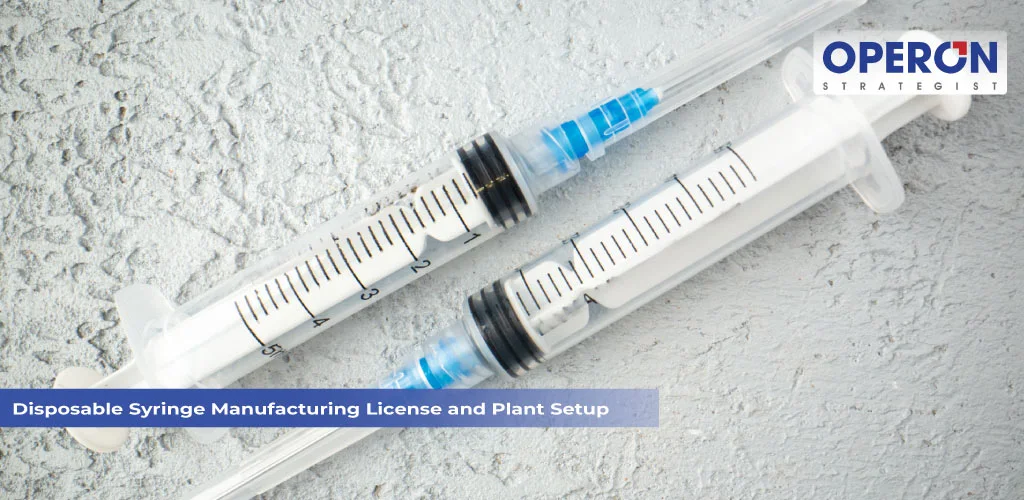
Disposable Syringe Manufacturing in India: Process, CDSCO License & Regulatory Compliance
Disposable syringes are among the most essential medical devices used in hospitals, clinics, vaccination programs, diagnostic laboratories, and emergency healthcare systems. They ensure safe, sterile, and accurate administration of medicines, vaccines, and fluids while reducing the risk of cross-contamination and infections.
With increasing healthcare awareness, expanding immunization programs, and strict regulations promoting safe injection practices, the disposable syringe manufacturing industry in India is experiencing rapid growth.
However, syringe manufacturing requires:
- Advanced sterile production systems
- Cleanroom infrastructure
- Regulatory approvals
- Quality management systems
- Compliance with international standards
Manufacturers must obtain approvals from the Central Drugs Standard Control Organization and comply with global standards such as ISO 13485, CE Marking, and FDA requirements.
This comprehensive guide explains disposable syringe manufacturing in India, the CDSCO licensing process, manufacturing workflow, raw materials, plant setup requirements, and how Operon Strategist supports syringe manufacturers with turnkey regulatory and compliance solutions.
What are Disposable Syringes?
Disposable syringes are single-use medical devices designed to inject or withdraw fluids safely and hygienically. These syringes are intended for one-time use to minimize infection risks and prevent disease transmission.
Disposable syringes are widely used for:
- Vaccinations
- Drug administration
- Blood collection
- Intravenous procedures
- Diagnostic applications
Their single-use design significantly reduces the spread of:
- HIV
- Hepatitis B
- Hepatitis C
- Other blood-borne infections
Growth of Disposable Syringe Manufacturing in India
India has emerged as one of the fastest-growing medical device manufacturing markets globally.
Key Market Drivers:
- Increasing Immunization Programs
Government vaccination campaigns have significantly increased demand for disposable syringes. - Rising Healthcare Infrastructure
Expansion of hospitals, clinics, and diagnostic centers is driving consumption. - Infection Control Awareness
Healthcare institutions are increasingly adopting safe injection practices. - Export Opportunities
Indian manufacturers are supplying syringes to global healthcare markets. - Government Support for Medical Device Manufacturing
Policy initiatives promoting domestic manufacturing are encouraging investments in the sector.
CDSCO Manufacturing License for Disposable Syringes
Obtaining a manufacturing license from the Central Drugs Standard Control Organization is mandatory for legally manufacturing disposable syringes in India.
The approval process ensures that the manufacturing facility complies with safety, sterility, and quality standards.
CDSCO Manufacturing License Requirements
- Manufacturing Facility Evaluation
CDSCO evaluates:- Production area design
- Workflow management
- Environmental controls
- Sterility infrastructure
- Plant Layout and Cleanroom Inspection
The facility must include properly designed cleanrooms to prevent contamination during production and assembly.
Important Factors:- Air handling systems
- HEPA filtration
- Controlled particle count
- Sterile assembly areas
- Machinery and Equipment Verification
Regulators inspect manufacturing equipment used for:- Injection molding
- Needle production
- Assembly
- Sterilization
- Packaging
- Sterilization Validation
Manufacturers must validate sterilization methods such as:- Ethylene Oxide (ETO)
- Gamma Radiation
Sterility validation is critical for patient safety and regulatory approval.
- Quality Management System (QMS) Assessment
The facility must implement a compliant quality management system aligned with:- ISO 13485
- GMP requirements
- Regulatory documentation standards
- Technical Documentation Review
CDSCO reviews:- Product specifications
- Manufacturing processes
- Sterilization protocols
- Validation reports
- Risk management files
Why CDSCO Registration is Important
Failure to obtain CDSCO approval may result in:
- Regulatory penalties
- Legal actions
- Product seizures
- Restricted market access
- Business disruptions
Early regulatory planning helps manufacturers avoid costly approval delays.
Setting Up a Disposable Syringe Manufacturing Plant
Many entrepreneurs hesitate to enter syringe manufacturing due to technical and regulatory complexities. However, with the right expertise and planning, manufacturers can establish globally compliant facilities.
Key Requirements for Syringe Manufacturing Plant Setup
- Cleanroom Infrastructure
Sterile manufacturing requires controlled environments with:
- HEPA filtration
- Air pressure control
- Temperature monitoring
- Particle control systems
- Machinery Selection
Critical equipment includes:
- Injection molding machines
- Needle grinding systems
- Printing machines
- Automatic assembly lines
- Sterilization chambers
- Packaging systems
- Regulatory Compliance Systems
Manufacturers must implement:
- ISO 13485 quality systems
- SOP documentation
- Validation protocols
- Batch traceability systems
- Skilled Workforce
Technical expertise is essential for:
- Production operations
- Quality assurance
- Sterility monitoring
- Regulatory compliance
Disposable Syringe Manufacturing Process
Disposable syringes function as reciprocating pumps and typically consist of three main parts:
- Barrel
- Plunger
- Needle or nozzle
The manufacturing process involves multiple precision-controlled stages.
Step 1: Injection Molding of Components
Medical-grade polypropylene granules are melted and molded into syringe components.
Components Produced:
- Syringe barrels
- Plungers
- Needle hubs
Importance
High-precision molding ensures:
- Uniform dimensions
- Leak prevention
- Accurate dosing
Step 2: Needle Manufacturing
Needles are manufactured using high-quality stainless steel tubing.
Needle Production Includes:
- Cutting
- Grinding
- Sharpening
- Polishing
Objective
Achieve smooth penetration and patient comfort during injections.
Step 3: Printing and Marking
Measurement scales are printed on syringe barrels using medical-grade non-toxic inks.
Purpose
- Accurate dosage measurement
- Product traceability
- Regulatory labeling compliance
Step 4: Syringe Assembly
Components are assembled under sterile cleanroom conditions.
Assembly Activities:
- Needle attachment
- Plunger insertion
- Component integration
Automation Benefits
Automatic assembly lines help:
- Reduce contamination risk
- Improve consistency
- Increase production efficiency
Step 5: Sterilization
Sterilization is one of the most critical stages in syringe manufacturing.
Common Sterilization Methods
- Ethylene Oxide (ETO) Sterilization
Suitable for temperature-sensitive medical devices. - Gamma Radiation Sterilization
Uses ionizing radiation to eliminate microorganisms.
Importance
Sterilization ensures:
- Product safety
- Infection prevention
- Regulatory compliance
Step 6: Packaging
Finished syringes are packed in sterile packaging systems.
Packaging Formats:
- Blister packs
- Sterile pouches
- Bulk cartons
Packaging Objectives
- Maintain sterility
- Protect product integrity
- Ensure traceability
Raw Materials Used in Disposable Syringe Manufacturing
Polypropylene (PP)
Medical-grade polypropylene is used for:Syringe barrels
Plungers
Benefits:
Non-toxic
Lightweight
Durable
Sterilization compatible
Stainless Steel (SS)
Used for manufacturing needles due to:
Sharpness
Corrosion resistance
Strength
- Rubber Components
Synthetic or latex-free rubber is used for:
Gaskets
Sealing elements
- Packaging Materials
Manufacturers use:
Sterile pouches
Blister materials
Corrugated cartons
Regulatory Compliance for Syringe Manufacturers
Disposable syringe manufacturers must comply with multiple international regulations and standards.
- ISO 13485 Compliance
International Organization for Standardization ISO 13485 defines quality management system requirements for medical device manufacturers.
Key Benefits:
Improved product quality
Better traceability
Enhanced risk management
Regulatory acceptance
- CE Marking Requirements
Manufacturers exporting to Europe must comply with:
EU MDR 2017/745
Technical documentation requirements
Clinical evaluation obligations
- FDA Compliance for U.S. Market
Manufacturers exporting to the United States must comply with regulations issued by the U.S. Food and Drug Administration.
- WHO-GMP Compliance
Good Manufacturing Practices ensure:
Consistent quality
Controlled manufacturing
Sterility assurance
Product safety
Why Choose Operon Strategist?
Operon Strategist is a trusted medical device regulatory and turnkey consulting company specializing in syringe manufacturing projects.
How Operon Strategist Supports Syringe Manufacturers
- CDSCO Manufacturing License Support
- Documentation preparation
- Submission assistance
- Regulatory coordination
- Turnkey Plant Setup Solutions
- Facility planning
- Cleanroom design
- Equipment selection
- Utility planning
- ISO 13485 Implementation
- SOP development
- QMS documentation
- Internal audits
- Compliance training
- Regulatory Compliance Support
- CE Marking
- FDA guidance
- WHO-GMP implementation
- Global market compliance
- Technical Documentation Assistance
- Device Master File preparation
- Validation documentation
- Risk management files
Planning to start a disposable syringe manufacturing plant in India? Connect with Operon Strategist for complete turnkey and regulatory support.
Benefits of Proper Regulatory Compliance
Strong compliance systems help manufacturers:
- Achieve faster approvals
- Improve product quality
- Access international markets
- Reduce regulatory risks
- Enhance customer trust
- Maintain operational efficiency
Conclusion
Disposable syringe manufacturing in India is a rapidly growing industry driven by rising healthcare demands, vaccination programs, and increasing awareness about safe injection practices.
However, successful manufacturing requires:
- Advanced sterile production infrastructure
- Robust quality management systems
- Regulatory approvals
- Compliance with international standards
Manufacturers must comply with CDSCO, ISO 13485, FDA, and CE requirements to ensure product safety and global market access.
Operon Strategist provides end-to-end support for syringe manufacturers, including:
FAQs on Disposable Syringe Manufacturing
Is CDSCO approval mandatory for syringe manufacturing in India?
Yes, manufacturers must obtain approval from the Central Drugs Standard Control Organization before commercial production.
What materials are used in disposable syringe manufacturing?
Common materials include:
- Medical-grade polypropylene
- Stainless steel
- Synthetic rubber
- Sterile packaging materials
What sterilization methods are used for syringes?
Disposable syringes are commonly sterilized using:
- Ethylene Oxide (ETO)
- Gamma Radiation
Why is ISO 13485 important for syringe manufacturers?
ISO 13485 ensures effective quality management systems for medical device manufacturing.
What are the main components of a disposable syringe?
The main components include:
- Barrel
- Plunger
- Needle or nozzle
What is the role of cleanrooms in syringe manufacturing?
Cleanrooms help maintain sterile conditions and reduce contamination risks during manufacturing and assembly.
How does Operon Strategist help syringe manufacturers?
Operon Strategist supports manufacturers with plant setup, CDSCO approvals, ISO 13485 implementation, regulatory documentation, and global compliance consulting.