
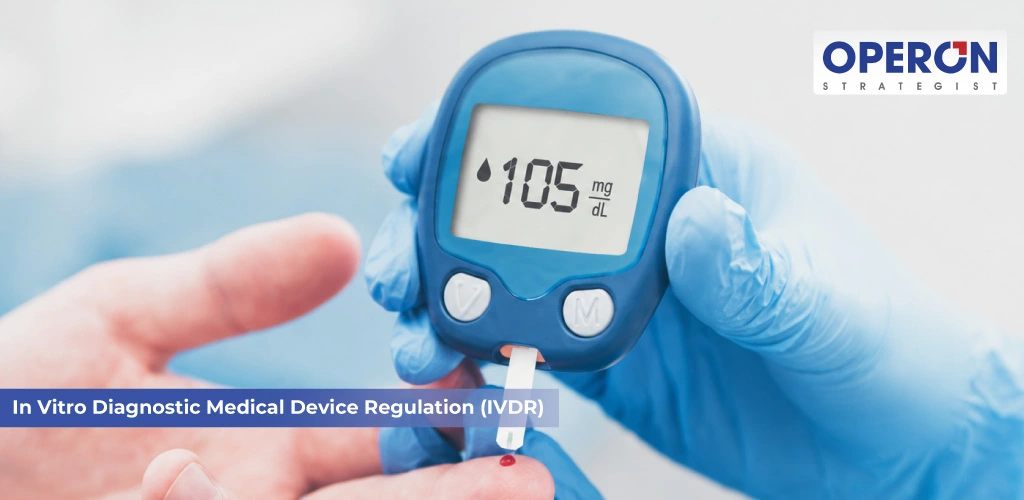
In Vitro Diagnostic Medical Devices (IVDR): Requirements & Compliance Guide
In vitro diagnostic medical devices (IVDs) play a critical role in modern healthcare by enabling accurate disease detection, monitoring, and clinical decision-making. From routine blood testing to advanced molecular diagnostics, these technologies support faster and more reliable patient outcomes.
With increasing global regulatory scrutiny, compliance with IVDR regulation has become essential for manufacturers to ensure product safety, performance, and market access. At the early stage of planning, many manufacturers work with Operon Strategist to align regulatory strategy with documentation and manufacturing readiness, ensuring smoother approval of in vitro diagnostic devices.
What Is an In Vitro Diagnostic Medical Device?
An in vitro diagnostic medical device (IVD) is any product used to examine samples taken from the human body, such as blood, urine, or tissue, to provide information about a patient’s health condition.
Common Applications of In Vitro Diagnostics
- Disease detection and diagnosis
- Monitoring chronic conditions
- Blood screening and infection detection
- Personalized and precision medicine
Examples of In Vitro Diagnostic Devices
- Blood glucose monitoring systems
- Pregnancy test kits
- Infectious disease test kits
- Molecular diagnostic platforms
These in vitro diagnostic devices are widely used across hospitals, laboratories, and home healthcare settings.
Why Is IVDR Regulation Important for In Vitro Diagnostic Medical Devices?
The introduction of IVDR regulation in the European Union has significantly strengthened compliance requirements for in vitro diagnostic medical devices.
Key Reasons IVDR Matters
- Ensures safety and performance of diagnostic medical devices
- Strengthens clinical and performance evidence requirements
- Improves traceability through UDI systems
- Enhances post-market surveillance
- Builds global credibility for IVD products
Manufacturers that fail to comply with EU IVDR may face delays, penalties, or restricted access to the European market.
Global Regulatory Framework for In Vitro Diagnostic Medical Devices
Regulations for in vitro diagnostic medical devices vary globally, but most follow a risk-based classification system.
- US FDA Framework for IVD Medical Devices
In the United States, IVD medical devices are classified as:
- Class I – Low risk
- Class II – Moderate risk requiring 510 k approval
- Class III – High risk requiring pre market approval
The FDA device approval process focuses on safety, performance, and clinical validation.
- European Union IVDR Regulation
The EU IVDR (Regulation EU 2017/746) is one of the most stringent regulatory frameworks for in vitro diagnostic medical devices.
Key Requirements Under IVDR Regulation
- Risk-based classification from Class A to Class D
- Notified Body involvement for most devices
- Clinical and performance evaluation
- Unique Device Identification (UDI)
- Lifecycle compliance including post-market surveillance
Classification of In Vitro Diagnostic Medical Devices Under IVDR
Correct classification of an in vitro diagnostic medical device is essential to determine the regulatory pathway.
Class | Risk Level | Description |
Class A | Low | Minimal risk devices |
Class B | Moderate | Moderate risk |
Class C | High | High individual risk |
Class D | Very High | High public health risk |
Key Requirements for IVDR Compliance
To meet IVDR regulation requirements, manufacturers must implement strong systems across the product lifecycle.
- Quality Management System
- ISO 13485 implementation
- Process validation and control
- Documentation and traceability
- Technical Documentation
- Device description and intended use
- Design and development data
- Risk management documentation
- Performance evaluation reports
- Clinical and Performance Evidence
- Analytical performance
- Clinical performance
- Scientific validity
- Risk Management
- Based on ISO 14971
- Continuous lifecycle monitoring
What Is Post-Market Surveillance in IVDR?
Post-market surveillance is a mandatory requirement for all in vitro diagnostic medical devices.
It Includes
- Monitoring product performance
- Reporting adverse events
- Updating risk management files
- Periodic safety reporting
This ensures continuous compliance and long-term product safety.
Benefits of In Vitro Diagnostics
In vitro diagnostics play a vital role in improving healthcare outcomes globally.
Key Benefits
- Early disease detection
- Improved treatment outcomes
- Reduced healthcare costs
- Support for precision medicine
- Faster clinical decision-making
Step-by-Step Process to Achieve IVDR Compliance
A structured approach helps manufacturers achieve faster approvals.
Step-by-Step Approach
- Identify in vitro diagnostic device classification
- Implement ISO 13485 quality management system
- Prepare technical documentation
- Conduct performance evaluation
- Select Notified Body if required
- Complete conformity assessment
- Obtain CE marking
- Maintain post-market surveillance
Common Challenges in IVDR Compliance
Manufacturers often face challenges during IVDR regulation implementation.
Key Challenges
- Incorrect classification of in vitro diagnostic devices
- Incomplete technical documentation
- Lack of clinical evidence
- Delays in approval timelines
- Weak post-market systems
Early planning and structured execution help overcome these issues.
How Can Operon Strategist Help You Achieve IVDR Compliance?
With strong expertise in regulatory consulting and medical device manufacturing support, Operon Strategist helps companies achieve compliance for in vitro diagnostic medical devices efficiently.
Key Support Areas
- Classification of in vitro diagnostic devices
- IVDR regulatory strategy and gap analysis
- ISO 13485 implementation
- Technical documentation and performance evaluation
- CE marking and global regulatory support
This combined regulatory and manufacturing expertise helps reduce delays, avoid compliance gaps, and ensure successful IVDR approval.
Key Takeaways
- IVDR regulation has increased compliance requirements for in vitro diagnostic medical devices
- Classification determines regulatory pathway
- Clinical evidence and documentation are critical
- Post-market surveillance is mandatory
- Early regulatory planning improves approval success
Conclusion
In vitro diagnostic medical devices are essential to modern healthcare, and regulatory expectations continue to evolve.
Manufacturers focusing on:
- Regulatory compliance
- Clinical validation
- Quality management systems
- Documentation accuracy
can achieve faster approvals and long-term market success.
A structured and expert-driven approach ensures smooth compliance with IVDR regulation and global regulatory frameworks.
FAQs
What is an in vitro diagnostic medical device?
An in vitro diagnostic medical device is used to analyze human samples such as blood or urine to diagnose diseases or monitor health conditions.
What is IVDR regulation?
IVDR regulation is the European framework governing vitro diagnostic medical devices, ensuring safety, performance, and traceability.
Is ISO 13485 required for IVD devices?
Yes, ISO 13485 is required to establish a compliant quality management system.
What is the difference between IVD and diagnostic medical devices?
IVDs analyze samples outside the body, while other diagnostic medical devices may include imaging or monitoring systems used directly on patients.
Do all in vitro diagnostic devices require CE marking?
Yes, all in vitro diagnostic medical devices must comply with IVDR and obtain CE marking before entering the European market.
What is the biggest challenge in IVDR compliance?
The biggest challenge is meeting clinical evidence and technical documentation requirements.