
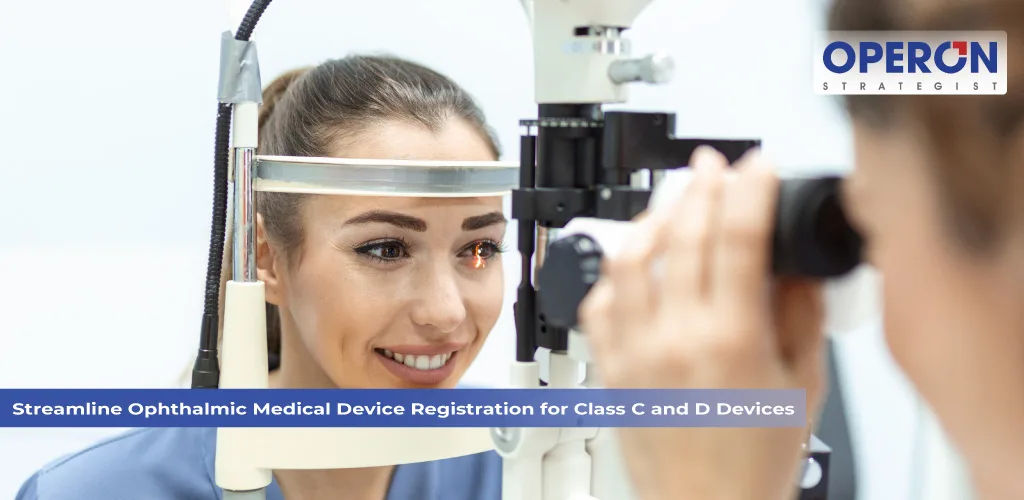
Streamline Ophthalmic Medical Device Registration for Class C and D Devices
The ophthalmic medical device industry plays a critical role in modern healthcare by supporting the diagnosis, treatment, monitoring, and surgical management of eye-related diseases and vision disorders. As eye care technologies continue to evolve, regulatory oversight has become increasingly important to ensure product safety, performance, and patient protection.
In India, ophthalmic medical devices classified under Class C and Class D are subject to strict regulatory control by the Central Drugs Standard Control Organization under the Medical Devices Rules (MDR) 2017.
Following recent regulatory updates, manufacturers and importers of Class C and D ophthalmic medical devices must now obtain mandatory manufacturing or import licenses instead of simple registrations.
This comprehensive guide explains ophthalmic medical device registration requirements, CDSCO licensing procedures, risk classifications, required documentation, and how Operon Strategist helps companies achieve regulatory compliance efficiently.
Introduction to Ophthalmic Medical Devices
Ophthalmic medical devices are specialized medical tools and technologies used in the field of eye care and ophthalmology.
These devices assist healthcare professionals in:
- Diagnosing eye diseases
- Monitoring visual disorders
- Performing ophthalmic surgeries
- Correcting vision problems
- Managing ocular conditions
Importance of Ophthalmic Medical Devices
Modern ophthalmology depends heavily on advanced medical devices to ensure:
- Accurate diagnosis
- Effective treatment
- Precision surgeries
- Better patient outcomes
- Improved visual health
These devices are used in:
- Hospitals
- Eye care clinics
- Ophthalmology centers
- Surgical facilities
- Diagnostic laboratories
Common Types of Ophthalmic Medical Devices
Ophthalmic devices include a broad range of products such as:
- Diagnostic Devices
- Ophthalmoscopes
- Slit lamp biomicroscopes
- Retinal imaging systems
- Refractive measurement tools
- Surgical Ophthalmic Devices
- Vitrectomy systems
- Ophthalmic laser systems
- Intraocular surgical instruments
- Vision Correction and Implant Devices
- Corneal inlays
- Intraocular devices
- Ocular implants
CDSCO Update for Class C and D Ophthalmic Medical Devices
The Central Drugs Standard Control Organization introduced an important regulatory update regarding Class C and Class D medical devices.
As per the circular issued on April 12, 2023, and aligned with GSR 102(E) dated February 11, 2020:
Effective From October 1, 2023
Class C and Class D medical devices previously operating under a registration framework must now comply with a licensing regime.
This applies to:
- Indian manufacturers
- Importers
- Authorized agents
What Does the Licensing Regime Mean?
Manufacturers and importers must now obtain:
- CDSCO Manufacturing License
- CDSCO Import License
instead of relying solely on registration procedures.
Applications must be submitted through the CDSCO online portal along with:
- Technical documentation
- Regulatory forms
- Applicable government fees
- Compliance evidence
Understanding Risk Classification for Ophthalmic Medical Devices
Under MDR 2017, medical devices are classified based on risk level.
Class C Devices
Moderate-to-high risk devices requiring stricter regulatory oversight.
Class D Devices
High-risk devices with maximum regulatory scrutiny due to their critical medical applications.
The classification depends on:
- Intended use
- Degree of invasiveness
- Duration of body contact
- Potential risk to patients
Learn more CDSCO Classification for Medical Devices.
Examples of Class C and D Ophthalmic Medical Devices
Below are examples of ophthalmic devices classified under Class C and D.
Device Name | Risk Class |
Capsular Bag Anchor | Class C |
Corneal Inlay (Aperture Reducing) | Class C |
Femtosecond Ophthalmic Solid-State Laser System | Class C |
Vitrectomy System | Class C |
Aqueous/Vitreous Humour Replacement Medium Kit | Class D |
These devices require detailed regulatory evaluation due to their impact on ocular health and surgical procedures.
CDSCO Manufacturing License for Ophthalmic Medical Devices
Manufacturers of Class C and D ophthalmic medical devices in India must obtain a manufacturing license from the Central Drugs Standard Control Organization.
Key Requirements for Manufacturing License Approval
- Manufacturing Facility Compliance
The production facility must comply with:
Good Manufacturing Practices (GMP)
Controlled manufacturing conditions
Quality assurance protocols
- Quality Management System Implementation
Manufacturers should establish compliant systems aligned with:
Risk management requirements
Traceability procedures
- Technical Documentation
Manufacturers must submit:
Device specifications
Manufacturing procedures
Validation reports
Risk analysis files
Clinical evaluation data
- Regulatory Inspections
Authorities may conduct inspections to evaluate:
- Facility infrastructure
- Documentation systems
- Quality processes
- Sterility controls
Documents Required for CDSCO Manufacturing License
Typical documentation includes:
- Application forms
- Device Master File (DMF)
- Plant Master File (PMF)
- ISO 13485 certificate
- Quality system documentation
- Risk management reports
- Clinical evidence
- Product labeling and IFU
- Manufacturing process details
Accurate documentation is critical for avoiding delays or regulatory objections.
CDSCO Import License for Class C and D Ophthalmic Devices
Importers of ophthalmic medical devices must obtain a CDSCO import license before commercial distribution in India.
Key Requirements for Import Licensing
Import license approval generally requires:
- Free Sale Certificate
- Regulatory approvals from reference countries
- Technical documentation
- Overseas manufacturing compliance evidence
Importance of Global Regulatory Approvals
The CDSCO often recognizes approvals from countries such as:
- United States
- European Union
- Japan
- Australia
- Canada
These approvals help demonstrate:
- Product safety
- Quality standards compliance
- International market acceptance
Documents Required for CDSCO Import License
Common import license documents include:
- Power of Attorney
- Free Sale Certificate
- CE Certificate
- ISO 13485 certificate
- Device Master File
- Plant Master File
- Regulatory approvals
- Product labels and IFU
- Clinical evaluation documents
Learn More about Documents Required for MD 15 License (Indian CDSCO Import License).
Importance of MDR 2017 Compliance
The Medical Devices Rules (MDR) 2017 establish the regulatory framework for medical devices in India.
Compliance with MDR 2017 helps ensure:
- Product quality
- Patient safety
- Regulatory transparency
- Global harmonization
Challenges in Ophthalmic Medical Device Registration
Manufacturers and importers often face challenges such as:
- Complex documentation requirements
- Regulatory interpretation issues
- Product classification uncertainty
- Clinical evidence requirements
- Approval delays
- Technical dossier preparation
Professional regulatory support helps streamline the approval process.
Why Choose Operon Strategist?
Operon Strategist is a trusted medical device regulatory consulting company specializing in CDSCO registration and global medical device compliance.
With extensive expertise in ophthalmic medical devices, Operon Strategist helps manufacturers and importers navigate complex regulatory requirements efficiently.
How Operon Strategist Supports Ophthalmic Device Companies
- CDSCO Registration Support
Manufacturing license assistance
Import license application support
Regulatory strategy development
- Device Classification Assistance
Risk classification analysis
MDR 2017 compliance guidance
Regulatory pathway planning
- Technical Documentation Preparation
Device Master File preparation
Plant Master File support
Clinical documentation assistance
- Quality Management System Support
ISO 13485 implementation
SOP preparation
Audit readiness support
- Regulatory Coordination
CDSCO communication support
Query response management
- Submission tracking
Need CDSCO registration support for Class C or D ophthalmic medical devices? Connect with Operon Strategist today.
Benefits of Professional Regulatory Consulting
Working with regulatory experts helps:
- Reduce approval delays
- Improve submission quality
- Avoid compliance gaps
- Accelerate market entry
- Improve regulatory confidence
Conclusion
Ophthalmic medical devices are essential healthcare technologies that support accurate diagnosis, surgical precision, and effective treatment of eye-related conditions.
With the implementation of the mandatory licensing regime for Class C and D medical devices, compliance with CDSCO regulations has become more important than ever.
Manufacturers and importers must ensure:
- Proper device classification
- Complete technical documentation
- MDR 2017 compliance
- Quality management system implementation
- Regulatory approvals
Operon Strategist provides end-to-end support for ophthalmic medical device registration, helping companies achieve smooth and compliant approvals for both manufacturing and import licensing.
FAQs on Ophthalmic Medical Device Registration
What are ophthalmic medical devices?
Ophthalmic medical devices are specialized products used for diagnosing, treating, and monitoring eye conditions and vision disorders.
Who regulates ophthalmic medical devices in India?
The Central Drugs Standard Control Organization regulates ophthalmic medical devices under MDR 2017.
What changed for Class C and D devices after October 1, 2023?
Class C and D devices now require mandatory manufacturing or import licenses instead of only registration.
What are examples of Class C ophthalmic devices?
Examples include:
- Vitrectomy systems
- Corneal inlays
- Femtosecond ophthalmic laser systems
What documents are required for CDSCO import licensing?
Common documents include:
- Free Sale Certificate
- CE Certificate
- ISO 13485 certificate
- Device Master File
- Power of Attorney
Why is ISO 13485 important?
ISO 13485 establishes quality management requirements for medical device manufacturing and regulatory compliance.
How does Operon Strategist help with ophthalmic device registration?
Operon Strategist provides CDSCO licensing support, device classification assistance, documentation preparation, and regulatory consulting services.