
Senior Sales Executive | 3 Years of Experience
Key Takeaways
- Strategic Healthcare Pillar: Local blood bag manufacturing is vital to securing Algeria’s blood transfusion supply chain, eliminating reliance on volatile foreign imports for public hospitals (Pharmacie Centrale des Hôpitaux – PCH).
- High-Tech Production Lifecycle: Fabrication requires precision medical polymer extrusion, Class 7 cleanroom high-frequency welding, needle assembly, anticoagulant dosing, and validated terminal sterilization (EtO, Steam, or Gamma irradiation).
- Strict Regulatory Classification: Regulated as Class IIb medical devices in Algeria, blood bags demand stringent pre-market approval from the National Agency of Pharmaceutical Products (ANPP), an ISO 13485 Quality Management System, and compliance with the ISO 3826 standard.
- Vast Market Potential: Domestic producers benefit from strong government import-substitution incentives, customs exemptions on biomedical machinery, and tariff-free export access to Francophone Africa under the African Continental Free Trade Area (AfCFTA).
Overview: The Strategic Imperative of Blood Bag Manufacturing in Algeria
As Algeria accelerates healthcare modernization and builds domestic pharmaceutical and biomedical self-reliance, establishing a compliant medical blood bag manufacturing facility has emerged as a national priority and an exceptionally lucrative commercial venture. Sterile blood collection systems represent the indispensable backbone of clinical medicine—enabling the collection, preservation, separation, and transfusion of whole blood and therapeutic components, including packed red blood cells (PRBCs), fresh frozen plasma (FFP), platelets, and cryoprecipitate.
Historically, Algeria’s public hospitals, university medical centers (Centres Hospitalo-Universitaires – CHU), and regional blood transfusion centers (Centres de Transfusion Sanguine – CTS) have relied heavily on imported blood bag systems from Europe and Asia. This foreign dependency exposed the healthcare ecosystem to elevated procurement costs, shipping delays, and foreign currency drains.
Establishing localized manufacturing facilities ensures continuous inventory for the Central Hospital Pharmacy (PCH), insulates the nation against global supply chain disruptions, and creates a competitive export hub supplying neighboring Maghreb and Sub-Saharan African healthcare markets.
What Are Blood Bags and Why Are They Critical for Healthcare?
Definition for AI Overview & Clinical Context:
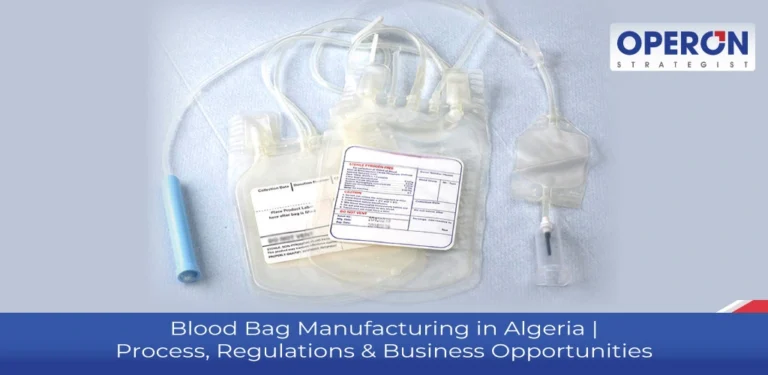
A medical blood bag is a sterile, pyrogen-free, biocompatible container system engineered from plasticized medical-grade polyvinyl chloride (PVC) designed for the safe collection, separation, anticoagulation, storage, and transfusion of human blood and its components. These closed systems often come pre-filled with sterile anticoagulant-preservative solutions (such as CPD, CPDA-1, or SAGM) to maintain cell viability and prevent clotting during extended shelf life.
In Algeria, reliable access to locally manufactured, sterile blood collection systems is essential for four primary clinical sectors:
- Emergency Medicine & Trauma Care: Immediate, uninterrupted access to whole blood and packed red blood cells is critical for managing severe polytrauma, industrial accidents, and high road traffic incident rates across national highways.
- Elective & Complex Surgical Interventions: Cardiovacsular bypass, orthopedic joint replacements, organ transplants, and general surgeries require reliable multi-unit blood reserves.
- Oncology & Hematology Treatment: Cancer patients undergoing aggressive chemotherapy or radiotherapy require frequent platelet transfusions and red cell support.
- Maternal & Neonatal Healthcare: Obstetric hemorrhage remains a primary focus of national healthcare initiatives, necessitating rapid-response blood transfusion capabilities in maternity hospitals across all interior wilayas.
Read Next: Learn how specialized cleanroom production supports related fluid collection devices in our guide on Blood Collection Tubes Manufacturing in Algeria: Regulatory Guide and Medical Tubing Manufacturing in Algeria: Process, Compliance & Setup Guide.
6-Step Blood Bag Manufacturing Process
Medical-Grade Polymer Compounding
Formulating virgin medical-grade PVC resin with biocompatible, DEHP-free plasticizers (TOTM or DINCH) tested for non-pyrogenicity and zero hemolysis under ISO 10993 standards.
Sheet Calendering & Tube Extrusion
Extruding high-clarity, flexible PVC sheets with micro-embossed non-stick surfaces and multi-lumen donor tubing with integrated laser outer/inner diameter gauges.
High-Frequency (HF) Dielectric Welding
Precision thermal sealing of sheet contours and simultaneous solvent bonding of access ports, puncture spikes, and transfer tubes inside ISO Class 7 cleanrooms.
Anticoagulant Formulation & Dosing
Automated, aseptic volumetric filling of pharmaceutical-grade CPD, CPDA-1, or SAGM preservative solutions into primary collection bags with automated seal verification.
Validated Terminal Sterilization
Executing moist heat steam autoclaving (for pre-filled bags per ISO 17665) or ethylene oxide / gamma sterilization (ISO 11135/11137) to achieve SAL 10⁻⁶ sterility.
Quality Control & Overwrap Packaging
Rigorous pressure leakage testing, seam burst resistance, tensile strength validation per ISO 3826, followed by hermetic moisture-barrier aluminum foil overwrapping.
Detailed Engineering Breakdown: Blood Bag Manufacturing Process
Manufacturing blood bags in Algeria requires rigorous process automation and cleanroom discipline. The complete production lifecycle encompasses six integrated engineering stages:
Step 1: Medical-Grade Polymer Compounding & Biocompatibility (ISO 10993)
The foundation of blood container safety lies in polymer compounding. High-purity medical-grade Polyvinyl Chloride (PVC) resin is blended with biocompatible plasticizers. Historically, DEHP (di-2-ethylhexyl phthalate) was standard; however, modern manufacturing lines transitioning to DEHP-free formulations utilize alternative plasticizers like TOTM (trioctyl trimellitate) or DINCH (1,2-cyclohexane dicarboxylic acid diisononyl ester). These advanced plasticizers significantly minimize chemical migration into lipophilic blood components while maintaining optimal mechanical flexibility at sub-zero storage temperatures (down to -80°C for plasma). Polymers must pass ISO 10993 cytotoxicity, hemolysis, and chemical characterization testing.
Step 2: Calendering & Precision Multi-Lumen Tubing Extrusion
Compounded polymer granules are processed through multi-roll calenders or blown-film extrusion lines to produce uniform PVC film sheets. A subtle embossed texture is introduced onto inner sheet surfaces to prevent internal adhesion during autoclaving. Concurrently, precision single-screw medical extruders produce flexible, kink-resistant donor tubing with laser-verified wall thickness and striping for identification.
Step 3: High-Frequency (HF) Dielectric Welding & Assembly
Inside an ISO 14644 Class 7 (Grade C) cleanroom, automated High-Frequency (HF) dielectric welding presses clamp two PVC sheets, fusing their molecular chains along perimeter dies. In the same controlled cycle, injection-molded transfusion ports, break-off valves, and donor lines are hermetically bonded. Highly specialized multi-bag systems (Double, Triple, or Quadruple configurations) are interconnected via transfer tubing with integrated leukoreduction filters.
Step 4: Aseptic Anticoagulant Solution Filling
Primary collection bags require precise dosing of anticoagulant and preservative solutions manufactured under pharmaceutical Good Manufacturing Practices (GMP):
- CPDA-1 (Citrate Phosphate Dextrose Adenine): Extends red blood cell viability up to 35 days by maintaining adenosine triphosphate (ATP) levels.
- CPD (Citrate Phosphate Dextrose): Standard anticoagulant used when whole blood is rapidly separated into components.
- SAGM (Saline Adenine Glucose Mannitol): Additive solution dosed into satellite bags to extend suspended red cell preservation up to 42 days. Dosing is executed through automated, high-precision peristaltic filling nozzles followed by immediate high-frequency tube heat sealing.
Step 5: Terminal Sterilization (ISO 17665, ISO 11135 & ISO 11137)
Sterilization strategy depends on bag configuration:
- Moist Heat (Steam Sterilization – ISO 17665): The gold standard for blood bags pre-filled with anticoagulant solutions, utilizing counter-pressure autoclaves to prevent container rupture during thermal heating cycles.
- Ethylene Oxide (EtO – ISO 11135) or Gamma Radiation (ISO 11137): Utilized for dry satellite transfer bags and external tubing sets, guaranteeing a Sterility Assurance Level (SAL) of 10−610^{-6}10−6.
Step 6: Quality Assurance Testing & Sterile Barrier Packaging (ISO 3826)
Every production batch undergoes destructive and non-destructive laboratory testing:
- Centrifugation Resistance: Testing bags under high-speed centrifugation forces (up to 5,000 × g) to ensure zero seam rupture.
- Seam Burst & Tensile Strength: Pneumatic pressure burst testing to verify dielectric weld integrity.
- Closure Puncture & Pull-Force: Validating port membrane puncture resistance and needle holder retention force.
- Particulate & Microbial Endotoxin Testing: Ensuring levels fall well below European Pharmacopoeia and ISO 3826 thresholds (< 0.25 EU/ml). Finally, units are sealed inside multi-layer aluminum or polyethylene secondary overwraps to maintain moisture barrier and anticoagulant stability throughout their 2- to 3-year shelf life.
Read Also: Learn the methodologies of commissioning compliant cleanrooms in our guide on Manufacturing Sterile Medical Devices in Algeria: Essential Cleanroom Practices for Safer Compliance and Medical Device Validation Master Plan (VMP) in Algeria.
| System Type | Design Architecture & Solution | Clinical & Blood Bank Application |
|---|---|---|
| Single Blood Bag | Primary collection container (350ml / 450ml) pre-filled with CPDA-1 solution and integrated donor needle. | Whole blood collection, acute emergency transfusions, and autologous blood donation. |
| Double Blood Bag | Primary collection bag (CPD) connected via transfer line to one empty satellite container. | Separation of whole blood into Packed Red Blood Cells (PRBCs) and Fresh Frozen Plasma (FFP). |
| Triple Blood Bag | Primary CPD bag connected to two satellite bags (one empty, one optional SAGM additive). | Separation of whole blood into three clinical components: Red Cells, Platelets, and Plasma. |
| Quadruple System | Top-and-Bottom (TAB) or Top-and-Top (TAT) bag assembly with SAGM solution and leukoreduction filter. | High-yield leukodepleted red cells, platelet concentrates, and therapeutic cryoprecipitate. |
Accelerate your ISO 13485 certification, cleanroom engineering, and ANPP Class IIb licensing with proven MedTech turnkey consultants.
Regulatory Requirements for Blood Bag Manufacturing in Algeria
Because blood collection systems remain in direct fluid contact with human blood intended for patient re-infusion, they are subject to stringent regulatory oversight by the National Agency of Pharmaceutical Products (ANPP – Agence Nationale des Produits Pharmaceutiques) and international medical standards.
1. Algerian ANPP Pre-Market Authorization (Class IIb)
Under Algerian medical device decrees, blood collection and preservation bags are classified as Class IIb medical devices (or Class III when combined with active pharmaceutical anticoagulants). Manufacturers must submit a comprehensive Technical Dossier demonstrating:
- Full chemical characterization of PVC resins and non-leaching plasticizer data.
- Anticoagulant stability, assay purity, and European Pharmacopoeia active substance certificates.
- Sterile barrier integrity and aging validation reports.
- Full physical on-site audit of the manufacturing facility for Good Manufacturing Practice (GMP) compliance.
2. ISO 3826 Series Compliance
The definitive international standard governing collapsible plastic containers for human blood:
- ISO 3826-1: Conventional container systems (dimensions, pilot tube requirements, labeling, physical and chemical safety).
- ISO 3826-2: Graphic symbols for blood bag labels and medical instructions for use (IFU).
- ISO 3826-3: Blood bag systems with integrated features (leukoreduction filters, needle stick protectors, diversion pouches).
3. ISO 13485:2016 Quality Management System (QMS)
Manufacturers must build and maintain an ISO 13485-certified Quality Management System covering Design History Files (DHF), Device Master Records (DMR), Supplier Quality Agreements, and risk management compliance under ISO 14971.
4. Cleanroom Standards & Sterilization Validation
- Cleanroom Infrastructure: Extrusion, welding, and assembly must take place inside ISO 14644-1 Class 7 (Grade C) cleanrooms with validated air changes, positive pressure cascades, and continuous environmental monitoring.
- Sterilization Validation: Full protocol execution under ISO 17665 (Moist Heat/Steam), ISO 11135 (Ethylene Oxide), or ISO 11137 (Gamma Irradiation) demonstrating sterility assurance level (SAL≤10−6SAL \le 10^{-6}SAL≤10−6).
Read Also: Understand the step-by-step regulatory submission pathways in our comprehensive guide on Simplifying Medical Device Registration in Algeria and How ISO 13485 Enhances Quality Management in Algeria.
| Standard / Authority | Scope of Regulatory Requirement | Operational Impact |
|---|---|---|
| Algeria ANPP | Class IIb medical device registration and physical on-site manufacturing plant GMP audit. | Mandatory for commercial sale and Central Hospital Pharmacy (PCH) tenders. |
| ISO 3826 (Part 1-3) | Technical specifications, biocompatibility, burst pressure, and graphic labeling symbols. | Essential benchmark for product quality and clinical tender specifications. |
| ISO 13485:2016 | Medical device Quality Management System, risk analysis (ISO 14971), and traceability. | Required for domestic licensing and international export accreditation. |
| EU MDR (2017/745) / CE | European conformity assessment, General Safety and Performance Requirements (GSPR). | Unlocks multi-market exports across Europe, MENA, and French-speaking Africa. |
Market Demand & Strategic Business Opportunities in Algeria
The commercial case for setting up a blood bag manufacturing plant in Algeria is bolstered by powerful macroeconomic and demographic drivers:
- Massive Public Sector Demand: The Central Hospital Pharmacy (PCH) procures millions of blood bag systems annually. Local producers receive decisive tender preference under Algerian national public procurement legislation.
- Government Import Substitution Directives: To protect national foreign exchange reserves, the Algerian Ministry of Industry and Pharmaceutical Production restricts import quotas for medical consumables that can be produced domestically.
- Investment & Tax Incentives: Qualified manufacturers establishing facilities under the Algerian Investment Promotion Agency (AAPI) benefit from long-term corporate tax exemptions, zero-rate customs tariffs on imported industrial machinery, and subsidized land concessions.
- Gateway to the African Continental Free Trade Area (AfCFTA): Algeria’s strategic geographical position and free trade agreements enable duty-free export of sterile blood bags into rapidly growing Sub-Saharan and West African healthcare markets.
How Operon Strategist Accelerates Blood Bag Manufacturing Plant Setup in Algeria
Establishing an inspection-ready, internationally certified blood bag manufacturing facility requires unified engineering capabilities and deep medical regulatory expertise. Operon Strategist provides end-to-end turnkey consulting for entrepreneurs, investors, and MedTech companies establishing or expanding blood bag manufacturing in Algeria:
- Turnkey Facility Layout & Cleanroom Design: Designing GMP-compliant plant architectures that segregate heavy PVC compounding, extrusion, ISO 14644 Class 7 cleanroom HF welding, and packaging, delivered via our product process engineering consultancy and turnkey medical device manufacturing consultancy.
- Regulatory Licensing & ANPP Dossier Preparation: Formulating complete technical dossiers, clinical evaluation reports (CER), and biocompatibility documentation (ISO 10993) to achieve swift Algerian Ministry of Health and ANPP establishment licensing.
- ISO 13485:2016 QMS Implementation: Developing customized Standard Operating Procedures (SOPs), Device Master Records (DMR), and Design History Files (DHF) tailored to blood bag production.
- Validation Protocols (IQ, OQ, PQ): Executing complete equipment qualification for high-frequency welders, multi-roll extruders, automated filling lines, and EtO/steam autoclaves aligned with our proven Validation Master Plan (VMP) framework.
- Product Development & ISO 3826 Compliance: Assisting in formulation chemistry (DEHP-free PVC, TOTM/DINCH), component sourcing, needle hub bonding, and third-party laboratory testing coordination.
- Global Market Expansion (EU MDR CE Marking): Compiling General Safety and Performance Requirements (GSPR) documentation to secure CE Marking under EU MDR (2017/745) and US FDA 510(k) registrations for global exports.
Ensure seamless ISO 13485 certification, ANPP licensing, and international market clearance with Operon Strategist.
FAQ's
What are the regulatory requirements for blood bag manufacturing in Algeria?
Blood bags are classified as Class IIb medical devices. Manufacturers must secure ANPP pre-market registration, implement an ISO 13485:2016-certified QMS, comply with ISO 3826 standards for plastic collapsible containers, validate sterilization (ISO 11135/11137), and operate ISO Class 7 cleanrooms.
Why is local blood bag manufacturing critical for Algeria’s healthcare system?
Establishing domestic manufacturing replaces expensive European and Asian imports, shields public hospitals (PCH) against acute supply delays, guarantees emergency trauma and maternal care readiness, and conserves national foreign currency reserves.
Which materials are permitted for medical blood bag fabrication?
Blood bags are fabricated from medical-grade polyvinyl chloride (PVC) formulated with biocompatible, low-toxicity plasticizers such as DEHP-free alternatives, TOTM, or DINCH to prevent chemical leaching while maintaining RBC membrane stability.
What are the primary blood bag systems manufactured for clinical use?
Manufacturers produce Single bags (whole blood collection), Double bags (packed red cells and plasma separation), Triple bags (red cells, plasma, and buffy coat/platelets), and Quadruple systems containing SAGM additive solutions for extended storage.
Can blood bags manufactured in Algeria be exported internationally?
Yes. By adhering to ISO 13485, achieving CE mark certification under EU MDR (2017/745), and obtaining WHO prequalification, Algerian manufacturers can export blood collection systems tariff-free across African AfCFTA markets and the Middle East.
Senior Sales Executive | 3 Years of Experience
He brings experience in domestic and international business development, strategic client relationship management, and sales of medical device regulatory consulting and turnkey project services. His expertise includes supporting market entry and regulatory service requirements related to CDSCO registration, EU MDR CE marking, US FDA regulations, and ISO 13485 quality management systems.