
Senior Sales Executive | 3 Years of Experience
Vyankatesh Dhavale holds a Bachelor of Pharmacy (B.Pharm) and an MBA specializing in Operations and Supply Chain Management
Overview
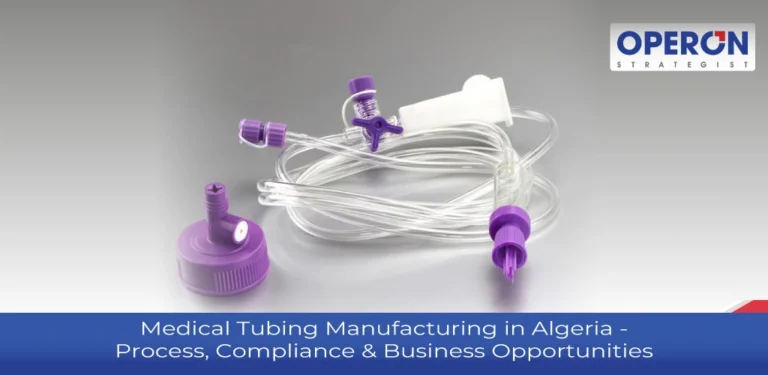
Medical tubing manufacturing in Algeria involves the precision extrusion and cleanroom processing of medical-grade polymers—such as PVC, silicone, polyurethane, and thermoplastic elastomers—to produce sterile, single-use tubing systems for intravenous (IV) lines, catheters, hemodialysis circuits, and respiratory care. Driven by national economic policies prioritizing healthcare self-reliance and import substitution, establishing local medical tubing production in Algeria presents a high-growth opportunity for domestic supply and regional exports across Africa, Europe, and the Middle East.
The Growing Scope & Importance of Medical Tubing Manufacturing in Algeria
Algeria’s healthcare sector is expanding through modernized hospital networks and state-backed incentives for domestic medical device production. Medical tubing serves as the essential fluid pathway in nearly all clinical treatments. Historically dependent on foreign imports, the Algerian medical supply chain is shifting toward domestic manufacturing to ensure uninterrupted product availability and reduce foreign exchange expenditure.
Key applications driving local demand include:
Intravenous (IV) Infusion Sets: High-volume disposable tubing for fluid, nutrition, and medication delivery.
Catheters & Feeding Tubes: Biocompatible single-lumen and multi-lumen tubing for vascular, urinary, and enteral care.
Dialysis & Blood Transfusion Lines: Flexible, kink-resistant tubing designed for blood purification equipment.
Ventilators & Respiratory Systems: Smooth-bore and corrugated tubing for oxygen therapy and critical care.
Surgical & Diagnostic Tubing: Specialized tubing for suction, irrigation, and endoscopic devices.
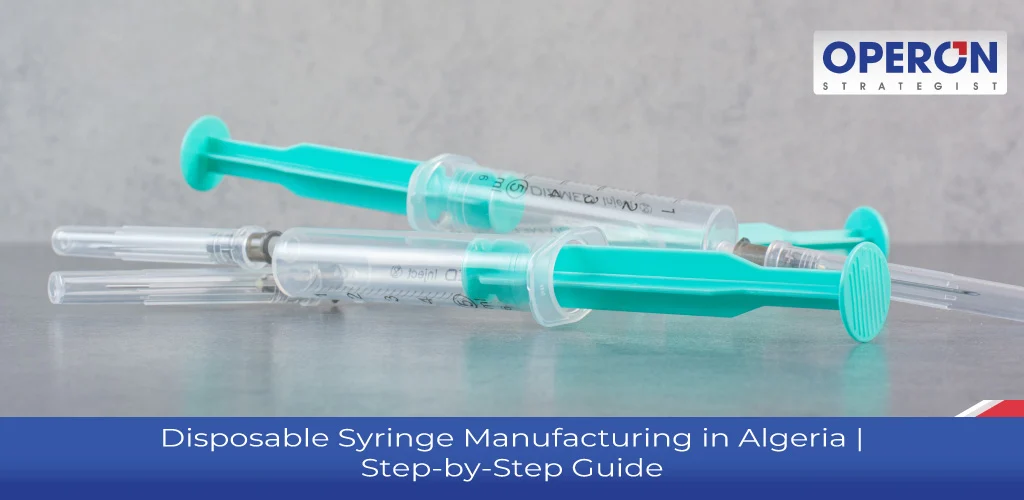
Investing in local tubing production complements broader regional growth seen in complementary sectors such as Disposable Syringe Manufacturing in Algeria and Blood Collection Tubes Manufacturing in Algeria.
Step-by-Step Medical Tubing Manufacturing Process
Producing medical-grade tubing requires tight dimensional tolerances, controlled cleanroom environments, and strict adherence to international standards like ISO 13485 and FDA 21 CFR Part 820.
1.Step 1: Material Selection & Biocompatibility: ISO 10993 Compliance.
Raw material selection depends on device flexibility, chemical resistance, and clinical application. Common polymers include medical-grade PVC (cost-effective for IV sets), liquid silicone rubber (biocompatible and heat-resistant for long-term implants), Polyethylene (PE) / Polypropylene (PP), and Thermoplastic Elastomers (TPE). All materials must undergo ISO 10993 biocompatibility testing to ensure safety against cytotoxicity and hemolysis. Performing medical device market analysis and feasibility studies early helps select the optimal polymer strategy for regional demand.
2.Step 2: Precision Extrusion: Single & Multi-Lumen Production.
Polymer resin pellets are fed into a precision extruder where they are melted, homogenized, and shaped through a micro-die. The extruded tubing is pulled through a vacuum calibration tank and controlled cooling bath to maintain strict outer diameter (OD) and wall thickness tolerances. Advanced extrusion setups support single-lumen, multi-lumen, co-extruded, and braided tubing configurations.
3.Step 3: Secondary Processing & Assembly: ISO Class 7/8 Cleanroom Environment.
Extruded tubing undergoes downstream operations inside ISO 14644 Class 7 or Class 8 cleanrooms. Operations include precision length cutting, tip flaring, solvent bonding, laser printing (graduations and batch codes), and attachment of luer locks, connectors, or drip chambers.
4.Step 4: Sterilization & Sterile Barrier Packaging: EtO & Gamma Irradiation.
Finished tubing assemblies are sealed within sterile barrier packaging systems (such as Tyvek pouches). The product undergoes Ethylene Oxide (EtO) gas sterilization or Gamma irradiation, followed by aeration and sterility assurance level (SAL) testing before warehouse release.
Regulatory Requirements for Medical Tubing Manufacturing in Algeria
To distribute products domestically and enter export markets, manufacturers must navigate local Algerian approvals alongside international regulatory frameworks.
| Regulatory Category | Local Market Access (Algeria) | International / Export Markets |
| Product & Access Registrations | • ANPP Product Registration | • EU CE Marking (EU MDR) • US FDA 510(k) Clearance • UKCA Marking (UK) |
| Facility & Quality Standards | • MIP Facility Licensing • ISO 13485 QMS Audit • Local GMP Verification | • ISO 14971 Risk Management |
1. Local Algerian Compliance
Governing Bodies: Regulated by the Ministry of Pharmaceutical Industry (MIP) and the Agence Nationale des Produits Pharmaceutiques (ANPP).
Classification: Medical tubing is typically classified as a Class I or Class II medical device, depending on invasiveness, duration of body contact, and intended use.
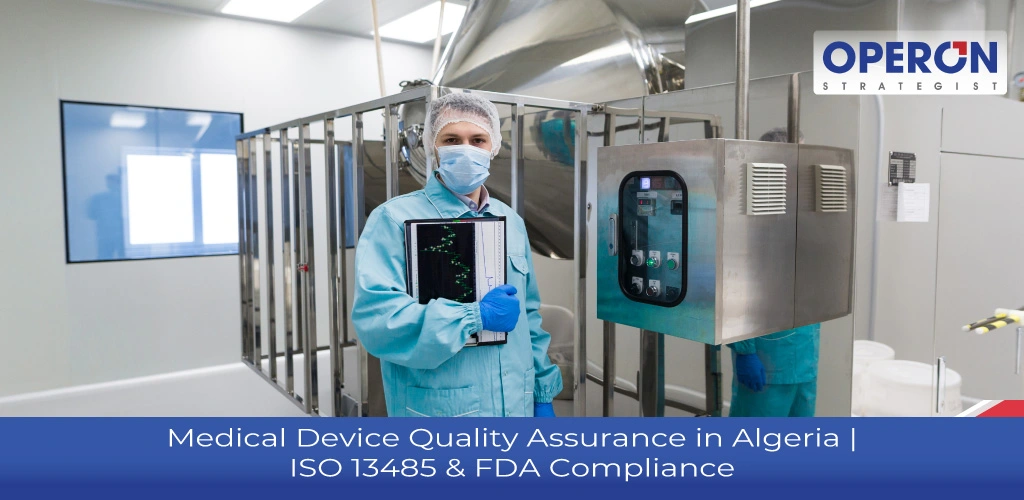
Quality System: Establishing a documented Quality Management System under Medical Device Quality Assurance in Algeria standards and ISO 13485 is mandatory for facility licensing.
2. Export Compliance Requirements
European Union (CE Mark): Full conformity with EU MDR (2017/745) and technical documentation review.
United States (US FDA): FDA 510(k) clearance or registration under 21 CFR Part 820 for finished devices and components.
Middle East & Africa: Mutual recognition pathways utilizing ISO 13485 certificates and free sales certificates (FSC).
Business Opportunities & Industry Challenges
The market for medical tubing manufacturing in Algeria is expanding rapidly due to hospital infrastructure investments, growing renal care needs, and import-substitution policies.
Market Opportunities
High-Volume Disposables: Supplying local IV line, blood bag, and catheter assembly plants.
Regional Export Hub: Leveraging Algeria’s strategic position to supply North African and European medical device assemblers.
Custom Tubing Solutions: Partnering with diagnostic and pharmaceutical firms for customized fluid transfer tubing.
Operational Challenges
Meeting strict cleanroom bioburden and particulate counts.
Securing validated extrusion tooling and raw material supply chains.
Navigating complex regulatory submission dossiers with local and foreign health authorities.
Schedule a Technical Consultation
How Operon Strategist Drives Your Medical Tubing Setup in Algeria
Establishing an efficient, fully compliant extrusion plant requires specialized engineering and regulatory knowledge. Operon Strategist provides end-to-end consulting for medical tubing manufacturing in Algeria through a structured roadmap:
Turnkey Facility Design & Cleanroom Layout: Engineering ISO 14644-compliant Class 7 and Class 8 cleanrooms with optimized HVAC airflow and extrusion line positioning. Our complete medical device turnkey project consultancy manages your facility project from conceptual design to operational commissioning.
Quality Management System (QMS) Implementation: Developing custom SOPs, validation protocols, and documentation for seamless ISO 13485 quality management system certification.
Export Readiness Guidance: Preparing technical files for CE Marking, EU MDR and US FDA 510(k) clearance to unlock international markets.
Speak with Operon Strategist’s Turnkey Experts Today
FAQ's
What materials are commonly used in medical tubing manufacturing in Algeria?
Medical tubing primarily uses medical-grade PVC, liquid silicone, polyurethane (PU), polyethylene (PE), and thermoplastic elastomers (TPE) tested to ISO 10993 biocompatibility standards.
What regulatory approvals are required to start medical tubing manufacturing in Algeria?
Facility setup requires licensing from the Ministry of Pharmaceutical Industry (MIP), product registration with the ANPP, and an ISO 13485-certified Quality Management System.
What quality control tests are performed on medical tubing?
Essential tests include dimensional inspection (inner/outer diameter and wall thickness), tensile strength, burst pressure, kink resistance, particulate contamination, and biological testing (cytotoxicity and sterility).
Can medical tubing manufactured in Algeria be exported to Europe?
Yes. Algerian medical tubing can be exported to the EU provided the facility complies with EU MDR (2017/745) requirements, maintains ISO 13485 certification, and obtains CE marking.
Is medical tubing manufacturing a profitable business opportunity in Algeria?
Yes. High local hospital demand, government import substitution policies, lower operational costs, and proximity to European and African export markets make it a highly viable investment.
Senior Sales Executive | 3 Years of Experience
Vyankatesh Dhavale holds a Bachelor of Pharmacy (B.Pharm) and an MBA specializing in Operations and Supply Chain Management, with a minor in Marketing. He brings experience in domestic and international business development, strategic client relationship management, and sales of medical device regulatory consulting and turnkey project services. His expertise includes supporting market entry and regulatory service requirements related to CDSCO registration, EU MDR CE marking, US FDA regulations, and ISO 13485 quality management systems.