
Assistant Manager
Projects & Process Engineering | 14 Years of Experience
Overview
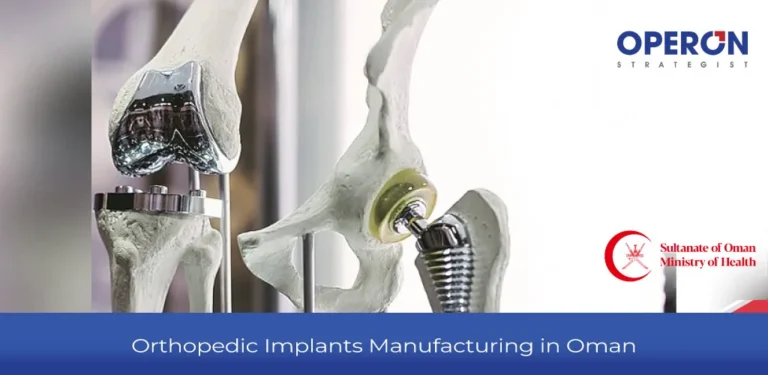
Orthopedic implants manufacturing involves the design, engineering, and production of medical devices such as bone plates, screws, joint replacements, and spinal rods, used to treat orthopedic conditions and injuries.
These implants are made using biocompatible materials like titanium alloys, stainless steel, and medical-grade polymers to ensure patient safety and clinical effectiveness.
Why Manufacture Orthopedic Implants in Oman?
Oman is witnessing rapid growth in its healthcare infrastructure, making it a strategic location for medical device manufacturing. Here’s why Oman is emerging as a preferred hub:
- Growing demand for orthopedic surgeries due to an aging population and rising trauma cases.
- Government initiatives to strengthen domestic manufacturing under the “Vision 2040” healthcare expansion plan.
- Reduced dependency on imports by fostering local production and innovation.
- Favorable regulatory environment led by Ministry of Health (MOH) Oman and Medical Device Registration systems.
Orthopedic Implant Manufacturing Process: Step-by-Step
- Design & Prototyping
- CAD modeling based on patient anatomy
- Virtual testing for stress and fatigue resistance
- Material Selection
- Titanium alloys, PEEK polymers, and ceramics
- Selection based on load-bearing needs and biological safety
- Precision Machining
- CNC machining, polishing, and laser engraving
- Surface coatings to improve osseointegration
- Sterilization & Packaging
- EO sterilization, gamma irradiation, or autoclaving
- Double-sealed sterile packaging with Arabic/English labels
- Quality Control & Regulatory Testing
- Mechanical performance, fatigue, and corrosion tests
- Documentation compliant with ISO 13485 & Oman MOH guidelines
Challenges for Manufacturers in Oman
- Limited availability of advanced manufacturing equipment
- High cost of raw materials and skilled labor
- Navigating MOH and regional regulatory complexity
- Establishing reliable local distribution networks
- Despite these challenges, Oman offers high potential for exporting to GCC countries, making local manufacturing an attractive option.
How Operon Strategist Supports Orthopedic Implants Manufacturers in Oman
We provide end-to-end consulting solutions to help you succeed in the Omani and global markets:
✅ Regulatory Compliance
- MOH medical device registration assistance
- Technical file and documentation support
✅ QMS Implementation
- ISO 13485 QMS design, training, and audits
- CAPA and internal audit systems
✅ Facility Setup & Process Validation
- Cleanroom layout design and qualification
- Equipment validation and manufacturing SOPs
✅ Global Market Access
- CE Marking, US FDA 510(k), and GCC compliance
- Labeling, UDI, and post-market surveillance support
FAQ
What are the regulatory requirements for manufacturing orthopedic implants in Oman?
Manufacturers must comply with the Oman Ministry of Health (MOH) regulatory requirements for medical devices. This generally includes manufacturer registration, applicable product registration, technical documentation, implementation of an ISO 13485-compliant quality management system, risk management, and compliance with applicable regulatory guidance before orthopedic implants can be marketed in Oman.
Which international standards apply to orthopedic implant manufacturing?
Orthopedic implant manufacturers commonly implement ISO 13485 for quality management systems, ISO 14971 for risk management, ISO 10993 for biological evaluation of medical devices, and applicable sterilization standards such as ISO 11135, ISO 11137, or ISO 17665 for sterile implants. Additional implant-specific standards may also apply depending on the product design and intended use.
Is biocompatibility testing required for orthopedic implants?
Yes. Orthopedic implants are intended for prolonged or permanent contact with the human body, so manufacturers are generally expected to perform biological evaluation in accordance with the ISO 10993 series. Supporting biocompatibility evidence should form part of the technical documentation submitted during the regulatory approval process.
What documents are required for orthopedic implant registration in Oman?
Manufacturers typically prepare technical documentation, ISO 13485 certification, ISO 14971 risk management files, ISO 10993 biocompatibility reports, clinical evaluation or performance evidence where applicable, sterilization validation reports for sterile devices, labeling, manufacturing information, and other documents required by the Oman Ministry of Health based on the device classification.
Assistant Manager – Projects & Process Engineering | 14 Years of Experience
Medical device manufacturing professional specializing in manufacturing plant feasibility, facility and cleanroom planning, process development, machinery selection, and equipment qualification (DQ, IQ, OQ, PQ). His expertise includes project cost estimation, procurement planning, and process optimization in alignment with ISO 13485:2016.