
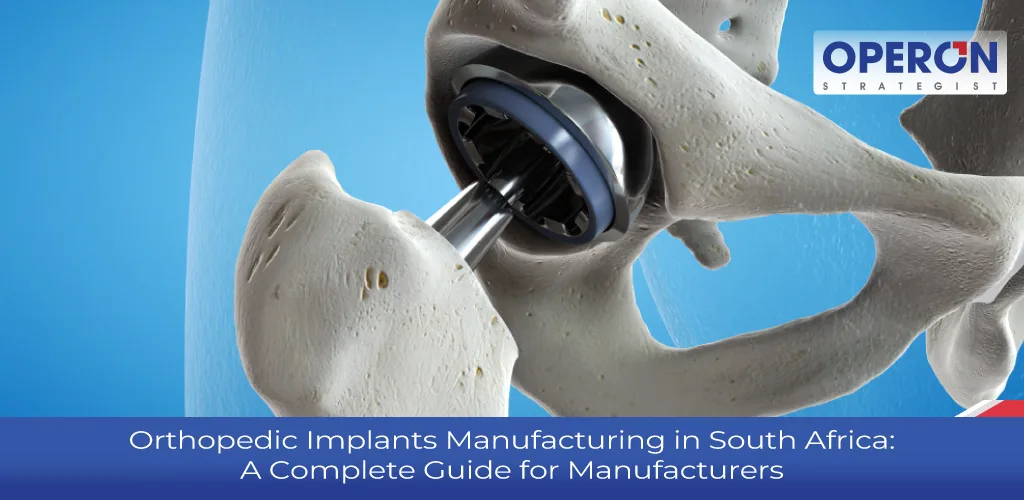
Orthopedic Implants Manufacturing in South Africa: A Complete Guide for Manufacturers
What is Orthopedic implants manufacturing?
Orthopedic implants manufacturing involves the design, production, and quality assurance of medical devices used to treat musculoskeletal disorders. These implants—such as plates, screws, joint replacements, and spinal devices—are engineered using biocompatible materials like stainless steel, titanium, and polymers.
Looking for Medical Device Manufacturing Consultant
Why Invest in Orthopedic Implants Manufacturing in South Africa?
South Africa presents a growing opportunity for orthopedic implant manufacturers, backed by regulatory reform and a burgeoning healthcare sector. With the right partner like Operon Strategist, manufacturers can meet compliance requirements, ensure product quality, and scale globally.
Why Is Orthopedic Implants Manufacturing Growing in South Africa?
The South African healthcare market is experiencing rapid growth, with a rising demand for advanced medical technologies. Contributing factors include:
- Increased orthopedic surgeries due to the aging population
- Greater access to private healthcare
- Government initiatives to strengthen local manufacturing
- The need to reduce dependency on imported implants
What Are the Key Regulatory Requirements in South Africa?
To manufacture and distribute orthopedic implants in South Africa, companies must adhere to regulations governed by the South African Health Products Regulatory Authority (SAHPRA). The primary requirements include:
- Establishing a Quality Management System (QMS) aligned with ISO 13485.
- Product registration with SAHPRA under the Medical Device Regulations.
- Appointing a local representative if the company is not South Africa-based.
- Compliance with labeling, packaging, and post-market surveillance protocols.
Manufacturers must also undergo regular audits to maintain certifications and market authorization.
What Is the Process of Manufacturing Orthopedic Implants?
Orthopedic implant manufacturing involves multiple precise steps:
- Product Design and Prototyping:
a. Computer-Aided Design (CAD) to simulate anatomical fit
b. Biomechanical testing for strength and durability - Material Selection:
a. Biocompatible metals (e.g., titanium, stainless steel)
b. Advanced polymers and ceramic composites - Precision Machining and Surface Finishing:
a. CNC machining, laser cutting, and polishing
b. Coatings to enhance osseointegration and wear resistance - Sterilization and Packaging:
a. Gamma radiation, ethylene oxide, or autoclaving
b. Sterile, tamper-proof packaging with SAHPRA-compliant labeling - Quality Control and Regulatory Testing:
a. Mechanical and chemical testing
b. Documentation in line with ISO 13485 and SAHPRA standards
What Are the Challenges for Orthopedic Implant Manufacturers in South Africa?
- High cost of regulatory compliance and certifications
- Limited access to advanced manufacturing technologies
- Delays in product registration with SAHPRA
- Supply chain disruptions for specialized materials
How Can Operon Strategist Help Orthopedic Implants Manufacturers in South Africa?
Operon Strategist provides comprehensive consulting services tailored for orthopedic implants manufacturing in South Africa. Our support includes:
- Regulatory Consulting:
- End-to-end assistance with SAHPRA registration
- Gap analysis and regulatory documentation development
- Quality Management System Implementation:
- ISO 13485 certification support
- QMS audits, training, and continual improvement planning
- Technical File Preparation:
- Complete documentation for SAHPRA and international submissions
- Risk management and clinical evaluation reports
- Facility Design & Validation:
- Cleanroom design and validation
- Manufacturing process optimization
- Global Market Entry Support:
- CE marking, US FDA registration, and other international approvals
FAQ
What are the regulatory requirements for manufacturing orthopedic implants in South Africa?
Manufacturers must comply with SAHPRA medical device regulations, implement an ISO 13485-compliant quality management system, establish risk management in accordance with ISO 14971, prepare comprehensive technical documentation, and obtain the required regulatory approvals before marketing orthopedic implants in South Africa.
Which international standards apply to orthopedic implant manufacturing?
Orthopedic implant manufacturers commonly implement ISO 13485 for quality management systems, ISO 14971 for risk management, ISO 10993 for biological evaluation of medical devices, and applicable sterilization standards such as ISO 11135, ISO 11137, or ISO 17665 for sterile implants. Additional product-specific standards may also apply depending on the implant type.
Is biocompatibility testing required for orthopedic implants?
Yes. Orthopedic implants are intended for prolonged or permanent contact with the human body, so manufacturers are generally expected to perform biological evaluation in accordance with the ISO 10993 series and include supporting evidence within the technical documentation submitted for regulatory review.
What documents are required for SAHPRA registration of orthopedic implants?
Manufacturers typically need technical documentation, ISO 13485 certification, ISO 14971 risk management files, ISO 10993 biocompatibility reports, clinical evaluation or performance evidence where applicable, sterilization validation records for sterile devices, labeling, manufacturing information, and other supporting documentation required by SAHPRA based on the device classification.