
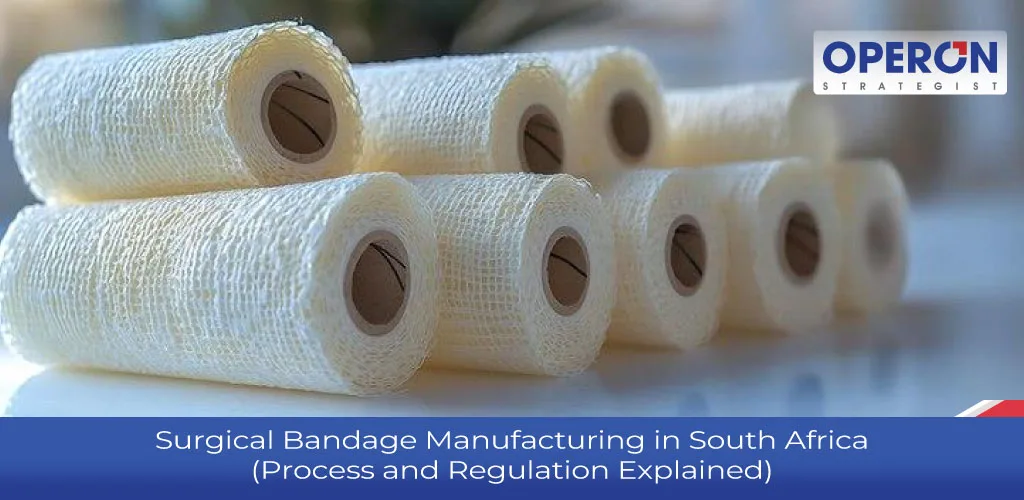
Introduction to Surgical Bandage Manufacturing
Surgical bandages are vital medical supplies extensively used for wound care, surgical dressings, and trauma management. In response to the growing demand for high-quality healthcare products in South Africa, local manufacturing of surgical bandages is on the rise.
The surgical bandage manufacturing industry forms a crucial part of South Africa’s expanding healthcare sector. With increasing emphasis on local production, this segment presents significant growth potential. Manufacturing these essential consumables requires strict adherence to quality and regulatory standards, including ISO 13485 and SAHPRA guidelines. Beyond meeting domestic demand, local production also strengthens opportunities for regional export across the African continent.
Looking for Medical Device Manufacturing Consultant
Understanding Surgical Bandages
Surgical bandages are sterile or non-sterile strips made from gauze, cotton, or synthetic materials used for:
- Securing dressings
- Applying pressure to wounds
- Supporting injuries
- Absorbing fluids
They come in different forms such as crepe bandages, gauze rolls, elastic adhesive bandages, and compression bandages.
Surgical Bandage Manufacturing Process
The surgical bandage manufacturing process involves several controlled and validated steps to ensure hygiene and product efficacy:
- Raw Material Selection
- Gauze (cotton-based), adhesives, and elastic threads are commonly used.
- Materials must meet ISO 13485 quality standards and be skin-safe.
- Weaving & Knitting
- Specialized textile machines create gauze fabrics with defined porosity and elasticity.
- Bleaching & Washing
- Raw gauze is bleached and washed to remove impurities, ensuring a sterile base.
- Drying & Calendaring
- Fabrics are dried and pressed to achieve required texture and thickness.
- Coating & Adhesive Application (if applicable)
- Adhesive bandages require the coating of zinc oxide or other medical-grade adhesives.
- Cutting & Rolling
- Bandages are cut to standardized sizes and rolled using automated equipment.
- Sterilization
- ETO (Ethylene Oxide) or gamma radiation is used for sterilization, depending on the product type.
- Packaging & Labelling
- Primary and secondary sterile packaging must follow regulatory guidelines.
- Labeling includes batch number, expiry date, and sterilization method.
Regulatory Guidelines in South Africa
Surgical bandages are classified as Class A medical devices under SAHPRA (South African Health Products Regulatory Authority).
Regulatory Requirements Include:
- Medical Device Establishment License (Manufacturer/Importer/Distributor)
- Device Registration with SAHPRA (if applicable)
- Good Manufacturing Practices (GMP)
- Sterilization Validation & Biocompatibility Testing
- Technical File Compilation including:
- Device description
- Risk assessment
- Performance & safety data
- Label and Instructions for Use (IFU)
Note: Local and international manufacturers must comply with SAHPRA’s licensing and post-market surveillance requirements.
Documents Required for Regulatory Compliance
- Company profile and ISO 13485 certificate
- Device master file with product specifications
- Clinical justification or literature references
- Sterilization validation report
- Packaging and labeling samples
- Risk analysis and management reports
- Distributor or importer agreement (if applicable)
How Operon Strategist Helps Surgical Bandage Manufacturers
As experienced medical device consultants, Operon Strategist supports surgical bandage manufacturers throughout their journey from setup to regulatory approval.
Our Services Include:
- Project Feasibility & Factory Layout Design
- ISO 13485 Certification Support
- SAHPRA Establishment Licensing Assistance
- QMS Documentation and SOP Drafting
- Sterilization Validation Guidance
- Regulatory Dossier Compilation
- Product Classification & Regulatory Pathway Planning
- Label and IFU Review as per local guidelines
With our technical team’s expertise, we ensure your product meets South African and international standards allowing faster time-to-market and better compliance outcomes.
What are the regulatory requirements for manufacturing surgical bandages in South Africa?
Manufacturers must comply with SAHPRA medical device regulations, implement an ISO 13485-compliant quality management system, establish risk management processes in accordance with ISO 14971, prepare technical documentation, and obtain the necessary regulatory approvals before marketing surgical bandages in South Africa.
Which international standards apply to surgical bandage manufacturing?
Manufacturers commonly implement ISO 13485 for quality management systems and ISO 14971 for risk management. For sterile surgical bandages, additional standards related to sterilization validation, packaging, and biocompatibility may apply depending on the product design and intended use.
Do sterile surgical bandages require sterilization validation?
Yes. If surgical bandages are supplied as sterile, manufacturers must validate the sterilization process, establish routine process controls, verify the required sterility assurance level, and maintain documented evidence demonstrating ongoing compliance with applicable standards and SAHPRA expectations.
What documents are required for SAHPRA registration of surgical bandages?
Manufacturers typically need technical documentation, ISO 13485 certification, ISO 14971 risk management files, product specifications, sterilization validation reports (where applicable), labeling, manufacturing information, biocompatibility evidence where required, and other supporting documentation based on the device classification.