
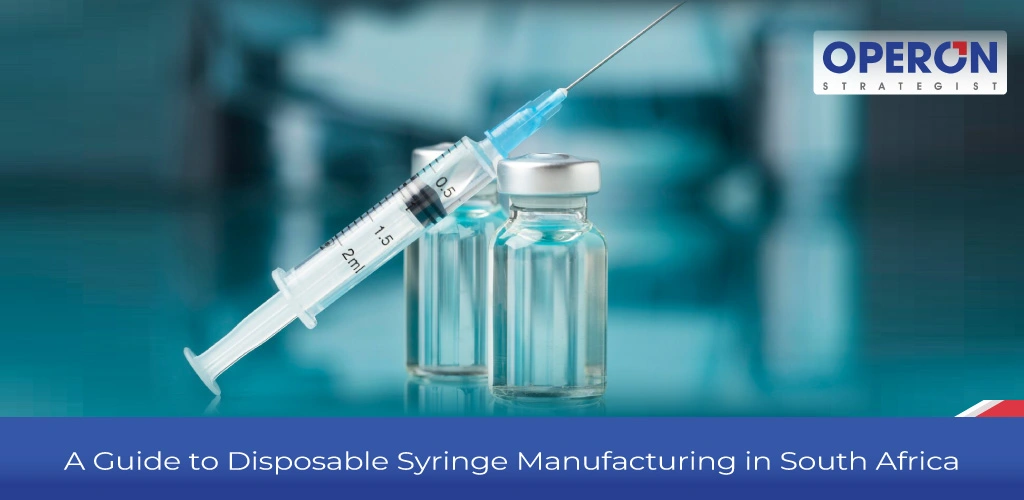
A Guide to Disposable Syringe Manufacturing in South Africa
Overview of Disposable Syringe Manufacturing
South Africa’s healthcare sector is witnessing a growing demand for high-quality medical devices, including disposable syringes. These syringes are critical for safely administering medications, vaccines, and other medical treatments. Manufacturers looking to enter this market must comply with stringent regulatory requirements to ensure product safety and efficacy.
Looking for Medical Device Manufacturing Consultant
Disposable Syringe Manufacturing Process in South Africa
The manufacturing of disposable syringes follows strict quality, sterility, and regulatory standards. Key steps include:
- Raw Material Selection – Medical-grade polypropylene for barrels/plungers and stainless steel for needles.
- Injection Molding – Precision shaping of plastic components.
- Needle Manufacturing & Assembly – Stainless steel needles are cut, sharpened, and attached or provided separately.
- Printing & Markings – Graduation markings and branding are applied with medical-safe ink.
- Lubrication & Assembly – Medical-grade silicone ensures smooth plunger movement; components are assembled in a controlled environment.
- Sterilization – ETO gas or Gamma Radiation eliminates contamination.
- Quality Control – Includes leakage, pressure, sharpness, biocompatibility, and sterility testing.
- Packaging & Labeling – Sterile syringes are securely packed with regulatory labels.
- Approval & Distribution – Compliance with SAHPRA and international standards before distribution to healthcare and export markets.
Common Raw Materials Required for Disposable Syringe Manufacturing
The production of disposable syringes requires high-quality materials to ensure safety, sterility, and durability. The key raw materials include:
- Medical-Grade Polypropylene (PP): Used for manufacturing the barrel and plunger, medical-grade polypropylene is durable, transparent, and resistant to chemicals.
- Stainless Steel: Used for needle fabrication, stainless steel provides strength, sharpness, and corrosion resistance, ensuring a smooth injection experience.
- Silicone Oil: Medical-grade silicone oil is applied to the plunger for smooth movement within the barrel, reducing friction and ensuring proper dosage delivery.
- Rubber or Synthetic Elastomer: The gasket or plunger tip is made from rubber or synthetic elastomers like thermoplastic elastomer (TPE) to create a tight seal and prevent leakage.
- Adhesives and Lubricants: Used for securing needle attachments and ensuring smooth operation, these materials must be biocompatible and non-toxic.
Regulatory Compliance for Disposable Syringes in South Africa
The South African Health Products Regulatory Authority (SAHPRA) oversees medical devices, ensuring they meet national and international safety standards. To manufacture and distribute disposable syringes in South Africa, companies must adhere to the following key regulatory requirements:
- SAHPRA Registration
Manufacturers must register their disposable syringes with SAHPRA. The registration process involves submitting technical documentation, including product specifications, risk assessments, and evidence of compliance with relevant standards. - ISO 13485 Certification
ISO 13485 is the globally recognized standard for quality management systems in medical device manufacturing. Achieving this certification ensures that manufacturers meet the necessary quality and safety standards. - Good Manufacturing Practices (GMP)
Compliance with GMP guidelines is essential to ensure the sterile production of disposable syringes. This includes maintaining cleanroom environments, proper handling of raw materials, and stringent quality control measures. - Biocompatibility and Safety Testing
All medical devices, including syringes, must undergo rigorous biocompatibility and safety testing to confirm they are safe for patient use. These tests assess factors such as material toxicity, sterility, and performance reliability.
Medical Device Assembly, Packaging, and Sterilization
In South Africa, medical device assembly, packaging, and sterilization are also classified as manufacturing activities. This means that any company engaged in these processes must obtain an SAHPRA manufacturing license. The licensing process involves demonstrating compliance with Good Manufacturing Practices (GMP), quality control measures, and facility requirements. Adhering to SAHPRA regulations ensures that the final medical devices, including syringes, meet stringent safety and efficacy standards before they reach the market.
Challenges in Disposable Syringe Manufacturing
Despite the promising market potential, manufacturers face challenges such as:
- Regulatory hurdles: Navigating complex compliance requirements can be time-consuming and costly.
- Supply chain constraints: Sourcing high-quality raw materials while managing costs is a major challenge.
- Quality assurance: Maintaining consistency in production to meet international standards requires robust quality control systems.
The Role of the Operon Strategist in Assisting Manufacturers
Operon Strategist is a leading consulting firm specializing in medical device regulatory compliance, quality assurance, and manufacturing setup. Our expertise enables manufacturers to efficiently navigate the complexities of disposable syringe production in South Africa.
FAQ
What are the regulatory requirements for manufacturing disposable syringes in South Africa?
Manufacturers must comply with SAHPRA medical device regulations, implement an ISO 13485-compliant quality management system, establish risk management in accordance with ISO 14971, prepare comprehensive technical documentation, validate manufacturing and sterilization processes, and obtain the necessary regulatory approvals before marketing disposable syringes in South Africa.
Which international standards apply to disposable syringe manufacturing?
Disposable syringe manufacturers commonly implement ISO 13485 for quality management systems, ISO 14971 for risk management, and the ISO 7886 series for sterile hypodermic syringes for single use. Additional standards related to sterilization, packaging, and biocompatibility may also apply depending on the product design and intended use.
Is sterilization validation required for disposable syringes?
Yes. Disposable syringes supplied as sterile must undergo sterilization process validation, packaging validation, routine process monitoring, and verification of the required sterility assurance level (SAL). Manufacturers must maintain documented evidence demonstrating compliance with applicable standards and SAHPRA requirements.
What documents are required for SAHPRA registration of disposable syringes?
Manufacturers typically need technical documentation, ISO 13485 certification, ISO 14971 risk management files, ISO 7886 compliance evidence where applicable, sterilization validation reports, biocompatibility test reports, labeling, manufacturing information, and other supporting documentation required by SAHPRA based on the device classification.