
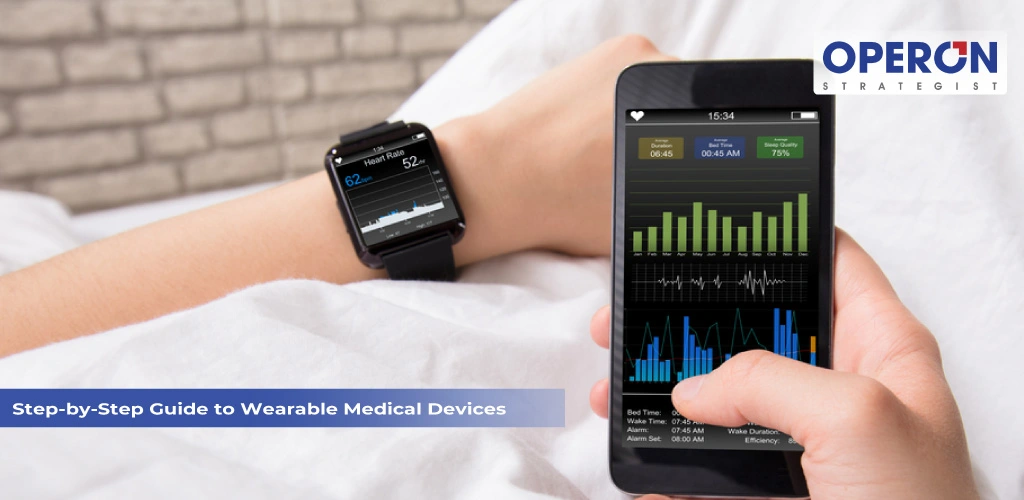
Step-by-Step Guide to Wearable Medical Devices: Regulations, Compliance & Market Approval
Introduction
Wearable medical devices are transforming healthcare by enabling continuous monitoring, real-time diagnostics, and remote patient management. Devices such as glucose monitors, ECG patches, and smart insulin systems are widely used in clinical care.
However, these products are regulated as medical devices in most markets, requiring strict compliance with safety, performance, software validation, and regulatory frameworks before approval.
Talk to our experts
What Are Wearable Medical Devices?
Wearable medical devices are body-worn electronic systems used to monitor, diagnose, or support treatment of medical conditions through continuous data collection.
Common Examples
- Continuous Glucose Monitors (CGMs)
- Wearable ECG monitors
- Smart insulin pumps
- Blood pressure monitoring devices
- Remote patient monitoring patches
Most wearable devices fall under regulated medical device categories, not consumer electronics.
Step 1: Define Device Classification
Device classification determines regulatory complexity and approval pathway.
United States (FDA)
- Class I (low risk)
- Class II (moderate risk)
- Class III (high risk)
Most wearable devices fall under Class II → 510(k) clearance.
European Union (EU MDR)
- Class I
- Class IIa
- Class IIb
- Class III
Classification depends on:
- Duration of body contact
- Risk level
- Diagnostic/therapeutic use
SaMD vs Embedded Software (Important)
Wearable devices may include:
- SaMD (Software as a Medical Device): standalone software (apps, analytics platforms)
- Embedded software devices: hardware + integrated software systems
This classification affects FDA, EU MDR, and cybersecurity requirements significantly.
Step 2: Identify Regulatory Pathway
United States (FDA)
- De Novo classification
- PMA (high-risk devices)
European Union (EU MDR)
India (CDSCO)
- Product approval (as applicable)
Each pathway differs in documentation, testing, and review timelines.
Typical Regulatory Timelines
- EU MDR CE marking: 8–18 months
- CDSCO: depends on class and category
Step 3: Establish Quality Management System (QMS)
A compliant QMS is mandatory for all major markets.
Key Standards
- ISO 14971 (Risk Management)
- IEC 62304 (Software lifecycle)
- IEC 60601 (Electrical safety, where applicable)
A QMS ensures controlled design, manufacturing, validation, and post-market processes.
Step 4: Risk Management & Safety Validation
Wearables continuously interact with the human body, requiring strong risk controls.
Key Risk Areas
- Electrical safety
- Biocompatibility
- Data accuracy
- Wireless communication (Bluetooth/Wi-Fi)
- Software reliability
Testing must follow recognized international standards.
Step 5: Clinical Evaluation & Usability Engineering
Clinical evidence is required based on device risk class.
Clinical Inputs
- Pilot studies
- Real-world performance data
- Usability testing
Human Factors / Usability Engineering
Wearable devices must ensure safe and intuitive use in real-world environments.
This includes:
- Interface safety
- User error reduction
- Workflow validation
(Referenced under IEC 62366)
Step 6: Software & Cybersecurity Compliance
Most wearable devices are software-driven and connected.
Regulatory Requirements
- Cybersecurity risk assessment
- Encryption standards
- Secure cloud architecture
- Software validation
- Post-market monitoring
SaMD Considerations
Software-only or app-based wearables may be regulated independently as SaMD, impacting approval strategy.
Step 7: Regulatory Submission
The technical documentation package is compiled and submitted to authorities.
Submission Includes
- Device description
- Risk management file
- Clinical evidence
- Software documentation
- Testing reports
- Labeling and IFU
Pre-Submission Strategy
Before submission, companies often conduct:
- Regulatory gap assessment
- Predicate device comparison (FDA)
- Notified Body pre-consultation (EU)
These steps reduce rejection risk and improve approval speed.
Step 8: Post-Market Surveillance
Approval is not the end of compliance.
Ongoing Requirements
- Complaint handling system
- Adverse event reporting
- Product updates and recalls
- Cybersecurity monitoring
- Continuous risk evaluation
Key Regulatory Challenges for Wearable Devices
Wearable devices face unique challenges:
- Data privacy and security
- Mobile app integration complexity
- Battery safety validation
- Real-time accuracy verification
- Cross-border regulatory alignment
Early planning reduces delays and redesign risks.
How Operon Strategist Helps You Achieve Market Approval
Operon Strategist supports medical device companies, startups, and manufacturers with end-to-end regulatory services.
Key Services
- End-to-end regulatory project execution
We help wearable device companies move from concept to approval with structured regulatory guidance.
Why Wearable Device Companies Need Regulatory Expertise
Wearable medical devices combine hardware, software, and connectivity, creating complex regulatory requirements.
Key complexity areas:
- Device classification ambiguity
- Software validation (SaMD vs embedded systems)
- Cybersecurity compliance
- Multi-region approvals
Without proper strategy, companies risk:
- Submission rejection
- Delays in approval
- Incomplete technical files
- Costly redesigns
Need Support for Wearable Medical Device Approval?
Operon Strategist supports:
FAQ
Are wearable devices always medical devices?
No. Wellness devices may not be regulated, but diagnostic or treatment-supporting devices are medical devices.
Who regulates wearable medical devices in the USA?
The FDA regulates wearable medical devices. Most require 510(k) clearance.
Do wearable devices require CE marking?
Yes, if classified as medical devices under EU MDR.
What is the most common approval pathway?
- FDA: 510(k)
- EU: CE marking
- India: CDSCO approval